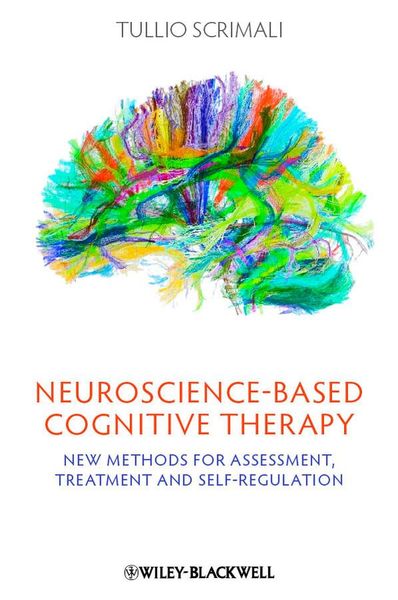
Produktbild: Neuroscience-based Cognitive Therapy

Neuroscience-based Cognitive Therapy New Methods for Assessment, Treatment and Self-Regulation

Fr. 149.00

inkl. gesetzl. MwSt., Versandkostenfrei


Beschreibung

Produktdetails

Einband

Gebundene Ausgabe

Erscheinungsdatum

23.04.2012

Verlag

John Wiley & Sons Inc

Seitenzahl

256

Maße (L/B/H)

22.9/15.2/1.8 cm

Gewicht

454 g

Auflage

1. Auflage

Sprache

Englisch

ISBN

978-1-119-99375-9

Beschreibung

Produktdetails

Einband

Gebundene Ausgabe

Erscheinungsdatum

23.04.2012

Verlag

John Wiley & Sons Inc

Seitenzahl

256

Maße (L/B/H)

22.9/15.2/1.8 cm

Gewicht

454 g

Auflage

1. Auflage

Sprache

Englisch

ISBN

978-1-119-99375-9

Noch keine Bewertungen vorhanden

Verfassen Sie die erste Bewertung zu diesem Artikel

Helfen Sie anderen Kundinnen und Kunden durch Ihre Meinung.

Kundinnen und Kunden meinen

Bewertungen (0)

Die Leseprobe wird geladen.
  • Produktbild: Neuroscience-based Cognitive Therapy
  • Foreword by Arthur Freeman xiii

    Preface xix

    Acknowledgments xxi

    List of Abbreviations xxiii

    Introduction 1

    Part I Neuroscience in Context

    1 Neuroscience, Clinical Psychology, and Cognitive Therapy 5

    2 The Mind-Brain Problem 11

    3 Motor Theories of Mind and a Complex Biocybernetic Model in Neuroscience 20

    4 Complexity, Chaos, and Dynamical Systems 27

    4.1 Introduction 27

    4.2 Complexity 27

    4.3 Chaos Theory 29

    4.4 Complex Systems 30

    4.5 From Complexity to a Neuroscience-based Cognitive Therapy 32

    5 Modular and Gradiental Brain, Coalitional Mind 35

    5.1 Introduction 35

    5.2 The Modular and Gradiental Brain 37

    5.3 The Social Brain 41

    5.4 The Central Nervous System, Neurovegetative Nervous System, and Visceral Brain 44

    5.4.1 The Neurovegetative Nervous System 44

    5.4.2 The Visceral Brain 46

    5.5 Paleognosis and Neognosis in theMind of Homo sapiens 47

    5.6 Memory 48

    5.7 Internal Representational Systems 51

    5.7.1 Imagery 52

    5.7.2 Internal Dialog 54

    5.8 Knowledge Processes 54

    5.9 Coalitional Processes 62

    6 Phylogenesis of the Brain and Ontogenesis of the Mind: Biological and Cultural Evolutionism 70

    6.1 The Reptilian Brain: The Archipallium 76

    6.2 The Limbic System: The Paleopallium 76

    6.3 Brain Structures of Less Evolved Mammals: The Neopallium 77

    6.4 Specialized Frontal Lobes 77

    Part II Clinical Psychophysiology and its Parameters

    7 Psychophysiology and Clinical Psychophysiology 83

    8 Electroencephalography and Quantitative Electroencephalography 86

    8.1 Electroencephalography 86

    8.2 Quantitative Electroencephalography 91

    9 Electrodermal Activity and Quantitative Electrodermal Activity 96

    9.1 Electrodermal Activity and its Recording 96

    9.2 Computer-Aided Analysis of Electrodermal Activity and Quantitative Electrodermal Activity 103

    9.3 Reference Database 107

    9.4 Evoked Electrodermal Responses 111

    9.5 Effects of Psychoactive Drugs on Electrodermal Activity 111

    10 Complex Psychological Diagnosis and Instrumental Psychodiagnostics 116

    10.1 Introduction 116

    10.2 Functional Diagnosis 118

    10.3 Instrumental Psychodiagnostics 120

    10.4 The Contribution of Neuroscience to a Complex Diagnosis 120

    Part III Neuroscience-basedMethods in the Clinical Setting

    11 Complex Psychological Diagnosis with Quantitative Electroencephalography 125

    11.1 Introduction 125

    11.2 Dementia 126

    11.3 Schizophrenia 129

    11.4 Depression 132

    11.5 Mania 133

    11.6 Attention Deficit Hyperactivity Disorder 133

    11.7 Obsessive-Compulsive Disorder 133

    12 Complex Psychological Diagnosis with Quantitative Electrodermal Activity 135

    12.1 General Aspects 135

    12.2 Data Regarding Specific Clinical Disorders 139

    13 Sets and Settings when Applying a Neuroscience-based Clinical Methodology 145

    14 Multimodal Assessment of Family Process and the "Family Strange Situation" 152

    14.1 The Family Strange Situation Procedure 154

    15 Biofeedback, Neurofeedback, and Psychofeedback 156

    15.1 Theoretical Foundation and Historical Development 156

    15.2 Physiological and Psychophysiological Biofeedback 163

    15.3 Biofeedback and Cognitive Therapy 165

    15.4 MindLAB Set-based Coping Skills Training 168

    15.5 Relaxation, Self-Control, Self-Regulation 168

    16 Meditation, Mindfulness, and Biofeedback-based Mindfulness (BBM) 171

    16.1 Meditation 171

    16.1.1 Types of Meditation 171

    16.2 Mindfulness 175

    16.3 Biofeedback-Based Mindfulness 177

    17 Neurofeedback and Cognitive Therapy 180

    17.1 Insomnia 180

    17.2 Obsessive-Compulsive Disorder 183

    17.3 Attention Deficit Hyperactivity Disorder 186

    17.4 Depression 187

    17.5 Mania 187

    17.6 Drug Dependency 187

    18 Psychofeedback and Cognitive Therapy 189

    18.1 Mental Disorders 190

    18.2 Psychosomatic Disorders 192

    18.3 Meditation, Mindfulness, Music Therapy 193

    19 Monitoring theWarning Signs of Relapse in Schizophrenia and Bipolar Disorder, and Coping with Them 194

    19.1 Introduction 194

    19.2 Schizophrenia 194

    19.3 Bipolar Disorder 196

    19.4 Coping with Prodromal Symptoms of Relapse in Psychosis 196

    20 Get Started with Neuroscience-based Cognitive Therapy 197

    References 199

    Index 217