Gutscheinbedingungen

*Gültig bis 05.07.2026 auf (fast) alles. Ausgeschlossen sind Smartboxen, Zeitschriften, Tickets, Lebensmittel, Gaming-Elektroartikel, Tinte/Toner, Gutscheine, Geschenkkarten, Blumen und Abos | Einlösbar in allen Buchhandlungen von Orell Füssli, Barth Bücher, Buchladen Rapunzel, Papeterie Köhler, Schuler Orell Füssli, Stauffacher und ZAP unter Vorweisung des Gutscheins, auf www.orellfüssli.ch durch Eingabe des Gutscheincodes. Beim Service „eBooks verschenken“ und bei eBook-Käufen via eReader nicht einlösbar | Mindesteinkaufswert: Fr. 30.- | Nicht mit anderen Rabatten kumulierbar.

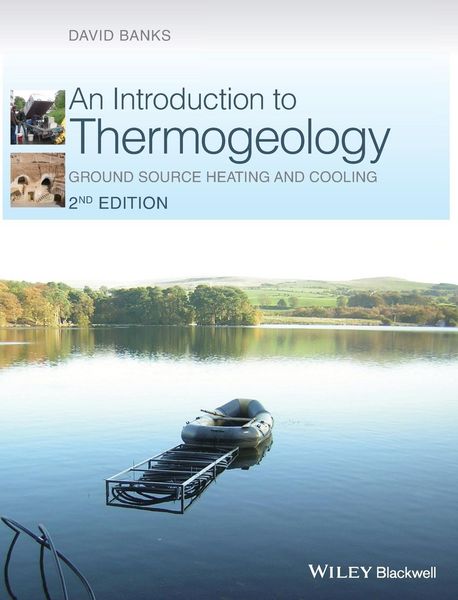
  • Produktbild: An Introduction to Thermogeology
  • Produktbild: An Introduction to Thermogeology

An Introduction to Thermogeology Ground Source Heating and Cooling

Fr. 169.00

inkl. gesetzl. MwSt., Versandkostenfrei


Beschreibung

Produktdetails

Einband

Gebundene Ausgabe

Erscheinungsdatum

13.08.2012

Verlag

John Wiley & Sons Inc

Seitenzahl

544

Maße (L/B/H)

26/20.8/3.4 cm

Gewicht

1211 g

Auflage

2. Auflage

Sprache

Englisch

ISBN

978-0-470-67034-7

Beschreibung

Produktdetails

Einband

Gebundene Ausgabe

Erscheinungsdatum

13.08.2012

Verlag

John Wiley & Sons Inc

Seitenzahl

544

Maße (L/B/H)

26/20.8/3.4 cm

Gewicht

1211 g

Auflage

2. Auflage

Sprache

Englisch

ISBN

978-0-470-67034-7

Herstelleradresse

Libri GmbH
Europaallee 1
36244 Bad Hersfeld
DE

Email: Libri GmbH

Noch keine Bewertungen vorhanden

Verfassen Sie die erste Bewertung zu diesem Artikel

Helfen Sie anderen Kundinnen und Kunden durch Ihre Meinung.

Kundinnen und Kunden meinen

Bewertungen (0)

Die Leseprobe wird geladen.
  • Produktbild: An Introduction to Thermogeology
  • Produktbild: An Introduction to Thermogeology
  • About the Author xi

    Preface to the First Edition xiii

    Preface to the Second Edition xv

    Acknowledgements xvii

    1 An Introduction 1

    1.1 Who should read this book? 2

    1.2 What will this book do and not do? 2

    1.3 Why should you read this book? 3

    1.4 Thermogeology and hydrogeology 6

    2 Geothermal Energy 11

    2.1 Geothermal energy and ground source heat 11

    2.2 Lord Kelvin's conducting, cooling earth 12

    2.3 Geothermal gradient, heat flux and the structure of the earth 14

    2.4 Internal heat generation in the crust 16

    2.5 The convecting earth? 17

    2.6 Geothermal anomalies 19

    2.7 Types of geothermal system 27

    2.8 Use of geothermal energy to produce electricity by steam turbines 28

    2.9 Binary systems 28

    2.10 Direct use 30

    2.11 Cascading use 30

    2.12 Hot dry rock systems [a.k.a. 'enhanced geothermal systems (EGS)'] 32

    2.13 The 'sustainability' of geothermal energy and its environmental impact 35

    2.14 And if we do not live in Iceland? 38

    3 The Subsurface as a Heat Storage Reservoir 40

    3.1 Specific heat capacity: the ability to store heat 41

    3.2 Movement of heat 45

    3.3 The temperature of the ground 51

    3.4 Insolation and atmospheric radiation 55

    3.5 Cyclical temperature signals in the ground 59

    3.6 Geothermal gradient 61

    3.7 Human sources of heat in the ground 65

    3.8 Geochemical energy 69

    3.9 The heat energy budget of our subsurface reservoir 70

    3.10 Cyclical storage of heat 72

    3.11 Manipulating the ground heat reservoir 74

    4 What Is a Heat Pump? 79

    4.1 Engines 81

    4.2 Pumps 84

    4.3 Heat pumps 85

    4.4 The rude mechanics of the heat pump 88

    4.5 Absorption heat pumps 91

    4.6 Heat pumps for space heating 91

    4.7 The efficiency of heat pumps 93

    4.8 Air-sourced heat pumps 96

    4.9 Ground source heat pumps 98

    4.10 Seasonal performance factor (SPF) 99

    4.11 GSHPs for cooling 100

    4.12 Other environmental sources of heat 100

    4.13 The benefits of GSHPs 101

    4.14 Capital cost 104

    4.15 Other practical considerations 107

    4.16 The challenge of delivering efficient GSHP systems 108

    4.17 Challenges: the future 109

    4.18 Summary 112

    5 Heat Pumps and Thermogeology: A Brief History and

    International Perspective 114

    5.1 Refrigeration before the heat pump 115

    5.2 The overseas ice trade 117

    5.3 Artificial refrigeration: who invented the heat pump? 119

    5.4 The history of the GSHP 121

    5.5 The global energy budget: how significant are GSHPs? 129

    5.6 Ground source heat: a competitor in energy markets? 132

    6 Ground Source Cooling 133

    6.1 Our cooling needs in space 133

    6.2 Scale effects and our cooling needs in time 134

    6.3 Traditional cooling 135

    6.4 Dry coolers 136

    6.5 Evaporation 138

    6.6 Chillers/heat pumps 141

    6.7 Absorption heat pumps 143

    6.8 Delivery of cooling in large buildings 144

    6.9 Dehumidification 145

    6.10 Passive cooling using the ground 145

    6.11 Active ground source cooling 147

    6.12 An example of open-loop groundwater cooling 148

    7 Options and Applications for Ground Source Heat Pumps 150

    7.1 How much heat do I need? 150

    7.2 Sizing a GSHP 156

    7.3 Open-loop ground source heat systems 161

    7.4 Closed-loop systems 173

    7.5 Domestic hot water by ground source heat pumps? 191

    7.6 Heating and cooling delivery in complex systems 195

    7.7 Heat from ice 201

    8 The Design of Groundwater-Based Open-Loop Systems 202

    8.1 Common design flaws of open-loop groundwater systems 203

    8.2 Aquifers, aquitards and fractures 203

    8.3 Transmissivity 205

    8.4 Confined and unconfined aquifers 206

    8.5 Abstraction well design in confined and unconfined aquifers 208

    8.6 Design yield, depth and drawdown 210

    8.7 Real wells and real aquifers 215

    8.8 Sources of information 217

    8.9 Multiple wells in a wellfield 222

    8.10 Hydraulic feedback in a well doublet 227

    8.11 Heat migration in the groundwater environment 234

    8.12 The importance of three-dimensionality 240

    8.13 Mathematical reversibility 242

    8.14 Sustainability: thermally balanced systems and seasonal reversal 243

    8.15 Groundwater modelling 244

    8.16 Examples of open-loop heating/cooling schemes 245

    8.17 Further reading 246

    9 Pipes, Pumps and the Hydraulics of Closed-Loop Systems 248

    9.1 Our overall objective 251

    9.2 Hydraulic resistance of the heat exchanger 252

    9.3 The hydraulic resistance of pipes 253

    9.4 Acceptable hydraulic losses 255

    9.5 Hydraulic resistances in series and parallel 255

    9.6 An example 256

    9.7 Selecting pumps 262

    9.8 Carrier fluids 265

    9.9 Manifolds 271

    9.10 Hydraulic testing of closed loops 275

    9.11 Equipping a ground loop 277

    10 Subsurface Heat Conduction and the Design of Borehole-Based

    Closed-Loop Systems 279

    10.1 Rules of thumb? 279

    10.2 Common design flaws 282

    10.3 Subsurface heat conduction 283

    10.4 Analogy between heat flow and groundwater flow 286

    10.5 Carslaw, Ingersoll, Zobel, Claesson and Eskilson's solutions 289

    10.6 Real closed-loop boreholes 294

    10.7 Application of theory - an example 304

    10.8 Multiple borehole arrays 313

    10.9 Simulating cooling loads 321

    10.10 Simulation time 322

    10.11 Stop press 323

    11 Horizontal Closed-Loop Systems 325

    11.1 Principles of operation and important parameters 326

    11.2 Depth of burial 327

    11.3 Loop materials and carrier fluids 328

    11.4 Ground conditions 329

    11.5 Areal constraints 333

    11.6 Geometry of installation 333

    11.7 Modelling horizontal ground exchange systems 344

    11.8 Earth tubes: air as a carrier fluid 351

    12 Pond- and Lake-Based Ground Source Heat Systems 353

    12.1 The physics of lakes 354

    12.2 Some rules of thumb 356

    12.3 The heat balance of a lake 357

    12.4 Open-loop lake systems 365

    12.5 Closed-loop surface water systems 367

    12.6 Closed-loop systems - environmental considerations 371

    13 Standing Column Wells 372

    13.1 'Standing column' systems 372

    13.2 The maths 376

    13.3 The cost of SCWs 377

    13.4 SCW systems in practice 379

    13.5 A brief case study: Grindon Camping Barn 379

    13.6 A final twist - the Jacob doublet well 381

    14 Thinking Big: Large-Scale Heat Storage and Transfer 383

    14.1 The thermal capacity of a building footprint 384

    14.2 Simulating closed-loop arrays with balanced loads 385

    14.3 A case study of a balanced scheme: car showroom, Bucharest 390

    14.4 Balancing loads 392

    14.5 Deliberate thermal energy storage - closed-loop borehole thermal energy storage (BTES) 395

    14.6 Aquifer thermal energy storage (ATES) 398

    14.7 UTES and heat pumps 403

    14.8 Regional transfer and storage of heat 403

    15 Thermal Response Testing 410

    15.1 Sources of thermogeological data 410

    15.2 Laboratory determination of thermal conductivity 411

    15.3 The thermal response test (TRT) 412

    15.4 The practicalities: the test rig 417

    15.5 Test procedure 420

    15.6 Sources of uncertainty 425

    15.7 Non-uniform geology 426

    15.8 Non-constant power input 426

    15.9 Groundwater flow 427

    15.10 Analogies with hydrogeology 428

    15.11 Thermal response testing for horizontal closed loops 429

    16 Environmental Impact, Regulation and Geohazards 432

    16.1 The regulatory framework 432

    16.2 Thermal risks 437

    16.3 Hydraulic risks 444

    16.4 Geotechnical risks 449

    16.5 Contamination risks 451

    16.6 Geochemical risks 453

    16.7 Microbiological risks 454

    16.8 Excavation and drilling risks 455

    16.9 Decommissioning of boreholes 458

    16.10 Promoting technology: subsidy 459

    16.11 The final word 460

    References 463

    Study Question Answers 493

    Symbols 503

    Glossary 509

    Units 515

    Index 518