• Produktbild: Obstacles to Divine Revelation
  • Produktbild: Obstacles to Divine Revelation

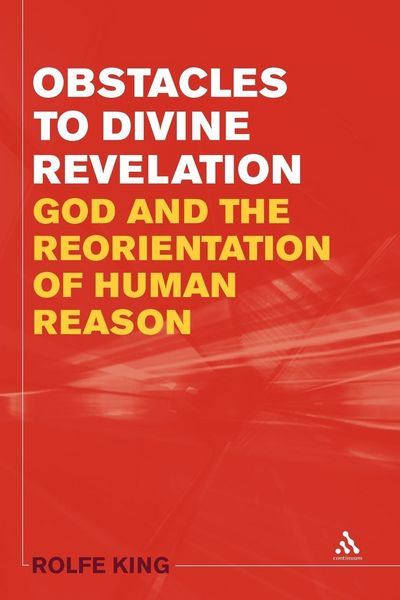
Obstacles to Divine Revelation God and the Reorientation of Human Reason

Fr. 76.90

inkl. gesetzl. MwSt., Versandkostenfrei


Beschreibung

Produktdetails

Einband

Taschenbuch

Erscheinungsdatum

03.11.2011

Verlag

Bloomsbury Academic

Seitenzahl

292

Maße (L/B/H)

23.4/15.6/1.6 cm

Gewicht

447 g

Sprache

Englisch

ISBN

978-1-4411-3454-7

Beschreibung

Produktdetails

Einband

Taschenbuch

Erscheinungsdatum

03.11.2011

Verlag

Bloomsbury Academic

Seitenzahl

292

Maße (L/B/H)

23.4/15.6/1.6 cm

Gewicht

447 g

Sprache

Englisch

ISBN

978-1-4411-3454-7

Herstelleradresse

Libri GmbH
Europaallee 1
36244 Bad Hersfeld
DE

Email: gpsr@libri.de

Kundinnen und Kunden meinen

0 Bewertungen

Informationen zu Bewertungen

Zur Abgabe einer Bewertung ist eine Anmeldung im Konto notwendig. Die Authentizität der Bewertungen wird von uns nicht überprüft. Wir behalten uns vor, Bewertungstexte, die unseren Richtlinien widersprechen, entsprechend zu kürzen oder zu löschen.

Die Bewertungen sind nach Format, Anzahl Sterne und Datum sortiert.

Verfassen Sie die erste Bewertung zu diesem Artikel

Helfen Sie anderen Kund*innen durch Ihre Meinung

Kundinnen und Kunden meinen

0 Bewertungen filtern

Die Leseprobe wird geladen.
  • Produktbild: Obstacles to Divine Revelation
  • Produktbild: Obstacles to Divine Revelation
  • Chapter 1: Initial Reflections
    1.1 Introduction
    1.2 Identifying our topic
    1.3 Comments on method
    1.4 Some key assumptions
    1.5 Adjusting the focus
    1.6 Some illustrations
    Chapter 2: The God of History?
    2.1 Recording history
    2.2 Revelation as history
    2.3 Hermeneutics
    2.4 Some general features of obstacles to revelation
    Chapter 3: Starting the Process
    3.1 The Eden parable
    3.2 Revelation and necessity
    3.3 Analysing God's options
    3.4 God's limited options
    3.5 Evidence and the best plan
    3.6 Some possible criticisms
    Chapter 4: Evidence and Direct Cognition of God
    4.1 Some background
    4.2 Internalism v. externamlism
    4.3 Models of direct knowledge of the truth of testimony
    4.4 Evaluation of the models
    Chapter 5: Knowledge and the Perception of God
    5.1 Can God be perceived?
    5.2 Language games and the name of God
    5.3 Seeing the essence of God
    5.4 Seeing the glory of God
    Chapter 6: Knowledge and Obstacles to Direct Cognition
    6.1 Direct cognition: a summary
    6.2 Plantinga and the maximum pace of revelation
    6.3 Obstacles to direct cognition
    6.4 Coherence rationality and union with God
    6.5 A Theory of Knowledge
    6.6 The Eden parable revisited
    Chapter 7: Major and Discreet Revelation
    7.1 Great evidence
    7.2 The "Gal" thought-experiment
    7.3 Results and application
    7.4 Obstacles to major revelation
    7.5 Discreet revelation: the best strategy?
    Chapter 8: Eschatological Revelation
    8.1 The parable of the Throne and the Seed
    8.2 Judgment and revelation
    8.3 Judgement and the vision of God
    8.4 The general problem of special revelation
    Chapter 9: Divine Hiddenness
    9.1 A third factor
    9.2 The choice to hide
    9.3 Obstacles or hiding?
    9.4 Apophatic theology
    Chapter 10: The Necessary Structure of Revelation
    10.1 The story so far
    10.2 God's limited opinions: types of divine self-testimony
    10.3 Evidence, divine plans and the "Version B Model"
    10.4 Features of the necessary structure
    10.5 Approaching assurance
    10.6 Miracles and necessity
    10.7 Does Kant make any difference?
    Chapter 11: Divine Self-testimony and the Journey to God
    11.1 God and the contemporary debate over testimony
    11.2 Journey-epistemology
    11.3 Two kinds of rationality
    11.4 Traditions and the awakening of the human ideal
    11.5 The knowledge of God: head and heart
    Chapter 12: The Journey of Faith
    12.1 Confident faith?
    12.2 Choosing to trust?
    12.3 The moral ideal and the journey towards God
    12.4 Faith and reason
    Chapter 13: Providence and Revelation
    13.1 The problem of evil
    13.2 Modest theodicy
    13.3 Providence and free will
    13.4 Modeling omnipotence
    Conclusion
    References
    Index