Gutscheinbedingungen

*Gültig bis 21.06.2026 auf (fast) alles. Ausgeschlossen sind Smartboxen, Zeitschriften, Tickets, Lebensmittel, Gaming-Elektroartikel, Tinte/Toner, Gutscheine, Geschenkkarten, Blumen und Abos | Einlösbar in allen Buchhandlungen von Orell Füssli, Barth Bücher, Buchladen Rapunzel, Schuler Orell Füssli, Stauffacher und ZAP unter Vorweisung des Gutscheins, auf www.orellfüssli.ch durch Eingabe des Gutscheincodes. Beim Service „eBooks verschenken“ und bei eBook-Käufen via eReader nicht einlösbar | Mindesteinkaufswert: Fr. 30.- | Nicht mit anderen Rabatten kumulierbar.

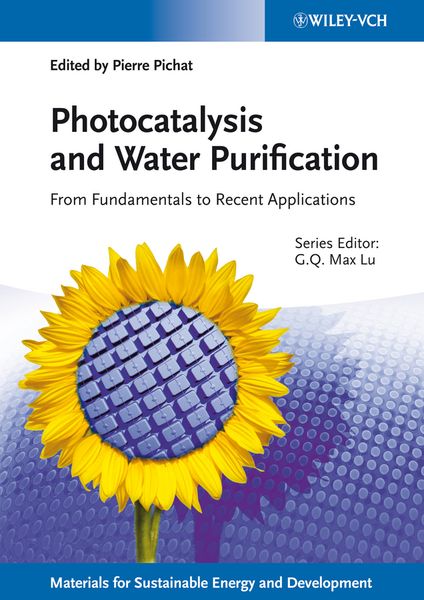
Produktbild: Photocatalysis and Water Purification

Photocatalysis and Water Purification From Fundamentals to Recent Applications

Fr. 200.00

inkl. gesetzl. MwSt., Versandkostenfrei


Beschreibung

Produktdetails

Einband

Gebundene Ausgabe

Erscheinungsdatum

13.03.2013

Abbildungen

146 schwarz-weiße Abbildungen, 14 schwarz-weiße Tabellen

Herausgeber

Pierre Pichat

Verlag

Wiley-VCH

Seitenzahl

438

Maße (L/B/H)

24.9/17.7/2.7 cm

Gewicht

1280 g

Auflage

1. Auflage

Sprache

Englisch

ISBN

978-3-527-33187-1

Beschreibung

Portrait

Pierre Pichat, as "Directeur de Recherche" with the CNRS (National Center for Scientific Research, France), has been active in heterogeneous photocatalysis for many years and has founded in Lyon, France, a laboratory principally based on this field. His research activity has concerned both basic investigations (role of photo-generated active species, reaction pathways, relationships between the efficacy and the characteristics of the materials, etc.) and applications regarding not only the photocatalytic treatment of water, but also self-cleaning materials and the purification of indoor air. He has been invited to publish reviews of these various domains. He has been and is a frequent invited lecturer at Conferences. He has received an International Appreciation Award acknowledging his pioneering contributions.

Over the years, he has served on CNRS-related Committees on diverse aspects of chemistry, such as catalysis, photochemistry, solar chemistry and environmental chemistry. He has been the coordinator or advisor of European Community projects on photocatalysis. He has been asked by Institutions of various countries to evaluate projects on environmental chemistry. He has been and is a member of International Scientific Committees of Journals and Conferences.


Produktdetails

Einband

Gebundene Ausgabe

Erscheinungsdatum

13.03.2013

Abbildungen

146 schwarz-weiße Abbildungen, 14 schwarz-weiße Tabellen

Herausgeber

Pierre Pichat

Verlag

Wiley-VCH

Seitenzahl

438

Maße (L/B/H)

24.9/17.7/2.7 cm

Gewicht

1280 g

Auflage

1. Auflage

Sprache

Englisch

ISBN

978-3-527-33187-1

Herstelleradresse

Wiley-VCH GmbH
Wiley-VCH GmbH, Boschstrasse 12, DE-69469 Weinheim
product_safety@wiley.com

Kundinnen und Kunden meinen

0 Bewertungen

Informationen zu Bewertungen

Zur Abgabe einer Bewertung ist eine Anmeldung im Konto notwendig. Die Authentizität der Bewertungen wird von uns nicht überprüft. Wir behalten uns vor, Bewertungstexte, die unseren Richtlinien widersprechen, entsprechend zu kürzen oder zu löschen.

Die Bewertungen sind nach Format, Anzahl Sterne und Datum sortiert.

Verfassen Sie die erste Bewertung zu diesem Artikel

Helfen Sie anderen Kund*innen durch Ihre Meinung

Kundinnen und Kunden meinen

0 Bewertungen filtern

Die Leseprobe wird geladen.
  • Produktbild: Photocatalysis and Water Purification
  • PREFACE
     
    PART I: Fundamentals: Active Species, Mechanisms, Reaction Pathways
     
    IDENTIFCATION AND ROLES OF THE ACTIVE SPECIES GENERATED ON VARIOUS PHOTOCATALYSTS
    Key Species in Photocatalytic Reactions
    Trapped Electron and Hole
    Superoxide Radical and Hydrogen Peroxide (O2 and H2O2)
    Hydroxyl Radical (OH)
    Singlet Molecular Oxygen (1O2)
    Reaction Mechanisms for Bare TiO2
    Reaction Mechanisms of Visible-Light-Responsive Photocatalysts
    Conclusion
     
    PHOTOCATALYTIC REACTION PATHWAYS - EFFECTS OF MOLECULAR STRUCTURE, CATALYST, AND WAVELENGTH
    Introduction
    Methods for Pathway Determination
    Prototypical Oxidative Reactivity in Photocatalytic Degradations
    Prototypical Reductive Reactivity in Photocatalytic Degradations
    The Use of Organic Molecules as Test Probes for Next-Generation Photocatalysts
    Modified Catalysts: Wavelength-Dependent Chemistry of Organic Probes
    Conclusions
     
    PHOTOCATALYTIC MECHANISMS AND REACTION PATHWAYS DRAWN FROM KINETIC AND PROBE MOLECULES
    The Photocatalyic Rate
    Surface Speciation
    Multisite Kinetic Model
    Conclusion
     
    PART II: Improving the Photocatalytic Efficacy
     
    DESIGN AND DEVELOPMENT OF ACTIVE TITANIA AND RELATED PHOTOCATALYSTS
    Introduction - a Thermodynamic Aspect of Photocatalysis
    Photocatalytic Activity: Reexamination
    Design of Active Photocatalysts
    A Conventional Kinetics in Photocatalysis: First-Order Kinetics
    A Conventional Kinetics in Photocatalysis: Langmuir - Hinshelwood Mechanism
    Topics and Problems Related to Particle Size of Photocatalysts
    Recombination of a Photoexcited Electron and a Positive Hole
    Evaluation of Crystallinity as a Property Affecting Photocatalytic Activity
    Electron Traps as a Possible Candidate of a Recombination Center
    Donor Levels - a Meaning of n-Type Semiconductor
    Dependence of Photocatalytic Activities on Physical and Structural Properties
    Synergetic Effect
    Doping
    Conclusive Remarks
     
    MODIF IED PHOTOCATALYSTS
    Why Modifying?
    Forms of Modification
    Modified Physicochemical Properties
     
    IMMOBILIZATION OF A SEMICONDUCTOR PHOTOCATALYST ON SOLID SUPPORTS: METHODS, MATERIALS, AND APPLICATIONS
    Introduction
    Immobilization Techniques
    Supports
    Laboratory and Industrial Applications of Supported Photocatalysts
    Conclusion
     
    WASTEWATER TREATMENT USING HIGHLY FUNCTIONAL IMMOBILIZED TIO2 THIN-FILM PHOTOCATALYSTS
    Introduction
    Application of a Cascade Falling-Film Photoreactor (CFFP) for the Remediation of Polluted Water and Air under Solar Light Irradiation
    Application of TiO2 Thin-Film-Coated Fibers for the Remediation of Polluted Water
    Application of TiO2 Thin Film for Photofuel Cells (PFC)
    Preparation of Visible-Light-Responsive TiO2 Thin Films and Their Application to the Remediation of Polluted Water
    Conclusions
     
    SENSITIZATION OF TITANIA SEMICONDUCTOR: A PROMISING STRATEGY TO UTILIZE VISIBLE LIGHT
    Introduction
    Principle of Photosensitization
    Dye Sensitization
    Polymer Sensitization
    Surface-Complex-Mediated Sensitization
    Solid Semiconductor/Metal Sensitization
    Other Strategies to Make Titania Visible Light Active
    Conclusions
     
    PHOTOELECTROCATALYSIS FOR WATER PURIF ICATION
    Introduction
    Photoeffects at Semiconductor Interfaces
    Water Depollution at Photoelectrodes
    Photoelectrode Materials
    Electrodes Preparation and Reactors
    Conclusions
     
    PART III: Effects of Photocatalysis on Natural Organic Matter and Bacteria
     
    PHOTOCATALYSIS OF NATURAL ORGANIC MATTER IN WATER: CHARACTERIZATION AND TREATMENT INTEGRATION
    Introduction
    Monitoring Techniques
    By-products from the Photocatalytic Oxidation of NOM and its Resultant Disinfection By-Products (DBPs)
    Hybrid Photocatalysis Technologies for the Treatment of NOM
    Conclusions
     
    WATERBORNE ESCHERICHIA COLI INACTIVATION BY TIO2 PHOTOASSISTED PROCESSES: A BRIEF OVERVIEW
    Introduction
    Physicochemical Aspects Affecting the Photocatalytic E. coli Inactivation
    Using of N-Doped TiO2 in Photocatalytic Inactivation of Waterborne Microorganisms
    Biological Aspects
    Proposed Mechanisms Suggested for Bacteria Abatement by Heterogeneous TiO2 Photocatalysis
    Conclusion
     
    PART IV: Modeling. Reactors. Pilot plants
     
    PHOTOCATALYTIC TREATMENT OF WATER: IRRADIANCE INFLUENCES
    Introduction
    Reaction Order in Irradiance: Influence of Electron - Hole Recombination and the High Irradiance Penalty
    Langmuir - Hinshelwood (LH) Kinetic Form: Equilibrated Adsorption
    Pseudo-Steady-State Analysis: Nonequilibrated Adsorption
    Mass Transfer and Diffusion Influences at Steady Conditions
    Controlled Periodic Illumination: Attempt to Beat Recombination
    Solar-Driven Photocatalysis: Nearly Constant nUV Irradiance
    Mechanism of Hydroxyl Radical Attack: Same Irradiance Dependence
    Simultaneous Homogeneous and Heterogeneous Photochemistry
    Dye-Photosensitized Auto-Oxidation
    Interplay between Fluid Residence Times and Irradiance Profiles
    Quantum Yield, Photonic Efficiency, and Electrical Energy per Order
    Conclusions
     
    A METHODOLOGY FOR MODELING SLURRY PHOTOCATALYTIC REACTORS FOR DEGRADATION OF AN ORGANIC POLLUTANT IN WATER
    Introduction and Scope
    Evaluation of the Optical Properties of Aqueous TiO2 Suspensions
    Radiation Model
    Quantum Efficiencies of 4-Chlorophenol Photocatalytic Degradation
    Kinetic Modeling of the Pollutant Photocatalytic Degradation
    Bench-Scale Slurry Photocatalytic Reactor for Degradation of 4-Chlorophenol
    Conclusions
     
    DESIGN AND OPTIMIZATION OF PHOTOCATALYTIC WATER PURIF ICATION
    REACTORS
    Introduction
    Catalyst Immobilization Strategy
    Synergistic Effects of Photocatalysis and Other Methods
    Effective Design of Photocatalytic Reactor System
    Future Directions and Concluding Remarks
     
    SOLAR PHOTOCATALYTIC PILOT PLANTS: COMMERCIALLY AVAILABLE REACTORS
    Introduction
    Compound Parabolic Concentrators
    Technical Issues: Reflective Surface and Photoreactor
    Suspended or Supported Photocatalyst
    Solar Photocatalytic Treatment Plants
    Specific Issues Related with Solar Photocatalytic Disinfection
    Conclusions
     
    INDEX