Zitat
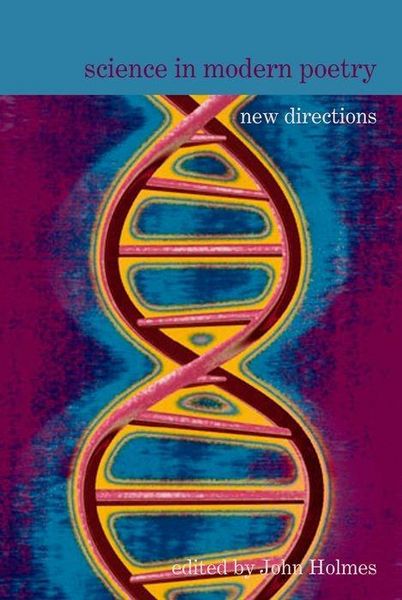
This collection of essays genuinely offers new directions for the study of science in modern poetry. It is coherently organised, full of matter, often fascinating, and always thought-provoking. -- Dame Gillian Beer 'Science' and 'poetry' are often seen as two poles, an instance of the oppositions of 'science' and 'art', or 'science and 'the humanities'. There has been a long and indecisive skirmish between the two categories at least since the late eighteenth century and the controversy informs this volume, though its general tendency is to seek 'consilience'. John Barnie puts it well: 'Why should knowledge that a rainbow is a spectrum of sunlight dispersed through water droplets in the air detract from elation at its beauty when a rainbow is unexpectedly encountered on a showery day?' But there is an oft-expressed anxiety here that the skirmish has in fact been decided in science's favour, that its epistemic authority is close to absolute. This results in a defensive tone in many of these essays, not just on behalf of poetry (two of the contributors, John Barnie and Robert Crawford, are practising poets) but on behalf of the kind of knowledge produced by the humanities, specifically literary scholars. Interestingly, it is Crawford's essay that most directly addresses the practical relationships between science, poetry and the universities, drawing instructively upon intellectual experience at the time of the Scottish Enlightenment and his own academic programme to ask questions about how 'creative writing' stands as a 'science' within the present parameters of the RAE/REF-governed world of academe. Crawford insists on the integrity of poetry in its new academic context, observing acutely that 'nothing is more rooted in its own discipline, nor more interdisciplinary, than poetry.' The defence, however, is frequently both assiduous and robust. Helen Small's excellent essay takes the weight of Miroslav Holub's critique of Romanticism and its persistence, and goes on to make an interesting discussion around Holub's use of scientific vocabulary in such words as 'amikacin', 'which achieves the pure poetry of denotation.' But, argues Small, such purity can only be temporary for just as the drug becomes obsolete, so its name will acquire the complex baggage of usage: 'the ancient and parodiable resources of poetic language and tradition are there to show that science, too, is parodiable', that just as 'gods and winged prophets' have changed, 'the scientific quest is ... endless and the supreme always provisional.' She makes the persuasive claim that Holub's own poem 'Intensive Care Unit' shows 'a way of anchoring science, of keeping its provisional truths true to their provisionality.' Elsewhere there are sound studies of how science, and other scientific writing, such as that of H.G. Wells, informed the poetry of Auden, Pound, Empson and Herbert Read. Michael Whitworth, in an essay on scientific diction in poetry, begins with the traumatic signalling of Eliot's 'patient etherised upon a table' to explore the complexities of the assimilation not just of scientific vocabulary but of scientific concepts into poetry. Four essays are devoted to 'Darwinian Dialogues' in which the influence of Darwin's texts is assessed in the work of Yeats, Hardy, Bishop and Judith Wright. Jonathan Ellis' essay on Elizabeth Bishop is particularly interesting because it is the one essay which studies the science-poetry relation in the instance of a scientist's literary influence on the poet. Following Bishop's own instruction, 'no detail too small', he compares excerpts from Darwin's journals with some Bishop poems to demonstrate their intertextual connections. Yet the greatest interest of the volume still resides in the sense of conflict with the nature of the knowledge science can be seen to bring. John Barnie juxtaposes A.R. Ammons's long poem Garbage with the biologist E.O. Wilson's Consilience: The Unity of Knowledge (1998). Wilson aims to be both reductionist and holistic in his attempt to envision a knowledge of everything through a biological route. Ammons concurs with Wilson in asserting that 'nature, not // we, gave rise to us', but questions the human response to our situation in a natural world that is becoming so despoiled as to be literally 'garbage'. This ecological inflection is also seen in John Holmes' account of the career of the Australian poet Judith Wright. The polarity Wright described was not that of science versus the humanities but between 'two sides of our own human nature', the 'creative and imaginative' and the 'manipulative power-hungry side'. Wright cleaved always to 'evolutionary hope', first through a teleology she found in Bergson which was vitiated by the disasters of the second world war that mocked the pretensions to 'the distinctive humane-ness of human beings'. From this Holmes traces Wright's move in her poetry to a perception of how 'Darwin's frankly non-purposive biology' is transmuted into an 'imaginative knowledge' which understands the importance of eco-systems and so 'provides the basis for a call to arms against the "servants of the machine".' As Mary Midgley writes in her Science and Poetry, this kind of binary thinking tends to drive us into inner conflict. Ronan McDonald begins his powerful and lucid essay on Yeats with an epigraph from 'Nineteen Hundred and Nineteen': We pieced our thoughts into philosophy, And tried to bring the world under a rule Who are but weasels fighting in a hole. No inner conflict visible here: rather Yeats takes a baleful view of nature and humanity. McDonald challenges the usual assumption that Yeats, buttressed by what he wryly called his 'infallible Church of poetic tradition', was profoundly anti-materialistic and anti-scientific. Rather McDonald represents Yeats' vision of nature as strongly 'attuned to the idea of natural selection' and thoroughly anti-teleological, one in which he affirms life aggressively while fully accepting it to be 'a blind man's ditch, / A blind man battering blind men.' McDonald finds this strain through superb readings of 'Easter 1916' and the Byzantium poems, stressing their profound ambiguity and paradox. He quotes Seamus Heaney's phrase 'unconsoled modernity' to describe Yeats's depictions 'of a blind and brutal nature from which humanity is alienated.' So does 'science' expect that as we better understand the world and our place within it we will become freed from our alienation? Such relief might come as Ammons entertains it, when, as John Barnie quotes him, 'we'll live no more on / this planet, we'll live in the word'. Perhaps it is there, in the hyperworld of virtual reality that the struggles of 'science' and 'poetry' are finding their next direction. -- Jeffrey Wainwright The British Society for Literature and Science 201301 There is strong work here. Times Literary Supplement 20130125 Dismissing C. P. Snow's "two cultures", John Holmes observes that "over the last twenty-five years, poets and scientists have been taking a more and more lively interest in each other's work and working methods". The essays collected in Science in Modern Poetry cover a wide range of contemporary, modernist and foreign verse and represent a concerted interdisciplinary effort on the part of the humanities - as Helen Small observes in her contribution, the movement "towards understanding, connection, creative alliance" is more likely to be made by poets and literary scholars than by scientists. Her essay, like several others, concerns itself with the difficulties involved in bringing together these discourses: "How can literary criticism give an accurate account of the content of science, as distinct from its rhetoric ... without retreating into a form of minimal positivism?" Small cites Miroslav Holub's impatience with big abstractions, and indeed these essays are most successful when attending to lyrical specificities, or the interest of particular poets in the creative possibilities of scientific language and metaphor. "It is easy to get entangled", otherwise, in what Robert Crawford calls "high-minded woolliness". In an essay critiqued by Bruce Clarke's afterword, John Barnie gets bogged down in unhelpful talk of the subjective and objective, and paraphrases E. O. Wilson and A. R. Ammons without persuading the reader that one helps us understand the other better. The list of contributors is impressive, yet many, while professing that science and poetry should and do come together, seem unsure about how to move beyond the "cosmopolitan gesture" Clarke endorses. The language of poetry is sometimes confused, or too simply conflated, with that of literary criticism. Nevertheless, there is strong work here, including Michael Whitworth's analysis of the "aesthetic effects" possible through the use of scientific words within poems. Two separate essays consider, as Tim Armstrong puts it, how "Empson uses insect societies to reflect on human automaticity"; Katy Price demonstrates how "The Ants" connects "the psychology of a failed romance to global politics, in the process enabling a shift in the cultural experience of insect life". Jonathan Ellis makes an intriguing connection between Elizabeth Bishop's "In the Waiting Room" and Darwin's description of an earthquake in The Voyage of the Beagle; in respective essays on Judith Wright and W. B. Yeats, John Holmes and Ronan McDonald illustrate how shifting between a less rational and a more scientific view of the world affects a poet's writing and politics. It is through such concrete analysis that we may yet reconcile, to quote Auden, "the tough who measure" and "the tender who value" - while also, one hopes, maintaining a critical distance from what Clarke refers to as "the ascendancy of modern technoscience". -- Vidyan Ravinthiran TLS 20130125