• Produktbild: Organizational Behaviour
  • Produktbild: Organizational Behaviour

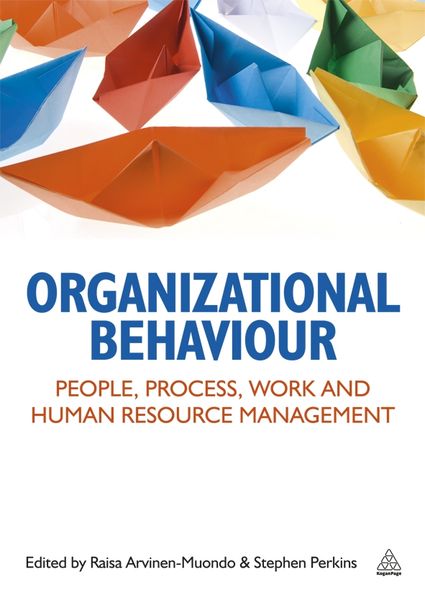
Organizational Behaviour People, Process, Work and Human Resource Management

Fr. 83.90

inkl. gesetzl. MwSt., Versandkostenfrei


Beschreibung

Produktdetails

Einband

Taschenbuch

Erscheinungsdatum

03.01.2013

Verlag

Kogan Page Ltd

Seitenzahl

360

Maße (L/B/H)

23.4/15.6/2 cm

Gewicht

550 g

Auflage

1

Sprache

Englisch

ISBN

978-0-7494-6360-1

Beschreibung

Produktdetails

Einband

Taschenbuch

Erscheinungsdatum

03.01.2013

Verlag

Kogan Page Ltd

Seitenzahl

360

Maße (L/B/H)

23.4/15.6/2 cm

Gewicht

550 g

Auflage

1

Sprache

Englisch

ISBN

978-0-7494-6360-1

Herstelleradresse

Libri GmbH
Europaallee 1
36244 Bad Hersfeld
DE

Email: gpsr@libri.de

Kundinnen und Kunden meinen

0 Bewertungen

Informationen zu Bewertungen

Zur Abgabe einer Bewertung ist eine Anmeldung im Konto notwendig. Die Authentizität der Bewertungen wird von uns nicht überprüft. Wir behalten uns vor, Bewertungstexte, die unseren Richtlinien widersprechen, entsprechend zu kürzen oder zu löschen.

Die Bewertungen sind nach Format, Anzahl Sterne und Datum sortiert.

Verfassen Sie die erste Bewertung zu diesem Artikel

Helfen Sie anderen Kund*innen durch Ihre Meinung

Kundinnen und Kunden meinen

0 Bewertungen filtern

Die Leseprobe wird geladen.
  • Produktbild: Organizational Behaviour
  • Produktbild: Organizational Behaviour

  • Contributors

    Part One: Introduction

    Introduction
    Stephen J Perkins and Raisa Arvinen-Muondo
    Learning objectives
    Managing others to a purpose
    How did OB get onto the management curriculum?
    Definition of OB
    Definition of HRM
    Overview of the chapters to follow
    Conclusion
    Key learning points and conclusions
    Discussion questions

    Part Two: Individuals at work under an employment relationship

    01 Managing diverse identities at work
    Janice Johnson and Christina Schwabenland
    Learning objectives
    Introduction
    Key concepts and debates in diversity management
    Case study and discussion questions
    Key concepts and debates - summary
    Processes of identity formation at work
    Processes of identity formation - summary
    Diversity in a global context
    Key learning points and conclusions
    Case study and discussion questions

    02 Perception, making decisions and people management
    Raisa Arvinen-Muondo
    Learning objectives
    Introduction
    Social perception and cultural perspectives
    Perception
    Common errors of perception
    Decision making
    Implications for HR practice and people management
    Key learning points and conclusions
    Case study and discussion questions

    03 Motivation at work: engagement and facilitation
    Nahid Rozalin
    Learning objectives
    Introduction
    Employee motivation
    Historical perspectives of motivation
    Content theories of motivation
    Process theories of motivation
    Intrinsic and extrinsic motivation and the individual
    Motivation and HRM: the psychological contract and employee engagement
    Key learning points and conclusions
    Case study and discussion questions

    Part Three: Employing human resources to work together for a purpose

    04 Managing performance
    Caroline Bolam and Sarah Jones
    Learning objectives
    Introduction
    Performance and control
    Performance management systems
    Managing performance in practice
    Key learning points and conclusions
    Discussion questions
    Case study and discussion questions

    05 Leadership, communication and organizational effectiveness
    Linda Holbeche
    Learning objectives
    Introduction
    Why is leadership so topical?
    What is leadership?
    Categories of leadership theory
    Critical management scholarship
    New approaches to leadership
    Discussion questions
    Key learning points and conclusions
    Case study and discussion questions

    06 Talent management
    Raisa Arvinen-Muondo and Qi Wei
    Learning objectives
    Introduction
    Talent management versus HRM
    The OB perspective
    Talent identification
    Strategic talent management
    Emerging issues in managing talnt
    Key learning points and conclusions
    Case study and discussion questions

    Part Four: Shifting contexts for organizational behaviour

    07 Conflict, power and politics
    Philip Davies and Rod Smith
    Learning objectives
    Introduction
    Definitions - power, politics and conflict
    Main arguments in the literature
    Politics
    Power
    Conflict
    Difference
    Possibility of competitions degenerating into conflict
    Key learning points and conclusions
    Case study and discussion questions

    08 Organizational culture
    Eliot Lloyd
    Learning objectives
    Introduction
    Defining organizational culture
    Interpretations of organizational culture
    Organizational culture and performance
    The development of culture
    Perspectives on the divisions of culture
    Managing organizational culture
    The role of recruitment and selection in organizational culture
    Key learning points and conclusions
    Discussion questions
    Case study and discussion questions

    09 Managing organizational change
    Faten Baddar Al-Husan and Konstantinos Kakavelakis
    Learning objectives
    Introduction
    Drivers and triggers of change
    Different types of change
    Resistance to change
    The change agent
    The role of HR in change management
    Key learning points and conclusions
    Case study and discussion questions

    10 Creativity, innovation and the management of knowledge
    Pauline Loewenberger
    Learning objectives
    Introduction
    Creativity and innovation
    Organizational learning and knowledge management
    Implications for HRM and HRD
    Key learning points and conclusions
    Discussion questions
    Case study and discussion questions

    Part Five: Summation and reflection

    11 Coda: HRM and OB - accenting the social
    Stephen J Perkins and Raisa Arvinen-Muondo

    Glossary
    References