Zitat
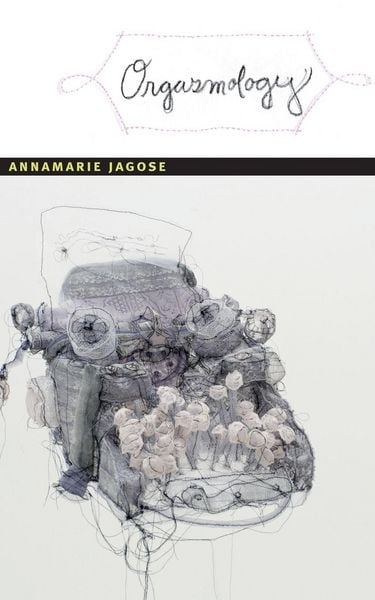
"[W]hile thinking too hard about achieving orgasm in the bedroom (...or kitchen...or office...or elsewhere) may foreclose its possibility, Jagose shows the opposite effect occurs in critical inquiry." - Marcie Bianco, Lambda Literary Review "Orgasmology disrupts queer doxa through a renewed emphasis on the materiality of sexual practice. Neither gay nor straight, queer nor normative, male nor female, orgasm shows up everywhere; its lability allows Annamarie Jagose to roam freely across a wide range of critical discourses, scenes, and textual objects. Sentence by sentence, this book is extremely rewarding - funny, finely observed, and smart in all the right places." - Heather Love, author of Feeling Backward: Loss and the Politics of Queer History "Just when they told you queer theory was dead, along comes a book that shows, yet again, what all the excitement was - and still is - about. Annamarie Jagose's patient, systematic demonstration that orgasm is the deconstruction of sex may seem at first to be pretty standard stuff, but the picture it discloses of the rise of twentieth-century sexuality, and of heterosexuality in particular, is so lucid and so surprising that you wonder why we never could see it in such eloquent detail before. You finish this book feeling ten times smarter than when you started it." - David M. Halperin, author of How To Be Gay "Altogether, I did learn more about orgasms. As a piece of cultural criticism, it is scholarly and carefully wrought. Jagose's book is mainly a study in representation following her earlier projects. I would have liked this to have been clearer in the book's title, because I kept reading hoping to find more sociological material on the orgasm... The academic project of queerness has been relentlessly coupled to postmodern indecipherability, excess and non-signification, as a strategy of linguistic freedom. The strength of Jagose's book lies not in the repetition of this romantic position but rather in its careful trace of the human orgasm in social, medical and representational history. 'Seeing' orgasm's trace in this way is quite handy." - Sally R. Munt, Times Higher Education, 11th April 2013