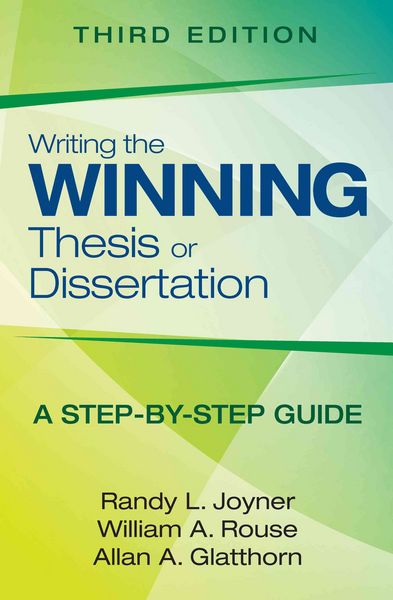
Produktbild: Joyner, R: Writing the Winning Thesis or Dissertation

Joyner, R: Writing the Winning Thesis or Dissertation A Step-By-Step Guide

Fr. 51.90

inkl. gesetzl. MwSt., Versandkostenfrei


Beschreibung

Produktdetails

Einband

Taschenbuch

Erscheinungsdatum

16.01.2013

Verlag

Sage Publications

Seitenzahl

328

Maße (L/B/H)

22.8/15.1/2.5 cm

Gewicht

538 g

Sprache

Englisch

ISBN

978-1-4522-5878-2

Beschreibung

Zitat

"It is a difficult quest to give students the needed resources to assist in writing a thesis or dissertation. Joyner, Rouse and Glatthorn address completing this journey in an organized and sequential process. I congratulate the authors in their thoughtful portrayal."

Produktdetails

Einband

Taschenbuch

Erscheinungsdatum

16.01.2013

Verlag

Sage Publications

Seitenzahl

328

Maße (L/B/H)

22.8/15.1/2.5 cm

Gewicht

538 g

Sprache

Englisch

ISBN

978-1-4522-5878-2

Kundinnen und Kunden meinen

0 Bewertungen

Informationen zu Bewertungen

Zur Abgabe einer Bewertung ist eine Anmeldung im Konto notwendig. Die Authentizität der Bewertungen wird von uns nicht überprüft. Wir behalten uns vor, Bewertungstexte, die unseren Richtlinien widersprechen, entsprechend zu kürzen oder zu löschen.

Die Bewertungen sind nach Format, Anzahl Sterne und Datum sortiert.

Verfassen Sie die erste Bewertung zu diesem Artikel

Helfen Sie anderen Kund*innen durch Ihre Meinung

Kundinnen und Kunden meinen

0 Bewertungen filtern

  • Produktbild: Joyner, R: Writing the Winning Thesis or Dissertation
  • Preface
    About the Authors
    I. Establishing the Foundations
    1. Laying the Groundwork for the Thesis and Dissertation
    Understanding the Special Nature of the Dissertation
    Purposes in Writing the Dissertation
    The Audiences for the Dissertation
    Analyze the Special Characteristics of the Dissertation
    Making Ethical Choices With Respect to the Dissertation
    Conduct Ethical Research
    Secure Informed Consent
    Acknowledge All Those Who Have Contributed or Collaborated
    Report the Results Honestly and Objectively
    Securing the Needed Resources
    Analyze Your Needs
    Search for Special Support
    Understanding the Key Differences Between the Thesis and the Dissertation
    Roles and Responsibilities of the Committee
    The Dynamics of the Committee
    Preventing Problems with the Committee
    Dealing With Committee Problems
    Committee Members Do Not Give Feedback Promptly
    Committee Members Give Conflicting Advice
    Committee Members Give Unhelpful Advice
    Relationships Critically Deteriorate
    Solving Personal Problems With the Dissertation
    Problems Near the End of the Course Work
    Problems at the End of Course Work
    Problems After the Proposal
    Problems After the Defense
    A Look Ahead
    Technology Technique: The Role of the Internet for Research in the Dissertation Process
    2. Dealing With Institutional Requirements
    Styles
    Specific University Guidelines or Requirements
    Institutional Review Board
    Knowledge Requirements (Training)
    Certificate Time Frame
    Degree Completion Timelines
    3. Finding a Research Problem
    Make a Personal Assessment of Topics
    Professional Significance
    Continuing Professional Interest
    Personal Interest
    Career Advancement
    Professional Knowledge, Experience, and Skills
    Likely Support
    Time Required
    Accessibility
    Conduct a Broad Scan of the Literature
    Organize for the Broad Scan
    Read to Inquire
    Concentrate on Research Reviews
    Reflect and Discuss
    Fix on the Research Topic and Research Problem
    Technology Technique: University Research Librarians
    4. Conducting a Focused Review of the Literature
    Reorganize Your Files
    Retrieve All Related Abstracts
    Evaluate the Results
    Check for Prior Dissertations
    Retrieve the Full Texts of the Most Useful Sources
    Use Primary Sources
    Develop an Annotated Bibliography
    A Concluding Note
    Technology Technique: Software for Maintaining Reference Information
    5. Making a Preliminary Choice of Methodology
    Quantitative and Qualitative Perspectives
    Mixed Method Perspective
    Project-Based Studies
    Research Types
    Studies Primarily Quantitative in Nature
    Experimental Research
    Quasi-Experimental Research
    Causal-Comparative Research
    Correlational Research
    Descriptive Research
    Evaluation Research
    Studies Primarily Qualitative in Nature
    Case Study Research
    Ethnographic Research
    Action Research
    Research Methods
    Make Preliminary Choices
    Technology Technique: Data Analysis Software I
    6. Organizing and Scheduling Your Work
    Develop a Planning Chart
    Make the Tentative Entries
    Technology Technique: Chart Software
    7. Developing the Prospectus and Organizing the Committee
    Prospectus Rationale
    Prospectus Developing
    Committee Selection
    Committee Dynamics
    Technology Technique: Telecommunication and Software Editing Tools
    II. Developing and Defending the Proposal
    8. Conducting a Comprehensive Critique of the Literature
    Maintain Good Research Practices Throughout the Search
    Develop a Focused Outline of the Search
    Establish Parameters for the Search
    Conduct a Comprehensive Search
    Critique All Sources Retrieved
    A Concluding Note
    Technology Technique: Electronic Note Card
    9. Detailing the Methodology
    The Research Design: Its General Nature
    The Research Design: Type-Specific Issues
    Quantitative: Experimental and Quasi-Experimental Research
    Quantitative: Causal-Comparative Research
    Quantitative: Correlational Research
    Quantitative: Descriptive Research
    Evaluation
    Qualitative: Case Study and Ethnographic Research
    Mixed Method: Action Research
    Develop Your Research Design
    Technology Technique: Data Analysis Software II
    10. Developing and Defending the Proposal
    Peer Collaboration
    Weighing the Advantages and Disadvantages
    Structuring the Collaborative
    Prepare for Comprehensive Examinations
    Provide Editorial Feedback
    Assist With and Contribute to Literature Review
    Assist With and Contribute to Data Collection
    Assist With and Contribute to Data Analysis
    Prepare for and Contribute to Defenses
    Develop and Article for Publication
    Provide Emotional Support
    Formalize the Structure and Request Advisor Approval
    Help the Group Remain Productive
    Readers and Reviewers
    Mini-Proposal
    Developing the Proposal
    Developing the Proposal: The Big Picture
    Developing the Proposal: Writing Chapter 1
    Introduction to the Chapter
    Background of the Study
    The Problem Statement
    Professional Significance of the Study
    Developing the Proposal: Writing Chapter 2
    Review the Theoretical Literature
    Review the Empirical Literature
    Developing the Proposal: Writing Chapter 3
    Developing the Proposal: The References
    Developing the Proposal: The Appendices
    Holding the Proposal Defense
    Coordinate Committee Schedules: Date and Time
    Prepare for the Proposal Defense
    Presentation of the Proposal Defense
    Facilities
    Deal With Other Defense Issues
    Post Proposal Steps
    Secure IRB Approval
    IRB Certification
    IRB Certification/Advisor
    University Requirements/Protocols
    Collect Data After Obtaining Appropriate Approvals
    Committee Requirements
    Required Edits and/or Revisions
    Review and Adjust Timeline
    Technology Technique: Page Numbering Using Word Processing Software and University Guidelines
    III. Researching and Writing the Thesis or Dissertation
    11. Following the Research Design
    Communicate Periodically With the Chair
    Ensure Access to the Research Site
    Avoid Premature Data Collection
    Develop a Detailed Planning Calendar
    Change the Schedule as Needed
    Prevent Problems With the Intervention
    Use Computers Mindfully
    Ensure a High Rate of Return on Surveys
    Maintain Careful and Duplicate Records
    Technology Technique: Electronic Data Collection
    12. Mastering the Academic Style
    Follow the Recommended Style Guide
    Use the Writing Process
    Develop an Effective Approach to Writing
    Write With an Efficient Process
    Mastering the Academic Style
    Project an Appropriate Persona
    Document Assertions
    Vary the Way You Identify Sources
    Use Appropriate Paragraphing
    Write Clear, Mature Sentences
    Some Special Matters of Word Choice and Form
    Technology Technique: Tools for Writing Software
    13. Organizing the Dissertation
    How Are Dissertations Organized?
    What Principles Govern the Organization of Individual Chapters?
    How Can the Organization Be Made Clear to the Reader
    How Is the Dissertation Finally Packaged?
    Technology Technique: Editors/Style Editors
    14. Writing the Introductory Chapter
    Introduction to the Chapter
    The Background of the Study
    The Problem Statement
    The Professional Significance of the Study
    Overview of Methodology
    Limitations and Delimitations
    Definition of Terms
    Technology Technique: Word Processing and Hanging Indents
    15. Writing the Review of the Literature
    Update the Comprehensive Critique of the Literature
    Reread All Sources
    Develop the Final Outline
    Use Levels of Headings That Reflect the Outline
    Write the Introductory Paragraph
    Write the First Section of the Review
    Provide an Overview
    Generalize
    Specific Reminders
    Write the Remaining Sections, Including a Summary
    Specific Reminders
    Evaluate and Revise
    Technology Technique: Formatting Quotes
    16. Explaining the Methodology
    Prepare to Write the Chapter
    Use an Objective Style in Writing the Chapter
    Determine the Content of the Chapter
    Outline the Chapter and Use Headings Appropriately
    Make an Outline
    Use Appropriate Headings
    Describe the Context for the Study
    Identify the Subjects or Participants
    Identify the Instruments Used to Collect Data
    Explain the Procedures Used in Completing the Design
    Explain How the Data Were Analyzed
    Write a Summary
    Technology Technique: Formatting
    17. Presenting the Results
    Prepare to Present the Results
    Decide on the Contents and Format of the Chapter
    Determine the Organization of the Chapter
    Develop the Tables and Figures
    Write the Introductory Paragraph
    Write the First Section
    Write the Remaining Sections, Using Appropriate Headings
    Revise the Chapter and Submit It for Review
    Technology Technique: Using Software to Create Figures and Tables
    18. Summarizing and Discussing the Results
    Review the Results Reported
    Develop an Outline of the Final Chapter
    Write the Introductory Paragraph
    Restate the Problem and Review the Methodology
    Summarize the Results
    Discuss the Meaning of the Study
    Reflect on Your Findings
    Determine the Content of the Discussion Section
    Write the Discussion Section
    Technology Technique: Software Capabilities
    IV. Defending and Profiting From the Dissertation
    19. Preparing and Holding the Dissertation Defense
    Planning
    Secure Needed Resources
    Edit the Dissertation
    Check on Content and Order
    Write the Abstract
    Write the Title and Approval Pages
    Write the Acknowledgment Pages
    Write the Table of Contents and Lists of Tables and Figures
    Include the Chapters
    Finalize the References
    Finalize Any Appendices
    Submit the Dissertation
    Holding the Defense
    Prepare
    Facilities
    Presentation
    After Your Presentation
    After the Defense
    University Requirements
    University Graduate School or University Library
    Electronic
    IRB Completion Requirements
    Study Closure
    Documentation
    Technology Technique: Packaging the Final Draft of The Dissertation
    20. Publishing the Thesis or Dissertation
    Add to the Research Knowledge Base
    Present a Scholarly Paper
    Publish a Journal Article
    Identify Several Possible Journals
    Make a Careful Analysis of Each Journal
    Prepare the Article for Submission
    Develop a Plan to Publish a Book
    Complete the Book Plan
    Submit the Book Plan
    Technology Technique: Journal Software Requirements
    References
    Index