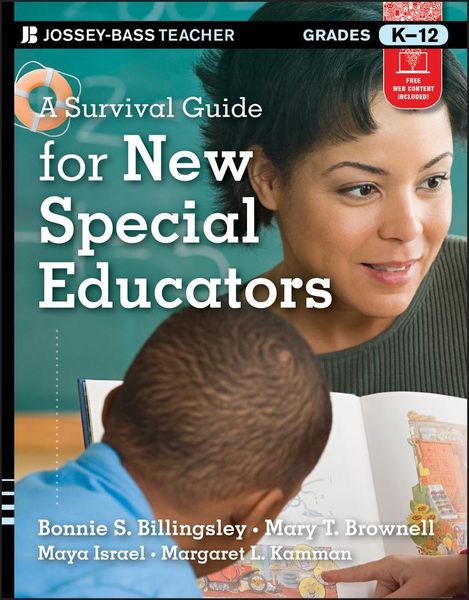
Produktbild: A Survival Guide for New Special Educators

A Survival Guide for New Special Educators

Aus der Reihe J-B Ed: Survival Guides

Fr. 44.90

inkl. gesetzl. MwSt., Versandkostenfrei


Beschreibung

Produktdetails

Einband

Taschenbuch

Erscheinungsdatum

01.04.2013

Verlag

John Wiley & Sons Inc

Seitenzahl

432

Maße (L/B/H)

28/21.6/2.2 cm

Gewicht

989 g

Auflage

1. Auflage

Sprache

Englisch

ISBN

978-1-118-09568-3

Beschreibung

Produktdetails

Einband

Taschenbuch

Erscheinungsdatum

01.04.2013

Verlag

John Wiley & Sons Inc

Seitenzahl

432

Maße (L/B/H)

28/21.6/2.2 cm

Gewicht

989 g

Auflage

1. Auflage

Sprache

Englisch

ISBN

978-1-118-09568-3

Herstelleradresse

Libri GmbH
Europaallee 1
36244 Bad Hersfeld
DE

Email: gpsr@libri.de

Noch keine Bewertungen vorhanden

Verfassen Sie die erste Bewertung zu diesem Artikel

Helfen Sie anderen Kundinnen und Kunden durch Ihre Meinung.

Kundinnen und Kunden meinen

Bewertungen (0)

Die Leseprobe wird geladen.
  • Produktbild: A Survival Guide for New Special Educators
  • The Authors v

    Acknowledgments vii

    Tables, Figures, and Exhibits xvii

    Introduction xxi

    PART ONE: THE BASICS

    Chapter One: Getting the Right Job 3

    An Initial Priority: Find a Good Job Match 3

    Steps in Your Job Search 4

    The Interview Process 5

    Consider the Offer 10

    To Sum Up 10

    What's Next? 10

    Chapter Two: Great Beginnings 11

    Reality 101: What to Expect in the First Years 11

    Your Challenge: Become an Accomplished and Committed Special Educator 13

    Reflect on the Moral Purpose That Guides Your Work 13

    Develop Knowledge about Professional Standards and Ethics 14

    Learn about the Community and Key Policies and Guidelines 15

    Learn More about the Content Standards for Subjects You Teach 16

    Use and Refi ne Your Knowledge about Evidence-Based Practices 17

    Know Your Students and Systematically Monitor Their Learning 17

    Collaborate Effectively with Administrators, Colleagues, and Parents 18

    Protect Instructional Time and Balance Your Responsibilities 18

    Develop Resilience and Manage Stress 18

    Take Initiative for Your Own Professional Learning 20

    Making It Happen: Create a Network of Supports 20

    To Sum Up 25

    What's Next? 25

    Additional Resources 25

    Chapter Three: Working with Others 26

    Be an Energizer 27

    Be an Effective Communicator 27

    Working Through Confl icts 30

    A Great Start with Parents 31

    Ten Actions to Develop Positive Relationships with Parents 32

    A Great Start with Administrators 35

    A Great Start with Your Mentor(s) 38

    A Great Start with Colleagues 42

    Leading Effective Professional Meetings 44

    To Sum Up 46

    What's Next? 46

    Additional Resources 46

    Chapter Four: Special Education Law 47

    Key Laws Related to Students with Disabilities 47

    Education for All Handicapped Children Act 48

    Individuals with Disabilities Education Act 51

    Section 504 56

    Americans with Disabilities Act 57

    Confidentiality 58

    Dealing with Legal Challenges 61

    To Sum Up 63

    What's Next? 63

    Additional Resources 63

    Chapter Five: Developing Quality IEPs 65

    The IEP Document 66

    The IEP Process 66

    Tips for a Great Start with IEPs 66

    Tips for Developing IEP Components 67

    The IEP Meeting 74

    Transition Planning 81

    IEP Summary Forms 83

    Tips for Organizing the IEP Process 83

    Practical Suggestions from Special Educators 85

    To Sum Up 85

    What's Next? 86

    Additional Resources 86

    PART TWO: BECOMING AN ACCOMPLISHED EDUCATOR

    Chapter Six: Organizing and Managing Your Work 89

    Your Many Roles and Responsibilities 90

    Goals and Plans Equal Organizational Success! 92

    Manage Your Time, Manage Your Tasks 96

    Setting Up Your Class for Success 97

    Considerations for Middle and High School Classrooms 98

    The Teacher's Desk 102

    Get Ready for Your First Day of School 104

    Plan for Fun and Knowledge 105

    To Sum Up 110

    What's Next? 110

    Additional Resources 111

    Chapter Seven: Classroom and Behavior Management 112

    Elizabeth Bettini

    Tiered Approach to Providing Positive Behavioral Support 113

    Evaluating the Intervention 136

    To Sum Up 137

    What's Next? 137

    Additional Resources 137

    Chapter Eight: Collaboration and Co-Teaching 139

    Fundamentals of Collaboration 140

    Defining Characteristics for Collaboration 140

    Understanding Collaboration in Varied Service-Delivery Models 140

    Tips for Special Education Teachers in Collaborating for RTI 142

    Collaboration in Inclusive Settings 142

    Small Strategies to Make a Big Impact on Collaboration 146

    Helping General Educators 147

    Co-Teaching 149

    The Co-Teacher Relationship 150

    Characteristics Aiding in Successful Co-Teaching 154

    Barriers and How to Overcome Them 154

    Keeping Collaborative Records 155

    To Sum Up 156

    What's Next? 157

    Additional Resources 157

    Chapter Nine: Supporting Your Students 158

    The Student-Teacher Relationship 159

    Tips for Fostering Positive Student-Teacher Relationships 159

    Motivating Your Students 161

    Advocating for and with Your Students 164

    Culturally Responsive Teaching 166

    Helping Your Students Stay Organized and Learn Responsibility 169

    To Sum Up 171

    What's Next? 171

    Additional Resources 171

    Chapter Ten: Assessment and Knowing Your Students 172

    Your State Standards and the CCSS 173

    Why Test in Relationship to the Standards? 173

    Educational Laws and Assessment 173

    Relationship Between the Laws and Your Assessment Practices 174

    Progress Monitoring and Curriculum-Based Measures 175

    Formal or Standardized Tests 178

    Assessment Accommodations and Adapting Classroom Tests 179

    Alternative Assessments 181

    Feedback and Grading 183

    Assessment Considerations at the High School Level 186

    To Sum Up 188

    What's Next? 189

    Additional Resources 189

    Chapter Eleven: Universal Design for Learning and Technology 190

    Plan Engaging and Accessible Instruction through UDL 192

    The Basics of UDL: Reach and Engage Your Students in Multiple Ways 192

    Three Principles of UDL: Multiple Means of Representation, Action and Expression, and Engagement 193

    General Hints for Implementing UDL 196

    Using Instructional Technologies to Support Students with Disabilities 203

    ATs to Support Students with Disabilities 207

    To Sum Up 210

    What's Next? 210

    Additional Resources 210

    PART THREE: MASTERING EFFECTIVE PRACTICES

    Chapter Twelve: Effective Instructional Practices and Lesson Planning 215

    Planning for Effective Instruction 216

    Using Effective Instruction 223

    To Sum Up 232

    What's Next? 233

    Additional Resources 233

    Chapter Thirteen: Teaching Reading 234

    A Framework for Teaching Reading 235

    Phonological Awareness and Phonics (Basic Decoding) 235

    Decoding Multisyllabic Words and Promoting Morphological Awareness 239

    Vocabulary Instruction 241

    Promoting Fluency at the Rime, Word, and Connected-Text Levels 243

    Promoting Reading Comprehension 245

    Special Considerations for ELLs with Learning Disabilities 248

    Incorporating Technology into Reading Instruction 248

    To Sum Up 250

    What's Next? 251

    Additional Resources 251

    Chapter Fourteen: Teaching Writing 252

    Basic Skills Underlying Profi cient Writing Performance 252

    Becoming an Independent Writer 255

    Special Considerations for ELLs 261

    Using Technology to Support Writing 262

    To Sum Up 263

    What's Next? 263

    Additional Resources 263

    Chapter Fifteen: Teaching Mathematics 264

    What Makes Math So Difficult for So Many Students? 265

    Going Beyond Arithmetic to Algebra 266

    Characteristics of Struggling Learners in Mathematics and General Strategies for Supporting Students 267

    Instructional Math Standards 269

    How Should I Teach Learners Who Have Difficulty Keeping Up with the Curriculum? 271

    Instruction That Supports Students with Disabilities in Mathematics 271

    What Is the Best Way to Integrate CRA into Math Instruction? 274

    Metacognitive Math Strategies 277

    Assessment and Feedback to Inform Mathematics Practice 278

    Formal Assessment and Mathematics 281

    Technology-Enhanced Mathematics Instruction 282

    To Sum Up 284

    What's Next? 284

    Additional Resources 284

    Chapter Sixteen: Teaching Content 285

    What Can You Do to Support Students with Disabilities in Learning Content? 285

    What Specific Things Can You Do to Help Students with Disabilities in the Content Areas? 286

    UDL and Instructional Technologies in Content Learning 292

    Teaching Concepts with Content Enhancements 293

    Teaching Simple Concepts 293

    Complex Concepts 294

    Inquiry-Based Approaches to Teaching and Learning Content 295

    What Is the Relationship Between Inquiry Learning and Problem-, Project-, and Challenge-Based Learning? 299

    To Sum Up 301

    What's Next? 301

    Additional Resources 301

    Chapter Seventeen: Teaching Students with Limited to Pervasive Intellectual Disability 303
    Bree A. Jimenez and Pamela J. Mims

    Who Are Your Students? 304

    What to Teach 304

    Why Teach Beyond Functional Skills to Students with Intellectual Disabilities 304

    Assessments to Guide Curricular Planning 306

    How to Teach 308

    To Sum Up 321

    What's Next? 321

    Additional Resources 321

    PART FOUR: ADDITIONAL CONSIDERATIONS

    Chapter Eighteen: Managing Student Health Needs 325
    Pamela W. Carter

    Individual Health-Care Plans and Emergency Care Plans 326

    Health Conditions and Teacher Tips 326

    Tourette Syndrome (TS) 341

    To Sum Up 343

    Additional Resources 343

    PART FIVE: APPENDIXES

    Appendix A: Definitions and Resources about Disability 345

    Attention Deficit Hyperactivity Disorder (ADHD) 347

    Autism Spectrum Disorders 350

    Deafness and Hearing Loss 353

    Developmental Delay 355

    Emotional Disturbance 356

    Intellectual Disability 361

    Other Health Impairment 362

    Specific Learning Disability 365

    Speech and Language Disorders 367

    Traumatic Brain Injury 369

    Visual Impairment Including Blindness 371

    Appendix B: Key Special Education Cases 373

    Appendix C: Assessment Vocabulary and Concepts 374

    Validity and Reliability 375

    Appendix D: Tips for Preparing for Observations and Evaluations 377

    Appendix E: Bonus Web Content 380

    Notes 383

    Index 400