Gutscheinbedingungen

*Gültig bis 21.06.2026 auf (fast) alles. Ausgeschlossen sind Smartboxen, Zeitschriften, Tickets, Lebensmittel, Gaming-Elektroartikel, Tinte/Toner, Gutscheine, Geschenkkarten, Blumen und Abos | Einlösbar in allen Buchhandlungen von Orell Füssli, Barth Bücher, Buchladen Rapunzel, Schuler Orell Füssli, Stauffacher und ZAP unter Vorweisung des Gutscheins, auf www.orellfüssli.ch durch Eingabe des Gutscheincodes. Beim Service „eBooks verschenken“ und bei eBook-Käufen via eReader nicht einlösbar | Mindesteinkaufswert: Fr. 30.- | Nicht mit anderen Rabatten kumulierbar.

  • Produktbild: Air Pollution
  • Produktbild: Air Pollution

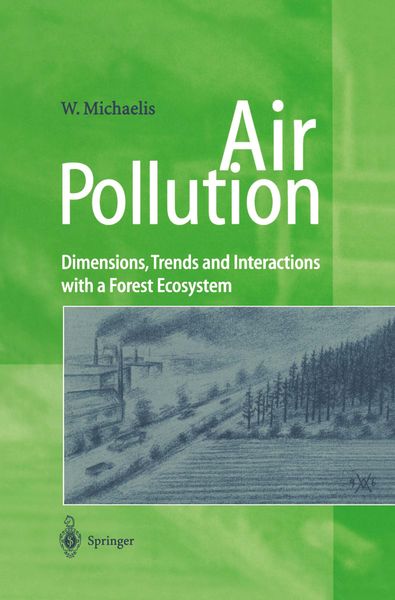
Air Pollution Dimensions, Trends and Interactions with a Forest Ecosystem

Fr. 137.00

inkl. gesetzl. MwSt., Versandkostenfrei


Beschreibung

Produktdetails

Einband

Taschenbuch

Erscheinungsdatum

16.09.2011

Verlag

Springer Berlin

Seitenzahl

178

Maße (L/B/H)

23.5/15.5/1.1 cm

Gewicht

305 g

Auflage

Softcover reprint of the original 1st ed. 1997

Sprache

Englisch

ISBN

978-3-642-64414-6

Beschreibung

Produktdetails

Einband

Taschenbuch

Erscheinungsdatum

16.09.2011

Verlag

Springer Berlin

Seitenzahl

178

Maße (L/B/H)

23.5/15.5/1.1 cm

Gewicht

305 g

Auflage

Softcover reprint of the original 1st ed. 1997

Sprache

Englisch

ISBN

978-3-642-64414-6

Herstelleradresse

Springer-Verlag KG
Sachsenplatz 4-6
1201 Wien
AT

Email: ProductSafety@springernature.com

Kundinnen und Kunden meinen

0 Bewertungen

Informationen zu Bewertungen

Zur Abgabe einer Bewertung ist eine Anmeldung im Konto notwendig. Die Authentizität der Bewertungen wird von uns nicht überprüft. Wir behalten uns vor, Bewertungstexte, die unseren Richtlinien widersprechen, entsprechend zu kürzen oder zu löschen.

Die Bewertungen sind nach Format, Anzahl Sterne und Datum sortiert.

Verfassen Sie die erste Bewertung zu diesem Artikel

Helfen Sie anderen Kund*innen durch Ihre Meinung

Kundinnen und Kunden meinen

0 Bewertungen filtern

  • Produktbild: Air Pollution
  • Produktbild: Air Pollution
  • 1 Introduction.- References.- 2 The Investigation Site.- References.- 3 Research Concept and Coordination.- References.- 4 General Outline of the Measuring Station.- References.- 5 Experimental Procedures.- 5.1. Sampling Techniques.- 5.1.1 Rainwater Sampler.- 5.1.2 Throughfall Measurements.- 5.1.3 Sampling of Size-Fractionated Particulates.- 5.1.4 Gas Measurements.- 5.1.5 Sampling of Soil Solution and Plant Components.- 5.2 Analytical Techniques.- 5.2.1 General Aspects.- 5.2.2 Sample Preparation for Trace Element Analysis.- 5.2.3 Total-Reflection X-Ray Fluorescence (TXRF).- 5.2.4 Inductively Coupled Plasma Optical Emission Spectroscopy (ICP-OES).- 5.2.5 Ion Chromatography and pH Measurements.- 5.2.6 Gas Analysis.- References.- 6 Methodology for the Determination of Atmospheric Deposition and of Fluxes within the Ecosystem Compartments.- 6.1 Basic Considerations on Dry Deposition.- 6.2 Aerosol Measurements.- 6.3 Turbulent Fluxes in the Boundary Layer.- 6.4 Fluxes in the Stand and the Seepage Water.- References.- 7 Trace Elements in Rainwater: Concentrations and Wet Deposition.- 7.1 Concentrations of Dissolved and Particulate Constituents.- 7.2 Wet Deposition.- 7.2.1 Meteorological Aspects.- 7.2.2 Long-Term Mean Values.- 7.2.3 Seasonal Variations.- 7.2.4 Annual Means and Long-Term Trends.- References.- 8 Deposition of Anions and Cations Via Precipitation.- 8.1 Meteorology and Source-Receptor Relationship.- 8.2 Deposition of SO42-, NO3-, Cl-, F- and NH4+: Mean Values, Temporal Variations and Long-Term Trends.- 8.3 pH Values and H+-Ion Deposition.- References.- 9 Trace Elements in Size-Fractionated Particulates: Concentrations and Dry Deposition into a Forest Ecosystem.- 9.1 Differential Trace Element Concentrations.- 9.2 Dry Deposition of Trace Elements.- 9.2.1 Meteorological Aspects.- 9.2.2 Long-Term Average Values.- 9.2.3 Seasonal Variations.- 9.2.4 Annual Mean Values and Long-Term Trends.- References.- 10 Total Deposition of Trace Elements.- References.- 11 Element Supply and Element Fluxes in the Forest Ecosystem Compartments.- 11.1 Element Supply in the Mineral Soil and the Humus Layer.- 11.2 Biomass and Element Content in the Tree Compartments.- 11.3 Balance of Element Fluxes.- References.- 12 Concentrations and Deposition of Gaseous Pollutants: SO2, NO2, NO, NH3 and O3.- 12.1 Gas Concentrations and Weather Conditions.- 12.2 Mean Values, Temporal Variations and Long-Term Trends of the Gas Concentrations.- 12.3 Nocturnal Ozone Maxima.- 12.4 Dry Deposition: Mean Values, Temporal Variations and Long-Term Trends.- 12.5 Deposition Velocities.- References.- 13 Impact of Gaseous Pollutants on the Forest Ecosystem.- 13.1 Interrelations Between the Concentrations of Pollutants and Carbon Dioxide.- 13.2 Associated Vertical Fluxes.- References.- 14 Summary and Conclusions.- References.