• Produktbild: Temperature Regulation in Humans and Other Mammals
  • Produktbild: Temperature Regulation in Humans and Other Mammals

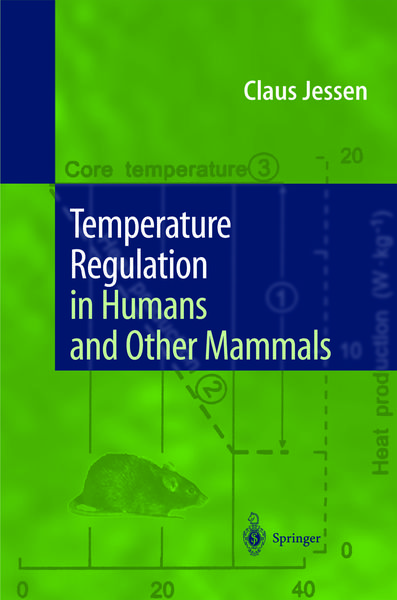
Temperature Regulation in Humans and Other Mammals

Fr. 72.90

inkl. gesetzl. MwSt., Versandkostenfrei


Beschreibung

Produktdetails

Einband

Taschenbuch

Erscheinungsdatum

06.10.2011

Verlag

Springer Berlin

Seitenzahl

194

Maße (L/B/H)

23.5/15.5/1.2 cm

Gewicht

324 g

Auflage

Softcover reprint of the original 1st ed. 2001

Sprache

Englisch

ISBN

978-3-642-63984-5

Beschreibung

Produktdetails

Einband

Taschenbuch

Erscheinungsdatum

06.10.2011

Verlag

Springer Berlin

Seitenzahl

194

Maße (L/B/H)

23.5/15.5/1.2 cm

Gewicht

324 g

Auflage

Softcover reprint of the original 1st ed. 2001

Sprache

Englisch

ISBN

978-3-642-63984-5

Herstelleradresse

Springer-Verlag KG
Sachsenplatz 4-6
1201 Wien
AT

Email: GPSR Kontakt

Noch keine Bewertungen vorhanden

Verfassen Sie die erste Bewertung zu diesem Artikel

Helfen Sie anderen Kundinnen und Kunden durch Ihre Meinung.

Kundinnen und Kunden meinen

Bewertungen (0)

  • Produktbild: Temperature Regulation in Humans and Other Mammals
  • Produktbild: Temperature Regulation in Humans and Other Mammals
  • 1 Introduction.- 1.1 Poikilotherms and Homeotherms.- 1.2 The Capacity of the System.- 1.3 Homeothermy in Terms of Control Theory.- 1.4 A First Approach to the Controller.- 2 The Skin as a Source of Temperature Signals.- 3 The Inner Body as a Source of Temperature Signals.- 3.1 Identifying Single Feedback Loops.- 3.2 Hypothalamus.- 3.3 Spinal Cord.- 3.4 Other Thermosensitive Sites of the Body Core.- 4 The Neuronal Basis of Temperature Reception.- 4.1 Skin Thermoreceptors.- 4.1.1 Afferent Processing of Skin Temperature Signals.- 4.2 Core Temperature Sensors Outside the Central Nervous System.- 4.3 Thermosensitive Neurons in the Central Nervous System.- 4.3.1 Neuronal Temperature Transduction.- 4.3.2 Sensitivity to Local and Remote Temperatures.- 5 Heat Production and Heat Balance of the Body.- 5.1 The Heat Balance Equation.- 5.2 Body Mass, Heat Exchange and Metabolic Rate.- 5.3 Metabolic Heat Production vs. Metabolic Rate.- 5.4 Basal Heat Production vs. Resting Heat Production.- 5.5 Shivering.- 5.6 Non-Shivering Thermogenesis in Brown Adipose Tissue.- 5.7 Cold-Induced Non-Shivering Thermogenesis in Other Tissues.- 6 Physics of Heat Exchange with the Environment.- 6.1 Conduction.- 6.2 Convection.- 6.2.1 Natural Convection.- 6.2.2 Forced Convection.- 6.2.3 The Heat-Transferring Medium.- 6.3 Radiation.- 6.3.1 Long-Wave Infrared.- 6.3.2 Solar Radiation.- 6.4 Evaporation.- 6.4.1 Sweating.- 6.4.2 Panting.- 7 External and Internal Insulation.- 7.1 External Insulation: Fur.- 7.1.1 Fur and Solar Radiation.- 7.1.2 Fur and Exercise.- 7.2 Internal Insulation: Fat and the Principle of Core and Shell.- 7.2.1 Core Temperature vs. Mean Body Temperature.- 7.2.2 Internal Conductance.- 7.3 Total Conductance.- 8 The Temperature Field of the Body Core.- 8.1 Passive Temperature Deviations.- 8.1.1 Where to Measure a “Representative” Body Core Temperature.- 8.2 Regulated Temperature Deviations.- 8.2.1 Selective Brain Cooling.- 8.2.2 Testes Cooling.- 9 Behavioural Control of Heat Exchange with the Environment.- 9.1 Locomotion.- 9.2 Orientation and Posture.- 9.3 Wallowing and Saliva Spreading.- 9.4 Social Behaviour.- 9.5 Operant Behaviour.- 10 Autonomic Control of Dry Heat Loss from the Skin.- 10.1 Pilomotion.- 10.2 Peripheral Blood Flow.- 10.2.1 Skin Blood Flow and Skin Temperature.- 10.2.2 Anatomy of Peripheral Circulation.- 10.2.3 The Central Drive.- 10.2.4 Local Effects of Skin Temperature.- 10.2.5 Specialized Surface Regions.- 11 Autonomic Control of Evaporative Heat Loss.- 11.1 Sweating.- 11.1.1 Types of Sweat Glands and Modes of Transmission.- 11.1.2 Sweat Rate: Central Drive and Local Effects.- 11.2 Panting.- 11.3 Sweating vs. Panting.- 12 Interaction of Various Body Temperatures in Control of Thermoregulatory Responses.- 12.1 Core Temperature as a Compound Input.- 12.1.1 Selective Brain Cooling: a Special Pattern of Core Temperatures.- 12.1.2 Natural Spinal Cord Warming.- 12.2 Skin and Core Temperatures.- 12.2.1 Autonomic Effector Mechanisms.- 12.2.2 Behavioural Responses.- 12.3 The Regulated Variable.- 13 The Central Interface Between Afferent Temperature Signals and Efferent Drives.- 13.1 The Controller: Concepts and Facts.- 13.2. Neuronal Models.- 13.3 The Set-Point Problem.- 14 Short-Term Temperature Regulation in Various Environments: Inputs and Responses.- 14.1 The Medium Range.- 14.1.1 The Thermoneutral Zone.- 14.2 Short-Term Exposure to Cold.- 14.3 Short-Term Exposure to Heat.- 15 Exercise in the Heat: the Ultimate Challenge.- 15.1 Cardiovascular System.- 15.2 Body Fluid Balance.- 16 Changes of Set-Point.- 16.1 Ovarian Cycle and Circadian Rhythm, But Not Sleep.- 16.2 Fever.- 16.2.1 Pyrogens and Fever.- 17 Adaptation to Cold.- 17.1 Smaller Animals.- 17.1.1 Hibernation.- 17.1.2 Daily Torpor.- 17.1.3 Everybody Starts Small.- 17.2 Larger Animals.- 17.3 Humans.- 18 Adaptation to Heat.- 18.1 Smaller Animals.- 18.2 Larger Animals.- 18.3 Humans.- 19 Pathophysiology of Temperature Regulation.- 19.1 Hyperthermia and Heat Stroke.- 19.2 Hypothermia.- References.