Gutscheinbedingungen

*Gültig bis 20.07.2026 auf alle Bücher. Ausgeschlossen sind Zeitschriften, Prozentbücher und Abos | Einlösbar in allen Buchhandlungen von Orell Füssli, Barth Bücher, Buchladen Rapunzel, Papeterie Köhler, Schuler Orell Füssli, Stauffacher und ZAP unter Vorweisung des Gutscheins, auf www.orellfüssli.ch durch Eingabe des Gutscheincodes. Beim Service „eBooks verschenken“ und bei eBook-Käufen via eReader nicht einlösbar | Mindesteinkaufswert: Fr. 30.- | Nicht mit anderen Rabatten kumulierbar.

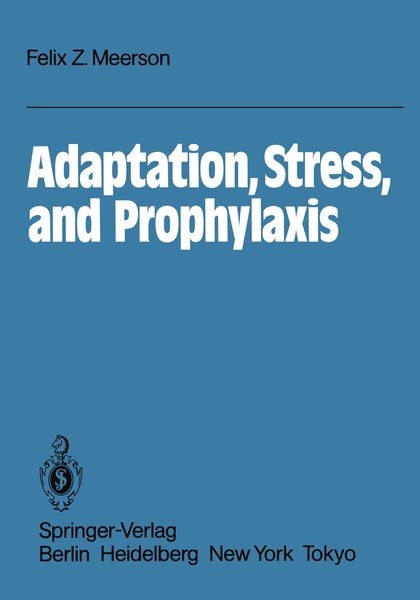
Produktbild: Adaptation, Stress, and Prophylaxis

Adaptation, Stress, and Prophylaxis

Fr. 137.00

inkl. gesetzl. MwSt., Versandkostenfrei


Beschreibung

Produktdetails

Einband

Taschenbuch

Erscheinungsdatum

12.10.2011

Verlag

Springer Berlin

Seitenzahl

330

Maße (L/B/H)

24.4/17/1.9 cm

Gewicht

594 g

Auflage

Softcover reprint of the original 1st ed. 1984

Übersetzt von

J. Shapiro

Sprache

Englisch

ISBN

978-3-642-61730-0

Beschreibung

Produktdetails

Einband

Taschenbuch

Erscheinungsdatum

12.10.2011

Verlag

Springer Berlin

Seitenzahl

330

Maße (L/B/H)

24.4/17/1.9 cm

Gewicht

594 g

Auflage

Softcover reprint of the original 1st ed. 1984

Übersetzt von

J. Shapiro

Sprache

Englisch

ISBN

978-3-642-61730-0

Herstelleradresse

Springer-Verlag GmbH
Tiergartenstr. 17
69121 Heidelberg
DE

Email: GPSR Kontakt

Noch keine Bewertungen vorhanden

Verfassen Sie die erste Bewertung zu diesem Artikel

Helfen Sie anderen Kundinnen und Kunden durch Ihre Meinung.

Kundinnen und Kunden meinen

Bewertungen (0)

  • Produktbild: Adaptation, Stress, and Prophylaxis
  • 1 - Basic Regularities of Phenotypic Adaptation.- Systemic Structural Trace: The Basis of Adaptation.- Interrelation Between Function and Genetic Apparatus: The Basis for Forming the Systemic Structural Trace.- Interrelationship of Cell Structures: A Parameter Determining the Functional Possibilities of the System Responsible for Adaptation.- Reversibility of Adaptation: Physiologic and Pathologic Deadaptation.- 2 - Role of Stress Reaction in Urgent and Long-term Adaptation.- Stress Mobilization and Redistribution of Resources.- Stress-enhanced Resistance to Hypoxia.- Lipotropic Effect of Stress in Biomembranes.- Antioxidant Effect of Glucocorticoids and the Influence of Synthetic Antioxidants on Urgent Adaptation to Physical Loads.- Post-stress Activation of Nucleic Acid and Protein Synthesis and Its Role in Forming Long-term Adaptation.- General Mechanism and Principal Stages of Phenotypic Adaptation.- 3 - Development of Adaptation to Hypoxia and Its Preventive Use.- Systemic Structural Trace and Principal Stages of Adaptation to Hypoxia.- 4 - Compensation, a Form of Adaptational Response of an Injured Organism.- 5 - Systemic Structural Trace: Foundation of Memory and Higher Adaptational Responses.- Relationship Between Memory and Adaptation.- Role of Emotional Stress in Forming Higher Adaptational Responses. Unity of Dynamics in Forming Conditioned Reflexes and Other Adaptational Responses.- Main Stages of the Development of Conditioned Reflex. Differences and Common Features of Higher and Simple Adaptational Responses.- Effect of Adaptation to Hypoxia on the Formation of Temporary Connections. Behavior and Brain Resistance to Harmful Factors.- 6 - Stress and Stress Damage.- Damaging Stress Situation and Pathogenesis of Stress Stomach Ulcers.- Pathogenesis of Stress and Ischemic Injuries of the Heart.- Stress: A Basic Etiologic Factor of Noninfectious Human Diseases. Its Role in the Origin of Ischemic Heart Disease and Tumors.- 7 - Adaptation to Stress Situations and Systems for Natural Prevention of Stress-induced and Ischemic Injuries.- Activation of the GABA-ergic Inhibitory System Under Stress as a Natural Mechanism for Preventing Stress-induced and Ischemic Injuries.- Blockade of Physiologic Effects of Calcium: Its Role in Preventing Ischemic and Stress Damages.- Role of the Adenine Nucleotide System and Its Product Adenosine in Preventing Energy Shortage and Limiting Adrenergic Effects.- Activation of the Prostaglandin System: A Factor for Preventing Stress and Ischemic Damages.- 8 - Antioxidant Factors in the Organism: A System of Natural Prevention of Stress-induced and Ischemic Injuries.- Antioxidant Systems and Action Mechanisms of Exogenous Antioxidants.- Antioxidant Protection of the Heart Against Hypoxia, Ischemia, and Reoxygenation.- Conclusion.- References.