Gutscheinbedingungen

*Gültig bis 05.07.2026 auf (fast) alles. Ausgeschlossen sind Smartboxen, Zeitschriften, Tickets, Lebensmittel, Gaming-Elektroartikel, Tinte/Toner, Gutscheine, Geschenkkarten, Blumen und Abos | Einlösbar in allen Buchhandlungen von Orell Füssli, Barth Bücher, Buchladen Rapunzel, Papeterie Köhler, Schuler Orell Füssli, Stauffacher und ZAP unter Vorweisung des Gutscheins, auf www.orellfüssli.ch durch Eingabe des Gutscheincodes. Beim Service „eBooks verschenken“ und bei eBook-Käufen via eReader nicht einlösbar | Mindesteinkaufswert: Fr. 30.- | Nicht mit anderen Rabatten kumulierbar.

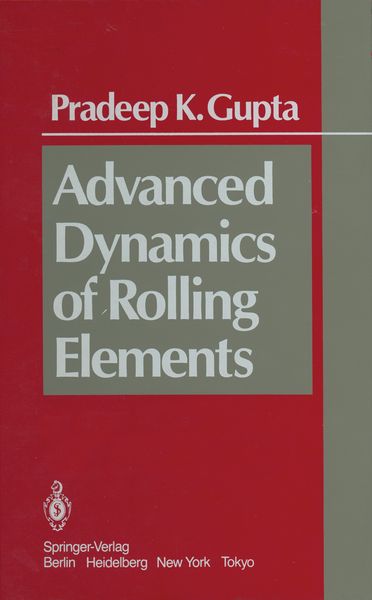
  • Produktbild: Advanced Dynamics of Rolling Elements
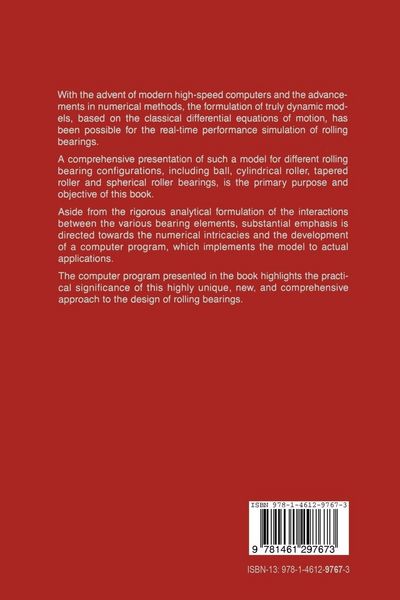
  • Produktbild: Advanced Dynamics of Rolling Elements

Advanced Dynamics of Rolling Elements

Fr. 137.00

inkl. gesetzl. MwSt., Versandkostenfrei


Beschreibung

Produktdetails

Einband

Taschenbuch

Erscheinungsdatum

08.10.2011

Verlag

Springer Us

Seitenzahl

296

Maße (L/B/H)

23.5/15.5/1.7 cm

Gewicht

476 g

Auflage

Softcover reprint of the original 1st ed. 1984

Sprache

Englisch

ISBN

978-1-4612-9767-3

Beschreibung

Produktdetails

Einband

Taschenbuch

Erscheinungsdatum

08.10.2011

Verlag

Springer Us

Seitenzahl

296

Maße (L/B/H)

23.5/15.5/1.7 cm

Gewicht

476 g

Auflage

Softcover reprint of the original 1st ed. 1984

Sprache

Englisch

ISBN

978-1-4612-9767-3

Herstelleradresse

Springer-Verlag KG
Sachsenplatz 4-6
1201 Wien
AT

Email: GPSR Kontakt

Noch keine Bewertungen vorhanden

Verfassen Sie die erste Bewertung zu diesem Artikel

Helfen Sie anderen Kundinnen und Kunden durch Ihre Meinung.

Kundinnen und Kunden meinen

Bewertungen (0)

  • Produktbild: Advanced Dynamics of Rolling Elements
  • Produktbild: Advanced Dynamics of Rolling Elements
  • 1. Introduction.- 1.1 Rolling Bearing Elements and Basic Interactions.- 1.2 Types of Analytical Models.- 1.2.1 Quasi-Static Model.- 1.2.2 Dynamic Model.- 1.3 Nomenclature.- 1.3.1 Coordinate Frames.- 1.3.2 Vector Transformations.- 1.3.3 List of Symbols.- 1.4 Summary.- 2. Equations of Motion and Coordinate Transformations.- 2.1 Coordinate Frames and Transformations.- 2.2 Equations of Motion.- 2.2.1 Mass Center Motion.- 2.2.2 Rotational Motion.- 2.3 Moving Coordinate Frames.- 2.4 General Motion Simulation.- 2.5 Summary.- 3. Geometric Interactions in Rolling Bearings.- 3.1 Rolling Element/Race Interactions.- 3.1.1 Ball/Race Interactions.- 3.1.2 Roller/Race Interactions.- 3.1.3 Roller/Race-Flange Interactions.- 3.2 Rolling Element/Cage Interactions.- 3.2.1 Geometric and Kinematic Considerations.- 3.2.2 Hydrodynamic Models.- 3.2.3 Dry Contact Models.- 3.3 Race/Cage Interactions.- 3.3.1 Geometric and Kinematic Considerations.- 3.3.2 Hydrodynamic Models.- 3.3.3 Dry Contact Models.- 3.4 Interactions Between Rolling Elements.- 3.4.1 Ball Bearings.- 3.4.2 Roller Bearings.- 3.5 External System Interactions and Constraints.- 3.5.l Equilibrium Constraint for Ball Bearings.- 3.5.2 Equilibrium Constraint for Roller Bearings.- 3.6 Summary.- 4. Elastohydrodynamic Lubrication.- 4.1 General Consideration in Lubricant Traction Modeling.- 4.1.1 Rolling Element/Race Contact Zone.- 4.1.2 Lubricant Rheology.- 4.1.3 Typical Traction-Slip Behavior.- 4.2 An E1astohydrodynamic Traction Model.- 4.2.1 Film Thickness Computation.- 4.2.2 Computation of Traction.- 4.2.3 Estimation of Lubricant Constitutive Equation.- 4.3 Traction Behavior of Some Lubricants.- 4.3.1 U.S. Specification MIL-L-23699.- 4.3.2 U.S. Specification MIL-L-7808.- 4.3.3 Traction Fluid Santotrac 30.- 4.3.4 Polyphenyl Ether.- 4.3.5 SAE-30-Type Oil.- 4.4 Summary.- 5. Churning and Drag Losses.- 5.l Estimation of Drag Forces.- 5.2 Estimation of Churning Moments.- 5.2.1 Loss on the Cylindrical Surface.- 5.2.2 Loss on the End Surface.- 5.3 Effective Lubricant Viscosity and Density.- 5.4 Summary.- 6. Numerical Integration of the Equations of Motion.- 6.1 Dimensional Organization.- 6.2 Explicit Algorithms.- 6.2.1 Step-Changing Criterion.- 6.3 Implicit Algorithms.- 6.3.1 Predictor Formula.- 6.3.2 Corrector Formula.- 6.3.3 Step-Changing Criterion.- 6.3.4 Change of Order.- 6.3.5 Computational Considerations.- 6.4 Selection of a Method.- 6.5 External Constraints.- 6.5.1 Equilibrium Constraints.- 6.5.2 Fictitious Damping.- 6.6 Summary.- 7. The Computer Program ADORE.- 7.1 Program Overview.- 7.2 Structure of ADORE.- 7.3 ADORE Capabilities.- 7.3.1 Bearing Types.- 7.3.2 Types of Cages.- 7.3.3 Operating Conditions.- 7.3.4 External Constraints.- 7.3.5 Radial Preloads.- 7.3.6 Material Properties.- 7.3.7 Lubricant Traction.- 7.3.8 Churning and Drag.- 7.3.9 Roller Skew.- 7.3.10 Rolling Element Skid.- 7.3.11 Cage Instability.- 7.3.12 Bearing Power Loss.- 7.3.13 Wear.- 7.3.14 Geometric Imperfections.- 7.3.15 Bearing Noise.- 7.3.16 Bearing Life for Arbitrary Load and Speed Cycles.- 7.3.17 Flexibility in Units.- 7.3.18 Graphic Output.- 7.3.19 Integrating Algorithms.- 7.3.20 Restart Capabilities.- 7.4 Input/Output Data.- 7.4.1 Input Data.- 7.4.2 Print Output.- 7.4.3 Plot Output.- 7.4.4 User-Programmable Subroutines.- 7.4.5 Data Management in ADORE.- 7.5 Computer Resource Requirement.- 7.6 Summary.- 8. Some Dynamic Performance Simulations.- 8.1 Numerical Considerations.- 8.2 Vibrational Characteristics.- 8.2.1 Cylindrical Roller Bearings.- 8.2.2 Ball Bearings.- 8.3 General Ball Motion and Skid.- 8.4 Cage Stability.- 8.5 Roller and Cage Motion in Cylindrical Roller Bearings.- 8.5.1 Roller Misalignment and Skew.- 8.5.2 Time-Varying Loads and Speeds.- 8.6 Summary.- 9. Experimental Validation of ADORE.- 9.1 Ball Motion and Skid.- 9.2 Cage Motion.- 9.2.1 Cage Mass Center Orbit.- 9.2.2 Whirl Velocities.- 9.2.3 Coning Motion of Cage.- 9.3 Summary.- 10. Guidelines for Rolling Bearing Design.- 10.1 System Overview.- 10.2 Rotor-Bearing System Interaction.- 10.3 ADORE: A Design and Performance Diagnosis Tool.- 10.4 Summary.- Appendix I: Hertz Point-Contact Solutions.- Appendix II: Shrink Fit and Thermal Expansion of Races.- Appendix III: Fatigue Life Computation.- Appendix IV: Source Listing of ADORE.- Appendix V: Typical Example.- References.- Author Index.