Gutscheinbedingungen

*Gültig bis 05.07.2026 auf (fast) alles. Ausgeschlossen sind Smartboxen, Zeitschriften, Tickets, Lebensmittel, Gaming-Elektroartikel, Tinte/Toner, Gutscheine, Geschenkkarten, Blumen und Abos | Einlösbar in allen Buchhandlungen von Orell Füssli, Barth Bücher, Buchladen Rapunzel, Papeterie Köhler, Schuler Orell Füssli, Stauffacher und ZAP unter Vorweisung des Gutscheins, auf www.orellfüssli.ch durch Eingabe des Gutscheincodes. Beim Service „eBooks verschenken“ und bei eBook-Käufen via eReader nicht einlösbar | Mindesteinkaufswert: Fr. 30.- | Nicht mit anderen Rabatten kumulierbar.

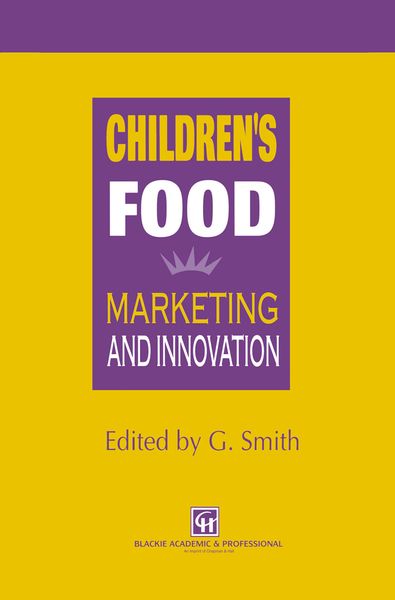
  • Produktbild: Children’s Food
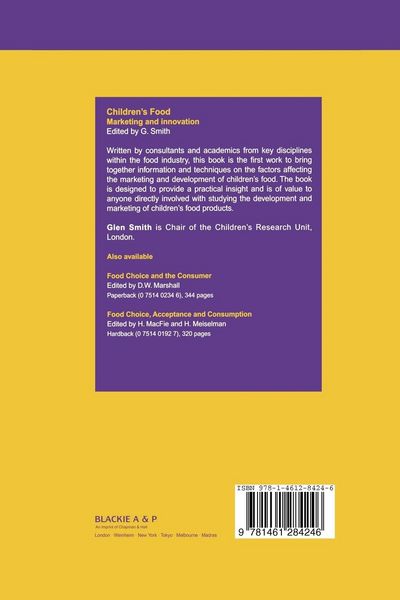
  • Produktbild: Children’s Food

Children’s Food Marketing and innovation

Fr. 191.00

inkl. gesetzl. MwSt., Versandkostenfrei


Beschreibung

Produktdetails

Einband

Taschenbuch

Erscheinungsdatum

28.09.2011

Verlag

Springer Us

Seitenzahl

258

Maße (L/B/H)

23.5/15.5/1.6 cm

Gewicht

423 g

Auflage

Softcover reprint of the original 1st ed. 1997

Sprache

Englisch

ISBN

978-1-4612-8424-6

Beschreibung

Produktdetails

Einband

Taschenbuch

Erscheinungsdatum

28.09.2011

Verlag

Springer Us

Seitenzahl

258

Maße (L/B/H)

23.5/15.5/1.6 cm

Gewicht

423 g

Auflage

Softcover reprint of the original 1st ed. 1997

Sprache

Englisch

ISBN

978-1-4612-8424-6

Herstelleradresse

Springer-Verlag KG
Sachsenplatz 4-6
1201 Wien
AT

Email: GPSR Kontakt

Noch keine Bewertungen vorhanden

Verfassen Sie die erste Bewertung zu diesem Artikel

Helfen Sie anderen Kundinnen und Kunden durch Ihre Meinung.

Kundinnen und Kunden meinen

Bewertungen (0)

  • Produktbild: Children’s Food
  • Produktbild: Children’s Food
  • 1 Influences on food choice within the family.- 1.1 Introduction.- 1.2 Why food is so significant.- 1.3 Personal factors in children’s food choice.- 1.4 Social factors in children’s food choices.- 1.5 Concerns about children’s eating.- 1.6 The processes of food choice.- 1.7 Recent research into family food choice.- 1.8 Implications of the research.- 1.9 How advertising can fit into the food choice process.- 1.10 Conclusion.- References.- 2 How to make effective advertising aimed at children.- 2.1 Introduction.- 2.2 Understanding the audience better.- 2.3 Ages and stages.- 2.4 Advertising to children.- 2.5 Enduring themes.- 2.6 Executional elements.- 2.7 Deadly sins.- 2.8 Conclusions.- 3 Starting the day right!.- 3.1 Introduction.- 3.2 Who eats breakfast?.- 3.3 Break the fast!.- 3.4 Compromising diet quality.- 3.5 Breakfast and health status.- 3.6 Mental, academic and physical performance.- 3.7 Does it matter what we eat?.- 3.8 Can breakfast prevent nutritional problems?.- 3.9 Can the breakfast habit prevent future illness?.- 3.10 Start the day right!.- References.- 4 Why tastes change.- 4.1 Introduction.- 4.2 Key changes in society, family and food.- 4.3 The direct influence of children on food.- 4.4 Model for change in children.- 4.5 Conclusion.- Reference.- 5 Children’s nutrition: drivers for change.- 5.1 Introduction.- 5.2 What are children eating today?.- 5.3 Health issues for children’s diets.- 5.4 The role of fat in children’s diets.- 5.5 Carbohydrates: starches and sugars.- 5.6 Fibre.- 5.7 Eating patterns and the nutritional role of snack foods.- 5.8 Vegetable and fruit consumption.- 5.9 The outlook for the future and its product development implications.- References.- 6 The politics of advertising to children.- 6.1 Introduction.- 6.2 Research, publicpolicy and politics.- 6.3 Advertising: the front line.- 6.4 Gullibility.- 6.5 Advertising as education.- 6.6 ‘Pester power’ and parental responsibilities.- 6.7 The Big Hijack: the role of government.- 6.8 European political perspectives.- 6.9 Advertising standards control.- Appendix A: The ITC Code of Advertising Standards and Practice.- Appendix B: Advertising Standards Authority; the British Codes of Advertising and Sales Promotion (excerpt).- References.- 7 How packaging works with children.- 7.1 Introduction.- 7.2 The role of packaging.- 7.3 Designing packaging to appeal to 6–9-year-olds.- 7.4 Creating packaging to last.- 7.5 Older children.- 8 How much does food and drink advertising influence children’s diet?.- 8.1 Introduction.- 8.2 The anti-advertising case.- 8.3 The advertisers’ case.- 8.4 Influences on children’s food choices.- 8.5 Children and food advertising.- 8.6 Discussion.- References.- 9 Children’s views on food and nutrition: a pan-European study.- 9.1 Chairman’s introduction.- 9.2 Background and research objectives.- 9.3 Methodology.- 9.4 Executive summary.- 9.5 Comparisons between countries: current eating and drinking patterns.- 9.6 Comparisons between countries: children’s views on nutrition and health.- 9.7 Comparisons between countries: learning about food and nutrition.- 9.8 Comparisons between countries: food safety and hygiene.- 9.9 France: current eating and drinking patterns.- 9.10 France: children’s views on nutrition and health.- 9.11 France: learning about food and nutrition.- 9.12 France: food safety and hygiene.- 9.13 Germany: current eating and drinking patterns.- 9.14 Germany: children’s views on nutrition and health.- 9.15 Germany: learning about food and nutrition.- 9.16 Germany: food safety and hygiene.- 9.17Italy: current eating and drinking patterns.- 9.18 Italy: children’s views on nutrition and health.- 9.19 Italy: learning about food and nutrition.- 9.20 Italy: food safety and hygiene.- 9.21 UK: current eating and drinking patterns.- 9.22 Italy: children’s views on nutrition and health.- 9.23 Italy: learning about food and nutrition.- 9.24 UK: food safety and hygiene.- 9.25 Technical appendix.- 9.26 Standard questionnaire.- 10 International influences on children’s food and drink.- 10.1 Introduction.- 10.2 The influences on children’s food and drink habits.- 10.3 Peer pressure and its origins.- 10.4 Promoting cultural awareness: Britain and India.- 10.5 Conclusion.- References.