Gutscheinbedingungen

*Gültig bis 05.07.2026 auf (fast) alles. Ausgeschlossen sind Smartboxen, Zeitschriften, Tickets, Lebensmittel, Gaming-Elektroartikel, Tinte/Toner, Gutscheine, Geschenkkarten, Blumen und Abos | Einlösbar in allen Buchhandlungen von Orell Füssli, Barth Bücher, Buchladen Rapunzel, Papeterie Köhler, Schuler Orell Füssli, Stauffacher und ZAP unter Vorweisung des Gutscheins, auf www.orellfüssli.ch durch Eingabe des Gutscheincodes. Beim Service „eBooks verschenken“ und bei eBook-Käufen via eReader nicht einlösbar | Mindesteinkaufswert: Fr. 30.- | Nicht mit anderen Rabatten kumulierbar.

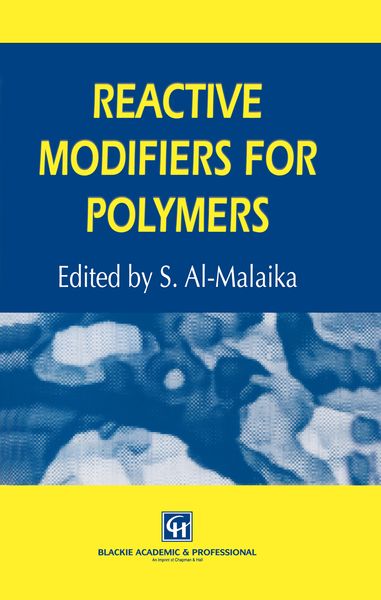
  • Produktbild: Reactive Modifiers for Polymers
  • Produktbild: Reactive Modifiers for Polymers

Reactive Modifiers for Polymers

Fr. 264.00

inkl. gesetzl. MwSt., Versandkostenfrei


Beschreibung

Produktdetails

Einband

Taschenbuch

Erscheinungsdatum

28.09.2011

Herausgeber

S. Al-Malaika

Verlag

Springer Netherland

Seitenzahl

400

Maße (L/B/H)

23.5/15.5/2.3 cm

Gewicht

634 g

Auflage

Softcover reprint of the original 1st ed. 1997

Sprache

Englisch

ISBN

978-94-010-7148-2

Beschreibung

Produktdetails

Einband

Taschenbuch

Erscheinungsdatum

28.09.2011

Herausgeber

S. Al-Malaika

Verlag

Springer Netherland

Seitenzahl

400

Maße (L/B/H)

23.5/15.5/2.3 cm

Gewicht

634 g

Auflage

Softcover reprint of the original 1st ed. 1997

Sprache

Englisch

ISBN

978-94-010-7148-2

Herstelleradresse

Springer-Verlag KG
Sachsenplatz 4-6
1201 Wien
AT

Email: GPSR Kontakt

Noch keine Bewertungen vorhanden

Verfassen Sie die erste Bewertung zu diesem Artikel

Helfen Sie anderen Kundinnen und Kunden durch Ihre Meinung.

Kundinnen und Kunden meinen

Bewertungen (0)

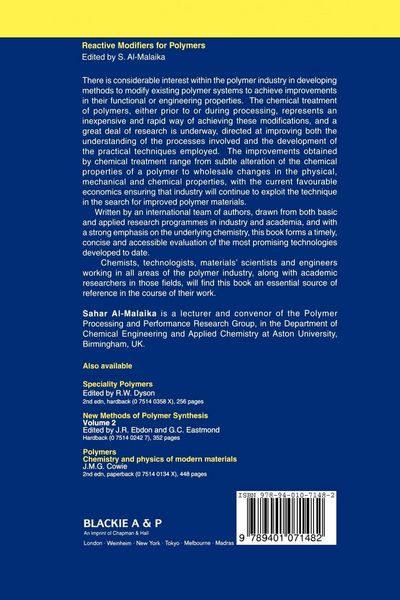
  • Produktbild: Reactive Modifiers for Polymers
  • Produktbild: Reactive Modifiers for Polymers
  • 1 Free-radical grafting of monomers onto polymers by reactive extrusion: principles and applications.- 1.1 Introduction.- 1.2 Free-radical grafting: an overall mechanistic view.- 1.3 Melt free-radical grafting: particular features.- 1.4 Challenges facing melt free-radical grafting.- 1.5 Recent advances in melt free-radical grafting.- 1.6 Concluding remarks.- Appendix l.A.- References.- 2 Modification of polypropylene by organic peroxides.- 2.1 Introduction.- 2.2 Background.- 2.3 Modifications of PP by organic peroxides.- 2.4 Future trends.- Acknowledgements.- Appendix 2.A.- 2.A.1 List of abbreviations.- References.- 3 Blends of polyamides and maleic-anhydride- containing polymers: interfacial chemistry and properties.- 3.1 Introduction.- 3.2 Interdependence of chemistry, rheology and morphology-interface.- 3.3 Relationships between morphology-interface and blend properties.- 3.4 Overall model and future trends.- Appendix 3.A.- 3.A.1 List of abbreviations.- References.- 4 Modification of polymer melts by oxazolines and their use for interfacial coupling reactions with other functional polymers.- 4.1 Introduction.- 4.2 Preparation of oxazoline-functionalized polymers.- 4.3 Interfacial reactions with other functional polymers.- 4.4 Modification of polymer melts by bis-2-oxazolines.- 4.5 Conclusions.- 4.6 Future trends.- Appendix 4.A.- 4.A.1 List of abbreviations.- References.- 5 Moisture cross-linkable silane-modified polyolefins.- 5.1 Introduction.- 5.2 Processes for cross-linking polyolefins.- 5.3 The chemistry of silane cross-linking.- 5.4 Silane-grafting processes.- 5.5 Silane copolymerisation processes.- 5.6 Structure and general properties of silane cross-linked polyolefins.- 5.7 Applications of silane cross-linked polyolefins.- 5.8 Other silane cross-linking approaches.- 5.9 Concluding remarks and future trends.- Appendix 5.A.- 5.A.1 List of abbreviations.- References.- 6 Reactive antioxidants for polymers.- 6.1 Introduction.- 6.2 Antioxidants and polymer oxidation: a mechanistic overview.- 6.3 Effect of chemical structure and physical factors on antioxidant performance.- 6.4 Reactive antioxidants and routes to antioxidant permanency in polymers.- 6.5 Concluding remarks.- Appendix 6.A.- 6.A.1 Abbreviations.- References.- 7 Synthesis of poly olefin graft and block copolymers by reactive borane reagents and applications in polyolefin trends and composites.- 7.1 Introduction.- 7.2 Synthesis of borane-functionalized olefinic polymers.- 7.3 Utilization of borane-functionalized polymers in graft and block copolymer formation.- 7.4 The use of graft and block copolymers prepared via borane- functionalized polymer intermediates in the compatibilization of polymer blends.- 7.5 Conclusions and future trends.- Acknowledgement.- Appendix 7.A.- 7.A.1 List of abbreviations.- References.- 8 Electron beam radiation graft modification of preformed polymer architecture.- 8.1 Introduction.- 8.2 Principles of pre-irradiation electron-beam grafting in inert atmosphere.- 8.3 Parameters affecting electron-beam grafting.- 8.4 Different polymer architectures suitable for electron-beam grafting.- 8.5 Applications of electron-beam grafting.- 8.6 Concluding remarks.- Appendix 8.A.- 8.A.1 List of abbreviations.- References.- 9 Thermoplastic elastomers based on elastomer/thermoplastic blends dynamically vulcanized.- 9.1 Introduction.- 9.2 The preparation of elastomer/plastic blends by dynamic vulcanization.- 9.3 Properties of blends prepared by dynamic vulcanization.- 9.4 Technological applications.- Appendix 9.A.- 9.A.1 Abbreviations.- References.