Gutscheinbedingungen

*Gültig bis 05.07.2026 auf (fast) alles. Ausgeschlossen sind Smartboxen, Zeitschriften, Tickets, Lebensmittel, Gaming-Elektroartikel, Tinte/Toner, Gutscheine, Geschenkkarten, Blumen und Abos | Einlösbar in allen Buchhandlungen von Orell Füssli, Barth Bücher, Buchladen Rapunzel, Papeterie Köhler, Schuler Orell Füssli, Stauffacher und ZAP unter Vorweisung des Gutscheins, auf www.orellfüssli.ch durch Eingabe des Gutscheincodes. Beim Service „eBooks verschenken“ und bei eBook-Käufen via eReader nicht einlösbar | Mindesteinkaufswert: Fr. 30.- | Nicht mit anderen Rabatten kumulierbar.

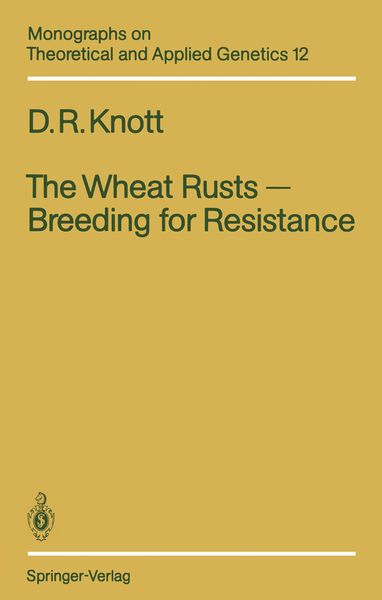
Produktbild: The Wheat Rusts — Breeding for Resistance
Band 12

The Wheat Rusts — Breeding for Resistance

Fr. 137.00

inkl. gesetzl. MwSt., Versandkostenfrei


Beschreibung

Produktdetails

Einband

Taschenbuch

Erscheinungsdatum

05.12.2011

Verlag

Springer Berlin

Seitenzahl

201

Maße (L/B/H)

24.4/15.6/1.3 cm

Gewicht

357 g

Auflage

Softcover reprint of the original 1st ed. 1989

Sprache

Englisch

ISBN

978-3-642-83643-5

Beschreibung

Produktdetails

Einband

Taschenbuch

Erscheinungsdatum

05.12.2011

Verlag

Springer Berlin

Seitenzahl

201

Maße (L/B/H)

24.4/15.6/1.3 cm

Gewicht

357 g

Auflage

Softcover reprint of the original 1st ed. 1989

Sprache

Englisch

ISBN

978-3-642-83643-5

Herstelleradresse

Springer-Verlag KG
Sachsenplatz 4-6
1201 Wien
AT

Email: GPSR Kontakt

Noch keine Bewertungen vorhanden

Verfassen Sie die erste Bewertung zu diesem Artikel

Helfen Sie anderen Kundinnen und Kunden durch Ihre Meinung.

Kundinnen und Kunden meinen

Bewertungen (0)

  • Produktbild: The Wheat Rusts — Breeding for Resistance
  • 1 Introduction.- 1.1 The Hosts.- 1.2 The Pathogens.- 1.3 The Importance of the Rusts.- 1.4 Rust Control.- 1.5 Conclusion.- 2 The Wheat Rust Pathogens.- 2.1 Introduction.- 2.2 Life Cycles.- 2.3 Axenic Culture of the Rusts.- 2.4 Classifying Infection Types.- 2.5 Variability in the Rust Pathogens.- 2.6 The Origin of Pathogenic Variability.- 2.7 Eradicating Barberry to Control Stem Rust.- 3 Rust Tests Under Controlled Conditions.- 3.1 Introduction.- 3.2 Production and Storage of Inoculum.- 3.3 Seedling Rust Tests.- 3.4 Adult Plant Rust Tests.- 3.5 Tests with Accurate Control of Inoculation Rates.- 3.6 Field Rust Tests.- 4 Surveying Variability in Host and Pathogen.- 4.1 Race Surveys in the Rusts.- 4.2 Surveying Resistance in the Hosts.- 4.3 The Analysis of Rust Populations.- 5 Genetic Analysis of Resistance.- 5.1 Introduction.- 5.2 Early Genetic Studies on Resistance.- 5.3 Procedures for Determining the Inheritance of Resistance to Rust.- 5.4 The Inheritance of Resistance to Stem Rust.- 5.5 The Inheritance of Resistance to Leaf Rust.- 5.6 The Inheritance of Resistance to Yellow Rust (with R. Johnson).- 5.7 Identifying an Unknown Gene for Rust Resistance.- 5.8 Genetic Linkages.- 5.9 The Effect of Temperature on Genes for Resistance.- 5.10 The Inheritance of Complex Resistance.- 5.11 Procedures for Studying Complex Resistance.- 5.12 The Inheritance of Virulence in Rust Fungi.- 6 The Genetics of Host-Pathogen Interactions.- 6.1 Introduction.- 6.2 The Gene-for-Gene System.- 6.3 Using Infection Type Data Sets to Postulate Genotypes.- 6.4 Apparent Exceptions to the Gene-for-Gene Hypothesis.- 6.5 Race-Specific and Race-Non — Specific Resistance.- 6.6 Durable Resistance.- 6.7 Association and Dissociation of Genes for Virulence.- 7 Cytogenetic Analysis of Resistance.- 7.1 Development of Aneuploids.- 7.2 Maintaining Monosomics and Other Aneuploids.- 7.3 Producing Monosomic Series in Other Cultivars.- 7.4 Using Monosomics to Identify Chromosomes Carrying Genes for Rust Resistance.- 7.5 Chromosome Mapping Using Telocentrics.- 7.6 Production and Use of Substitution Lines.- 7.7 The Use of Reciprocal Monosomic Hybrids.- 7.8 The Backcross Reciprocal Monosomic Method.- 7.9 Monosomic Analysis in Durum Wheat.- 8 Breeding Methods.- 8.1 Introduction.- 8.2 Field Rust Nurseries.- 8.3 Greenhouse or Growth Chamber Rust Tests.- 8.4 The Pedigree System of Breeding.- 8.5 Off-Season Nurseries.- 8.6 The Bulk System of Breeding.- 8.7 A Modified Bulk System.- 8.8 Backcrossing.- 8.9 Partial or Incomplete Backcrossing.- 8.10 Convergent Backcrossing.- 8.11 Single Seed Descent (SSD).- 8.12 Recurrent Selection.- 8.13 Using Knowledge About the Genetics of Resistance.- 8.14 Durable Resistance.- 8.15 Mutation Breeding for Rust Resistance.- 8.16 Biotechnology and Breeding for Rust Resistance.- 8.17 Hybrid Wheat.- 8.18 Selecting a Method of Breeding for Resistance.- 9 Managing Genetic Diversity to Control Rusts.- 9.1 Introduction.- 9.2 Multilines.- 9.3 Cultivar Mixtures or Blends.- 9.4 Interfield Diversity.- 9.5 Regional Deployment of Genes for Resistance.- 9.6 Conclusions.- 10 The Transfer of Rust Resistance from Alien Species to Wheat.- 10.1 Introduction.- 10.2 Relationships Among Species.- 10.3 The Relatives of Wheat as Sources of Rust Resistance.- 10.4 Transferring Rust Resistance to Wheat from Related Species.- 10.5 The Results of Transfer of Rust Resistance from Alien Species to Wheat.- 10.6 Future Prospects.- References.