• Produktbild: The Aging Brain
  • Produktbild: The Aging Brain
Band 5

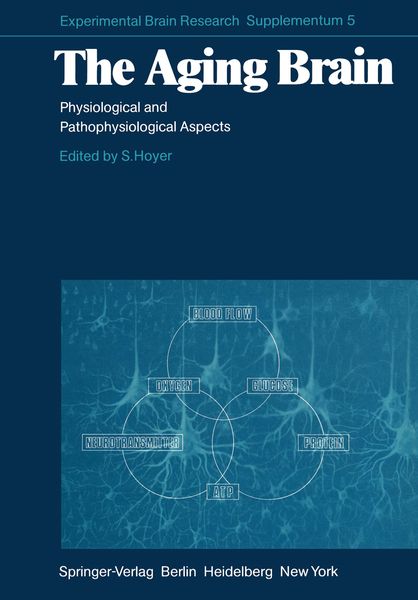
The Aging Brain Physiological and Pathophysiological Aspects

Fr. 138.00

inkl. gesetzl. MwSt., Versandkostenfrei


Beschreibung

Produktdetails

Einband

Taschenbuch

Erscheinungsdatum

21.11.2011

Herausgeber

S. Hoyer

Verlag

Springer Berlin

Seitenzahl

284

Maße (L/B/H)

24.4/17/1.7 cm

Gewicht

528 g

Auflage

Softcover reprint of the original 1st ed. 1982

Sprache

Englisch

ISBN

978-3-642-68509-5

Beschreibung

Produktdetails

Einband

Taschenbuch

Erscheinungsdatum

21.11.2011

Herausgeber

S. Hoyer

Verlag

Springer Berlin

Seitenzahl

284

Maße (L/B/H)

24.4/17/1.7 cm

Gewicht

528 g

Auflage

Softcover reprint of the original 1st ed. 1982

Sprache

Englisch

ISBN

978-3-642-68509-5

Herstelleradresse

Springer-Verlag GmbH
Tiergartenstr. 17
69121 Heidelberg
DE

Email: ProductSafety@springernature.com

Kundinnen und Kunden meinen

0 Bewertungen

Informationen zu Bewertungen

Zur Abgabe einer Bewertung ist eine Anmeldung im Konto notwendig. Die Authentizität der Bewertungen wird von uns nicht überprüft. Wir behalten uns vor, Bewertungstexte, die unseren Richtlinien widersprechen, entsprechend zu kürzen oder zu löschen.

Die Bewertungen sind nach Format, Anzahl Sterne und Datum sortiert.

Verfassen Sie die erste Bewertung zu diesem Artikel

Helfen Sie anderen Kund*innen durch Ihre Meinung

Kundinnen und Kunden meinen

0 Bewertungen filtern

  • Produktbild: The Aging Brain
  • Produktbild: The Aging Brain
  • Morphology.- Pathogenesis of Neuritic (Senile) and Amyloid Plaque Formation.- Alzheimer Neurofibrillary Tangle: Morphology and Biochemistry.- Immunological and Silver Staining Characteristics of Neurofibrillary Tangles of Alzheimer Type.- Immunocytochemical Studies on Neurofibrillary Changes.- Cerebral Atrophy in Parkinson Syndrome.- Plasticity of the Aging Cerebral Cortex.- Histone-DNA-lnteractions in Neuronal Chromatin During Aging.- Proliferation of Different Cell Types in the Brain of Senile Mice-Autoradiographic Studies with 3H and 14C- Thymidine.- Chromosome Aneuploidy in Alzheimer’s Disease.- (Patho)Physiologyand Neurochemistry.- Intercellular Matrix Molecules in the Ageing Brain.- Age-Related Changes in Local Glucose Utilization in the Brain.- Brain Metabolism and Blood Flow During Development and Aging of the Fischer-344 Rat.- Glucose and Energy Metabolism of Rat Cerebral Cortex During Aging.- Neurochemical Investigations of Aged Human Brain Cortex.- Proteinand Water Contents of Aging Brain.- Neuroimmunology and the Aging Brain.- Neurochemistry of Alzheimer’s Disease: An Update.- Neurotransmitter and Carbohydrate Metabolism During Senescence.- Neurotransmitter and Neuropeptide Systems in Alzheimer-Type Dementia.- Study on Some Compensatory Responses of Dopaminergic System in Aging Rats.- Neurotransmitters of the Cerebral Cortex in Senile Dementiaof Alzheimer Type.- Morphological and Biochemical Changes in the Aging Brain: Pathophysiological and Possible Therapeutic Consequences.- Old Age Alters Density of Myelin Isolated from Human Brain.- Clinical Aspects.- Cerebral Energy Relationships in Dementia: A Prospective Study with Positron Emission Tomography.- Measurement of Regional Cerebral Blood Flow, Oxygen Extraction Ratio and Oxygen Utilisation in Stroke Patients Using Positron Emission Tomography.- Regional Cerebral Glucose Metabolism in Aging and Senile Dementia as Determined by 18F-Deoxyglucose and Positron Emission Tomography.- Cerebro-Spinal Fluid Dynamics in Dementia.- Vascular-(Multi-lnfarct-)Dementia Versus Primarily Degenerative (Alzheimer’s) Dementia: A Study of rCBF and Computed Tomography (CT).- Relationship Between EEG and Cerebral Blood Flow in Normal Brain.- Age and the Rate of Preparation for Signals and for Responses.- Clinical and Pathological Aspects of Chronic Organic Brain Syndrome.- Organic Psychiatric Disease in Young Adults and Aged Patients.- A Clinical Approach to Vascular (Multiinfarct) Dementia.- Clinically Reversible Focal Cerebral Ischemia and Subclinical Permanent Damage: Neuropsychological and Tomodensitometric Evidence.- Dementia: Biometrical Indicators of State?.- Computertomography and Vascular (Multiinfarct) Dementia: A Qualitative and Quantitative Investigation.- Subcortical Arteriosclerotic Encephalopathy (Binswanger’s Disease).