Band 50
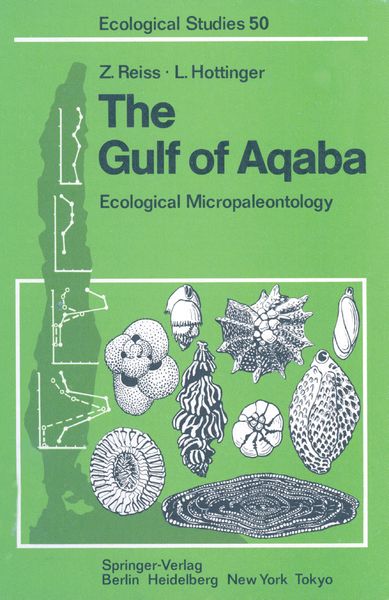
The Gulf of Aqaba Ecological Micropaleontology
Aus der Reihe
Ecological Studies
-
- Englisch ausgewählt
Fr. 137.00
inkl. gesetzl. MwSt.,
Beschreibung
Produktdetails
Einband
Taschenbuch
Erscheinungsdatum
05.12.2011
Verlag
Springer BerlinSeitenzahl
356
Maße (L/B/H)
24.4/17/2 cm
Gewicht
635 g
Auflage
Softcover reprint of the original 1st ed. 1984
Sprache
Englisch
ISBN
978-3-642-69789-0
The reconstruction of ancient marine environments is an important task of the Earth Sciences, of great interest to geology, pure and applied, to oceanography and climatology, as well as to such fields as ecology and evolution. In principle, such reconstructions are based on the actualistic approach of "the present is the key to the past." Since the deciphering of past environmental changes, either nat ural or man-made, has considerable bearing on planning, the past may provide a key to the future. Paleoenvironmental interpretations in the marine realm are based to a great extent on assemblages of fossils recovered from ancient sediments in outcrops and from land-based or submarine drillings. Observable lateral sequences of assemblages in contemporaneous strata, the known or assumed functional or adaptive significance of preserved skeletal struc tures, as well as their evolution through time and space, provide by themselves indications of ancient environmental settings. In some cases even present-day eco logical considerations may be derived from analysis of fossils.
Kundinnen und Kunden meinen
Verfassen Sie die erste Bewertung zu diesem Artikel
Helfen Sie anderen Kund*innen durch Ihre Meinung