Gutscheinbedingungen

*Gültig bis 05.07.2026 auf (fast) alles. Ausgeschlossen sind Smartboxen, Zeitschriften, Tickets, Lebensmittel, Gaming-Elektroartikel, Tinte/Toner, Gutscheine, Geschenkkarten, Blumen und Abos | Einlösbar in allen Buchhandlungen von Orell Füssli, Barth Bücher, Buchladen Rapunzel, Papeterie Köhler, Schuler Orell Füssli, Stauffacher und ZAP unter Vorweisung des Gutscheins, auf www.orellfüssli.ch durch Eingabe des Gutscheincodes. Beim Service „eBooks verschenken“ und bei eBook-Käufen via eReader nicht einlösbar | Mindesteinkaufswert: Fr. 30.- | Nicht mit anderen Rabatten kumulierbar.

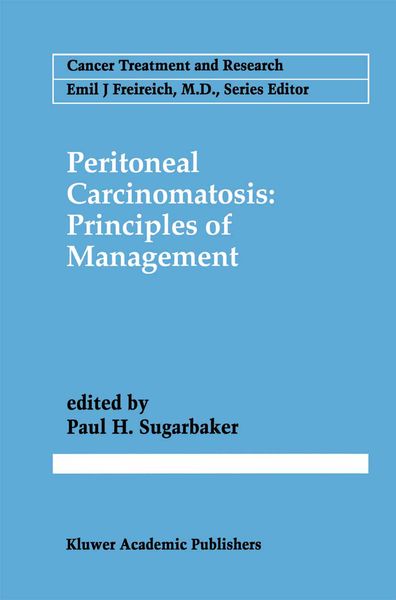
  • Produktbild: Peritoneal Carcinomatosis: Principles of Management
  • Produktbild: Peritoneal Carcinomatosis: Principles of Management
Band 82

Peritoneal Carcinomatosis: Principles of Management

Fr. 359.00

inkl. gesetzl. MwSt., Versandkostenfrei


Beschreibung

Produktdetails

Einband

Taschenbuch

Erscheinungsdatum

17.09.2011

Herausgeber

Paul H. Sugarbaker

Verlag

Springer Us

Seitenzahl

434

Maße (L/B/H)

23.5/15.5/2.5 cm

Gewicht

691 g

Auflage

Softcover reprint of the original 1st edition 1996

Sprache

Englisch

ISBN

978-1-4612-8531-1

Beschreibung

Produktdetails

Einband

Taschenbuch

Erscheinungsdatum

17.09.2011

Herausgeber

Paul H. Sugarbaker

Verlag

Springer Us

Seitenzahl

434

Maße (L/B/H)

23.5/15.5/2.5 cm

Gewicht

691 g

Auflage

Softcover reprint of the original 1st edition 1996

Sprache

Englisch

ISBN

978-1-4612-8531-1

Herstelleradresse

Springer-Verlag GmbH
Tiergartenstr. 17
69121 Heidelberg
DE

Email: GPSR Kontakt

Noch keine Bewertungen vorhanden

Verfassen Sie die erste Bewertung zu diesem Artikel

Helfen Sie anderen Kundinnen und Kunden durch Ihre Meinung.

Kundinnen und Kunden meinen

Bewertungen (0)

  • Produktbild: Peritoneal Carcinomatosis: Principles of Management
  • Produktbild: Peritoneal Carcinomatosis: Principles of Management
  • Foreword; J. Spratt. Preface; P.H. Sugarbaker. Section I: General principles. 1. Metastatic inefficiency: intravascular and intraperitoneal implantation of cancer cells; L. Weiss. 2. Intraperitoneal immunotherapy of cancer: a review of options for treatment; H.H. van Ravenswaay, A.M.M. Eggermont. 3. Pharmacokinetics of the peritoneal-plasma barrier after systematic mitomycin C administration; P.H. Sugarbaker, et al. 4. The peritoneal plasma barrier; P. Jacquet. 5. Patterns of spread of recurrent intraabdominal sarcoma; T.A. Sugarbaker, et al. 6. Observations concerning cancer spread within the peritoneal cavity and concepts supporting an ordered pathophysiology; P.H. Sugarbaker. 7. In-vitro pharmacologic rationale for intraperitoneal regional chemotherapy; K. Link, et al. 8. Immunotherapy for peritoneal ovarian carcinoma metastasis using ex vivo expanded tumor infiltrating lymphocytes; R. Freeman, C.D. Platsoucas. 9. The role of omentum associated lymphoid tissue in the progression of peritoneal carcinomatosis; M. Shimotsuma, et al. 10. Cancer cell seeding during abdominal surgery: experimental studies; F. Zoetmulder. 11. The Krukenberg syndrome as a natural manifestation of tumor cell entrapment; A.M. Averbach, P.H. Sugarbaker. Section II: Techniques. 12. Peritoneal carcinomatosis and radioimmunoguided surgery; S. Schneebaum, et al. 13. Diffuse and gross peritoneal carcinomatosis treated by intraperitoneal hyperthermic chemoperfusion; F. Kober, et al. 14. Intraperitoneal heated chemotherapy: a promise with problems; B. Loggie. 15. Peritonectomy procedures; P.H. Sugarbaker. 16. Progressive release of the left colon for a tension free colorectal or coloanal anastomosis; P.H. Sugarbaker. 17. Radiology of peritoneal carcinomatosis; A. Archer, et al. 18. Methodologic considerations in treatment using intraperitoneal chemotherapy; A.M. Averbach, et al. 19. Safety considerations in the use of intraoperative intraperitoneal chemotherapy; S. White, et al. 20. Treatment of peritoneal carcinomatosis from colon or appendiceal cancer with induction intraperitoneal chemotherapy; P.H. Sugarbaker. 21. The effects of postoperative intraperitoneal chemotherapy on peritoneal wound healing and adhesion formation; P. Jacquet, P.H. Sugarbaker. 22. Current status of staging laparoscopy in colorectal and ovarian cancer; M.P. Boente, et al. 23. Clinical research methodologies in diagnosis and staging of patients with peritoneal carcinomatosis; P. Jacquet, P.H. Sugarbaker. 24. Laser-mode electrosurgery; P.H. Sugarbaker. 25. Peritoneal access devices for intraperitoneal chemotherapy; S.R. Ash.