Gutscheinbedingungen

*Gültig bis 20.07.2026 auf alle Bücher. Ausgeschlossen sind Zeitschriften, Prozentbücher und Abos | Einlösbar in allen Buchhandlungen von Orell Füssli, Barth Bücher, Buchladen Rapunzel, Papeterie Köhler, Schuler Orell Füssli, Stauffacher und ZAP unter Vorweisung des Gutscheins, auf www.orellfüssli.ch durch Eingabe des Gutscheincodes. Beim Service „eBooks verschenken“ und bei eBook-Käufen via eReader nicht einlösbar | Mindesteinkaufswert: Fr. 30.- | Nicht mit anderen Rabatten kumulierbar.

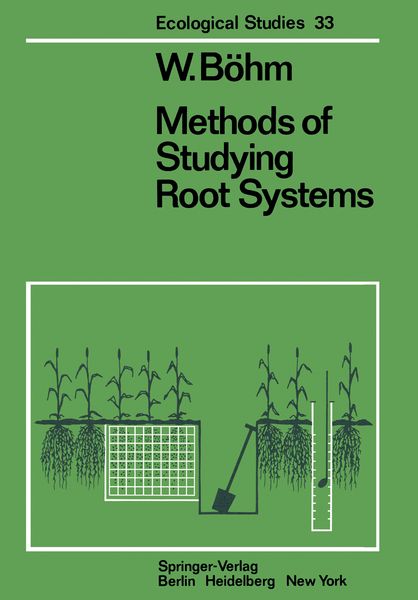
  • Produktbild: Methods of Studying Root Systems
  • Produktbild: Methods of Studying Root Systems
Band 33

Methods of Studying Root Systems

Aus der Reihe Ecological Studies

Fr. 201.00

inkl. gesetzl. MwSt., Versandkostenfrei


Beschreibung

Produktdetails

Einband

Taschenbuch

Erscheinungsdatum

15.11.2011

Verlag

Springer Berlin

Seitenzahl

188

Maße (L/B/H)

24.4/17/1.2 cm

Gewicht

369 g

Auflage

Softcover reprint of the original 1st ed. 1979

Sprache

Englisch

ISBN

978-3-642-67284-2

Beschreibung

Produktdetails

Einband

Taschenbuch

Erscheinungsdatum

15.11.2011

Verlag

Springer Berlin

Seitenzahl

188

Maße (L/B/H)

24.4/17/1.2 cm

Gewicht

369 g

Auflage

Softcover reprint of the original 1st ed. 1979

Sprache

Englisch

ISBN

978-3-642-67284-2

Herstelleradresse

Springer-Verlag KG
Sachsenplatz 4-6
1201 Wien
AT

Email: GPSR Kontakt

Noch keine Bewertungen vorhanden

Verfassen Sie die erste Bewertung zu diesem Artikel

Helfen Sie anderen Kundinnen und Kunden durch Ihre Meinung.

Kundinnen und Kunden meinen

Bewertungen (0)

  • Produktbild: Methods of Studying Root Systems
  • Produktbild: Methods of Studying Root Systems
  • 1. Root Ecology and Root Physiology.- 2. General Survey of Root-Study Methods.- 2.1 Historical Development.- 2.2 Principles of Classification.- 2.3 Selection of the Best Method.- 3. Excavation Methods.- 3.1 Introduction.- 3.2 Outline of the Classical Method.- 3.2.1 Selection of the Plant.- 3.2.2 Digging the Trench.- 3.2.3 Excavating the Root System.- 3.2.4 Drawings and Photographs.- 3.2.5 Preparation and Storage of Excavated Root Systems.- 3.2.6 Review of Applications.- 3.2.7 Advantages and Disadvantages.- 3.3 Modifications of the Classical Method.- 3.3.1 Excavations with Water Pressure.- 3.3.2 Excavations with Air Pressure.- 3.3.3 Excavations in a Horizontal Plane.- 3.3.4 Sector Method.- 4. Monolith Methods.- 4.1 Introduction.- 4.2 Simple Spade Methods.- 4.3 The Common Monolith Method.- 4.3.1 Square Monoliths.- 4.3.2 Round Monoliths.- 4.4 Box Methods.- 4.5 Cage Methods.- 4.6 Needleboard Methods.- 4.6.1 General Survey.- 4.6.2 Construction and Preparation of the Needleboards.- 4.6.3 Excavating the Monoliths.- 4.6.4 Washing Procedure.- 4.6.5 Photographing and Sectioning.- 4.6.6 Special Modifications.- 4.6.7 Evaluation of the Methods.- 5. Auger Methods.- 5.1 Specific Features.- 5.2 Sampling Techniques.- 5.2.1 Techniques with Hand Augers.- 5.2.1.1 Sampling Procedure.- 5.2.1.2 Number or Replications.- 5.2.1.3 Special Technique for Studying Tree Roots.- 5.2.2 Mechanized Techniques.- 5.2.3 Core-Sampling Machines.- 5.3 The Core-Break Method.- 5.4 Advantages and Drawbacks.- 6. Profile Wall Methods.- 6.1 General Survey.- 6.2 The Traditional Trench Profile Method.- 6.2.1 Digging the Trench.- 6.2.2 Preparing the Profile Wall.- 6.2.3 Exposing the Roots.- 6.2.4 Mapping and Counting Procedure.- 6.2.4.1 Determination of Root Number.- 6.2.4.2 Determination of Root Length.- 6.3 The Foil Method.- 6.4 Technique in a Horizontal Plane.- 6.5 Evaluation and Applications.- 7. Glass Wall Methods.- 7.1 Introduction.- 7.2 Glass-Faced Profile Walls.- 7.3 Root Laboratories.- 7.3.1 General Survey.- 7.3.2 Features of Their Design.- 7.3.3 Methods of Recording.- 7.3.4 Light Sensitivity of Roots.- 7.3.5 Recent Research in Root Laboratories.- 7.4 Root Observations with Glass Tubes.- 7.5 Evaluation of the Methods.- 8. Indirect Methods.- 8.1 Introduction.- 8.2 Determination of Soil Water Content.- 8.2.1 Gravimetric Method.- 8.2.2 Neutron Method.- 8.3 Staining Techniques.- 8.4 Uptake of Non-Radioactive Tracers.- 8.5 Radioactive Tracer Methods.- 8.5.1 General Survey.- 8.5.2 Soil Injection Technique.- 8.5.3 Plant Injection Technique.- 8.5.4 Root Studies with 14C.- 8.5.5 Critical Evaluation.- 9. Other Methods.- 9.1 Measuring Root-Pulling Strength.- 9.2 Measuring Root-Clump Weight.- 9.3 Measuring Root Tensile Strength.- 9.4 Root Measurements Using Soil Sections.- 9.5 Root-Detecting Method.- 9.6 Mesh Bag Method.- 9.7 Root Replacement Method.- 9.8 Root Investigations with Paper Chromatography.- 9.9 Electrical Methods.- 9.10 Determination of Growth Rings in Tree Roots.- 9.11 Investigations of Root Hairs.- 9.12 Determination of Root Nodules.- 9.13 Determination of Mycorrhizae.- 10. Container Methods.- 10.1 General Features.- 10.2 Rooting Volume and Container Size.- 10.3 Types of Containers.- 10.3.1 Small Pots.- 10.3.2 Boxes and Tubes.- 10.3.3 Glass-Faced Containers.- 10.3.4 Flexible Tubes.- 10.4 Rooting Media.- 10.5 Filling the Containers.- 10.6 Seed Technique.- 10.7 Irrigation Problems.- 10.8 Special Washing Procedures.- 10.9 Modified Container Methods.- 10.9.1 Cage Method.- 10.9.2 Needleboard Method.- 10.9.3 Root Training by Plastic Tubes.- 10.9.4 Split-Root Technique.- 10.9.5 Undisturbed Soil Monoliths.- 10.10 Root Studies in Nutrient Solutions.- 10.11 Root Studies in Mist Chambers.- 10.12 Comparability of Results from Container Experiments with Field Data.- 11. Techniques of Root Washing.- 11.1 Dry Sieving.- 11.2 Storing Soil-Root Samples Before Washing.- 11.3 Chemicals for Facilitating Root Washing.- 11.4 Washing Roots by Hand.- 11.5 Flotation Method.- 11.6 Root-Washing Machines.- 11.7 Nutrient Losses from Roots During Washing.- 11.8 Cleaning Roots from Debris.- 11.9 Storing Roots After Washing.- 12. Root Parameters and Their Measurement.- 12.1 General Aspects.- 12.2 Root Number.- 12.3 Root Weight.- 12.3.1 Determination of Fresh Weight.- 12.3.2 Determination of Dry Weight.- 12.3.3 Advantages and Critical Objections.- 12.4 Root Surface.- 12.4.1 Calculation from Other Parameters.- 12.4.2 Photoelectric Measurements.- 12.4.3 Adsorption Methods.- 12.5 Root Volume.- 12.5.1 Calculation from Other Parameters.- 12.5.2 Displacement Technique.- 12.6 Root Diameter.- 12.6.1 Measurements.- 12.6.2 Applications in Tree Root Studies.- 12.7 Root Length.- 12.7.1 Direct Measurements.- 12.7.2 Intersection Methods.- 12.7.3 Root-Counting Machines.- 12.7.4 Reasons for Increasing Use of Root Length Measurements.- 12.8 Root Tips.- 12.8.1 Technique of Counting.- 12.8.2 Root Coefficients.- 12.9 Shoot-Root Relations.- 13. Some Future Aspects for the Use of Ecological Root-Study Methods.- References.