Gutscheinbedingungen

*Gültig bis 05.07.2026 auf (fast) alles. Ausgeschlossen sind Smartboxen, Zeitschriften, Tickets, Lebensmittel, Gaming-Elektroartikel, Tinte/Toner, Gutscheine, Geschenkkarten, Blumen und Abos | Einlösbar in allen Buchhandlungen von Orell Füssli, Barth Bücher, Buchladen Rapunzel, Papeterie Köhler, Schuler Orell Füssli, Stauffacher und ZAP unter Vorweisung des Gutscheins, auf www.orellfüssli.ch durch Eingabe des Gutscheincodes. Beim Service „eBooks verschenken“ und bei eBook-Käufen via eReader nicht einlösbar | Mindesteinkaufswert: Fr. 30.- | Nicht mit anderen Rabatten kumulierbar.

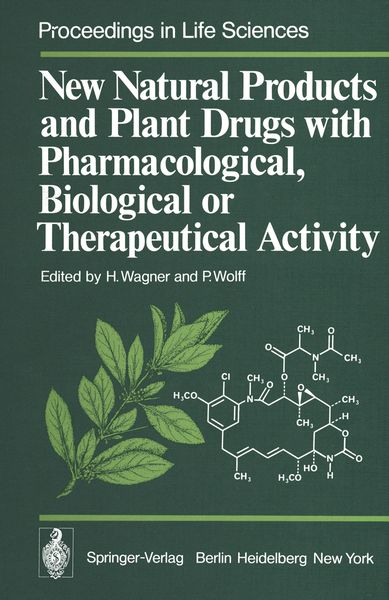
  • Produktbild: New Natural Products and Plant Drugs with Pharmacological, Biological or Therapeutical Activity
  • Produktbild: New Natural Products and Plant Drugs with Pharmacological, Biological or Therapeutical Activity

New Natural Products and Plant Drugs with Pharmacological, Biological or Therapeutical Activity Proceedings of the First International Congress on Medicinal Plant Research, Section A, held at the University of Munich, Germany, September 6–10, 1976

Fr. 149.00

inkl. gesetzl. MwSt., Versandkostenfrei


Beschreibung

Produktdetails

Einband

Taschenbuch

Erscheinungsdatum

18.10.2011

Herausgeber

H.K. Wagner + weitere

Verlag

Springer Berlin

Seitenzahl

288

Maße (L/B/H)

24.4/17/1.7 cm

Gewicht

534 g

Auflage

Softcover reprint of the original 1st ed. 1977

Sprache

Englisch

ISBN

978-3-642-66684-1

Beschreibung

Produktdetails

Einband

Taschenbuch

Erscheinungsdatum

18.10.2011

Herausgeber

Verlag

Springer Berlin

Seitenzahl

288

Maße (L/B/H)

24.4/17/1.7 cm

Gewicht

534 g

Auflage

Softcover reprint of the original 1st ed. 1977

Sprache

Englisch

ISBN

978-3-642-66684-1

Herstelleradresse

Springer-Verlag KG
Sachsenplatz 4-6
1201 Wien
AT

Email: GPSR Kontakt

Noch keine Bewertungen vorhanden

Verfassen Sie die erste Bewertung zu diesem Artikel

Helfen Sie anderen Kundinnen und Kunden durch Ihre Meinung.

Kundinnen und Kunden meinen

Bewertungen (0)

  • Produktbild: New Natural Products and Plant Drugs with Pharmacological, Biological or Therapeutical Activity
  • Produktbild: New Natural Products and Plant Drugs with Pharmacological, Biological or Therapeutical Activity
  • Problems and Prospects of Discovering New Drugs from Higher Plants by Pharmacological Screening.- A. Introduction.- B. Value of Drugs Obtained from Higher Plants.- I. Commercial Value of Plant-Derived Drugs.- II. Role of Plant-Derived Drugs as Therapeutic Agents.- III. Uses Other than as Drugs for Plant-Derived Chemicals.- C. Apathy in Plant-Derived Drug Development.- D. Current Level of Worldwide Research on Plant-Derived Drugs.- E. Pharmacological Screening Programs for Plant Extracts.- I. Random Selection Approach.- II. Selection of Plants Containing Specific Types of Chemical Compounds.- III. Selection of Plants Based on a Combination of Criteria.- F. Problems in the Pharmacological Screening of Extracts from Higher Plants.- I. Variation from Sample to Sample.- II. Unexpected Dose-Response Relationships.- III. Variation Within Samples from the Same Lot of Plant Material.- IV. Failure to Obtain Positive Results with an Extract Containing Active Principles.- V. Miscellaneous Considerations in Screening Plant Extracts.- G. Prospects for the Future.- References.- Pharmacological Approaches to Natural Product Screening and Evaluation.- A. Ideal Requirements for a Primary Screen.- B. Past Approaches to Primary Pharmacological Screening.- I. Single Technique-Single Goal Screening.- II. Screening Using a Battery of Specific Procedures.- III. Single Technique-Multiple Goals Screening.- IV. Combinations of Specific and Multipurpose Procedures.- C. Multidimensional Primary Screening.- I. The Rat “Hippocratic” Screen.- 1. Variations of Hippocratic Screening.- 2. Computerized Hippocratic Evaluation.- II. The Mouse Multidimensional Screen.- III. Relative Merits of the Mouse and Rat Primary Screens.- D. Multidimensional Secondary Screening of Extracts and Pure Compounds.- I. The Dog Pharmacodynamic Screen.- II. Other Approaches to Secondary Evaluation.- E. Tertiary Evaluation.- F. Addendum-Sample Print-Out of Computerized Hippocratic Evaluation.- References.- Recent Experimental and Clinical Data Concerning Antitumor and Cytotoxic Agents from Plants.- A. Introduction.- B. Terpenoids.- I. Sesquiterpenes.- II. Diterpenes.- III. Simaroubolides.- C. Miscellaneous Compounds.- D. Alkaloids.- I. Pyrrolizidine Alkaloids.- II. Isoquinoline Alkaloids.- III. Benzophenanthridines.- IV. Miscellaneous Alkaloids.- V. Monomeric Indole Alkaloids.- VI. Camptothecine.- VII. Cephalotaxus Alkaloids.- VIII. Dimeric Indole Alkaloids.- IX. Maytansinoids.- E. Summary.- References.- Recent Advances in the Field of Antibiotics.- A. Introduction.- B. Acetate/Propionate-Derived Metabolites.- I. Tetracyclines.- II. Anthracyclines.- III. Aflatoxins.- IV. Macrolides.- V. Cytochalasans.- VI. Polyethers.- VII. Macrotetrolides.- VIII. Nonadrides.- IX. Ansamycins.- X. Ovalicin and Pseurotins.- C. Isoprenoid Metabolites.- D. Amino Acid-Derived Metabolites.- I. Penicillins and Cephalosporins.- II. Other Natural ss-Lactams.- III. Cyclic Polypeptides.- E. Conclusion.- References.- Progress in the Chemistry of Alkaloids with Pharmacological or Biological Activity.- References.- Plant Mono-, Di- and Sesquiterpenoids with Pharmacological or Therapeutical Activity.- A. Introduction.- B. Classification.- C. General Biological Properties.- D. Monoterpenes.- I. Normal Monoterpenes.- 1. Antiseptic, Disinfectant, Anthelmintic Properties.- 2. Irritant, Skin Stimulant, Expectorant, Diuretic Properties.- 3. Sedative, Carminative, Spasmolytic Properties.- II. Cyclopentanoid Monoterpenes and Derivatives.- 1. Biological Activity of the Methylcyclopentanoid Monoterpenes of the Nepetalactone Type.- 2. Pharmacological Activity of the Iridoids and Secoiridoids.- Antimicrobial Activity.- Hypotensive Effect.- Analgetic and Antiphlogistic Properties.- Bitter Tonic.- Sedative Agents.- Laxative Properties.- Antileukemic Activity.- Various Other Effects.- 3. Cantharidin.- E. Sesquiterpenes and Diterpenes.- I. Antiphlogistic and Spasmolytic Agents.- II. Bitter Substances.- III. Antitumor Activity.- F. Conclusion.- References.- Saponins with Biological and Pharmacological Activity.- A. Introduction.- B. Saponins of Licorice.- I. Corticoidal Activities of Glycyrrhizin.- II. Antiinflammatory Activities of Glycyrrhizin.- III. Antigastric Ulcer Effects of Glycyrrhizin.- IV. Metabolic Effects of Glycyrrhizin.- C. The Saponins of Bupleuri Radix and Platycodi Radix.- D. Saponins of Polygalae Radix and Senegae Radix.- E. Saponins of Akebiae Vitis.- F. Aescin, the Saponins of the Seeds of Aesculus hippocastanum.- G. Saponins of Ginseng.- I. Chemical Studies on the Saponins and Sapogenins of Ginseng and its Congeners.- II. Pharmacological and Biochemical Studies on Ginseng Saponins.- III. Pharmacological Studies on Japanese Chikusetsu-Ginseng1.- H. Saponins of Zizyphus Spinosi Semen.- I. Concluding Remarks.- References.- Dimeric Natural Compounds with Pharmacological Activity.- A. Definitions and Classification.- B. The Formation of Dimeric Compounds.- C. Pharmacological and Physiological Activity.- I. Lignahs.- II. Dimeric Photosensitizers.- III. Coumarins.- References.- Chemical and Biological Investigations on Indian Medicinal Plants.- A. Introduction.- B. Alkaloids.- I. Tylophora Alkaloids.- II. Ancistrocladus Alkaloids.- III. Alkaloids of Croton sparsiflorus Morong.- IV. Alkaloids of Mappia foetida Miers.- V. Alkaloids of Piper trichostaehyon C.Dc.- VI. Alkaloids from some Menispermaceae Plants.- 1. Alkaloids from Tiliacora racemosa Colebr.- 2. Alkaloids of Cocculus pendulus (Forsk) Diels and Cocculus laurifolius Dc.- 3. Alkaloids of Cissampelos pareira Linn.- C. Oxygen Heterocycles.- I. Cryptocaryalactone and Cryptocaryone.- II. Surangin A and B.- III. Tuberosin.- D. Terpenoids.- I. Sesquiterpenes of Cedrus deodara Loudon.- II. Enhydrin.- III. Tagitinins A and F.- IV. Coleonol.- V. Diosbulbine.- VI. Dysobinin.- VII. Triterpenes of Salacia prinoides DC.- E. Glycosides.- I. Cleistanthin.- II. Ipolearoside.- III. Stigmasta-7, 22-diene-3 ?-O-glucoside.- IV. Scuttelarein-5-glucuronide.- V. Glycosides of Picrorhiza kurrooa Benth.- VI. Asclepin.- VII. Shatavarins I–IV.- VIII. Glycosides of Carissa Species.- IX. Peruvoside.- F. Miscellaneous.- I. Curcumine.- II. Arnebin.- III. Diospyrol.- IV. Steroidal Constituents of Commiphora mukul.- References.- Chemistry of Neolignans with Potential Biological Activity.- A. Introduction.- B. Benzofuranoid Neolignans.- I. Di- and Tetrahydrobenzofurans.- II. Hexahydrobenzofurans.- C. Benzodioxane and Other Neolignans.- D. Bicyclo [3, 2, 1] octanoid Neolignans.- E. Biogenesis of Neolignans.- F. Conclusion.- References.- Natural Substances with Effects on the Liver.- References.- The Modification of Natural Substances in the Modern Drug Synthesis.- A. Introduction.- B. Main Part.- I. Steroids and Prostanoids.- II. “Chemotherapy”.- III. Claviceps Purpurea.- 1. Peptide Alkaloids (13–15).- (a) Ergotamine(2).- (b) Dihydroergotamine.- (c) Dihydroergotoxines.- (d) 2-Bromo-?-ergocryptine = CB 154 (16).- 2. Low-Molecular Lysergic Acid Derivatives.- Lysergic Acid Diethylamide.- Methylergobasine.- Methysergide.- IV. Opiates.- V. Cannabinoids.- VI. Natural Substances in the Role of Raw Material for Drug Synthesis and Biochemical Model Reactions.- References.