• Produktbild: Illustrated Computer Tomography
  • Produktbild: Illustrated Computer Tomography

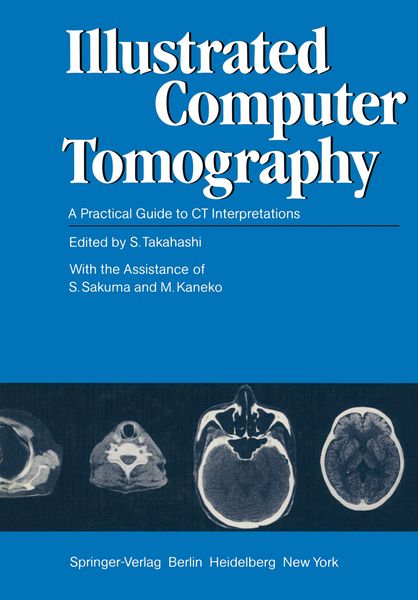
Illustrated Computer Tomography A Practical Guide to CT Interpretations

Fr. 137.00

inkl. gesetzl. MwSt., Versandkostenfrei


Beschreibung

Produktdetails

Einband

Taschenbuch

Erscheinungsdatum

21.12.2011

Herausgeber

S. Takahashi + weitere

Verlag

Springer Berlin

Seitenzahl

308

Maße (L/B/H)

24.4/17/1.8 cm

Gewicht

562 g

Auflage

Softcover reprint of the original 1st ed. 1983

Sprache

Englisch

ISBN

978-3-642-81816-5

Beschreibung

Produktdetails

Einband

Taschenbuch

Erscheinungsdatum

21.12.2011

Herausgeber

Verlag

Springer Berlin

Seitenzahl

308

Maße (L/B/H)

24.4/17/1.8 cm

Gewicht

562 g

Auflage

Softcover reprint of the original 1st ed. 1983

Sprache

Englisch

ISBN

978-3-642-81816-5

Herstelleradresse

Springer-Verlag KG
Sachsenplatz 4-6
1201 Wien
AT

Email: GPSR Kontakt

Noch keine Bewertungen vorhanden

Verfassen Sie die erste Bewertung zu diesem Artikel

Helfen Sie anderen Kundinnen und Kunden durch Ihre Meinung.

Kundinnen und Kunden meinen

Bewertungen (0)

  • Produktbild: Illustrated Computer Tomography
  • Produktbild: Illustrated Computer Tomography
  • I. Basic Aspects of Computed Tomography.- 1 Debut and Spread.- 1.1 History — Rotation Radiography and Computed Tomography.- 1.2 Utility of CT.- 1.3 Current Status and Future Scope of CT Applications.- 2 Principles.- 2.1 Principles of CT Imaging.- 2.2 Theory of Image Reconstruction.- 2.2.1 Matrix Inversion.- 2.2.2 Iterative Approximation.- 2.2.3 Back Projection.- 2.2.4 Filtered Back Projection.- 2.2.5 Various Problems Regarding Image Reconstruction.- 2.3 CT Images and Their Evaluation.- 3 CT Scanner.- 3.1 Basic Function.- 3.2 Main Subsystems.- 3.2.1 X-ray Tube and X-ray Generator.- 3.2.2 Detector and Collection of Data.- 3.2.3 Computer.- 3.2.4 Magnetic Disk Unit.- 3.2.5 Magnetic Tape Unit.- 3.2.6 Display.- 3.2.7 Independent Viewing Console.- 3.2.8 Hard Copy.- 3.2.9 Printer.- 3.2.10 The Patient’s Couch and Patient Positioning.- 4 Performance Evaluation.- 4.1 Items for Performance Evaluation.- 4.1.1 Noise.- 4.1.2 Contrast Scale.- 4.1.3 Spatial Resolution.- 4.1.4 Artifact.- 4.1.5 Uniformity.- 4.1.6 Linearity.- 4.1.7 Size Independence.- 4.1.8 Reproducibility and Quality Assurance.- 4.2 Examples of Actual Performance Evaluations.- 4.2.1 Noise and Contrast Scale.- 4.2.2 Spatial Resolution.- 4.2.3 Uniformity and Size Independence.- 4.2.4 Reproducibility and Quality Assurance.- 5 Actual Procedure of the Performance of CT and Its Interpretation.- 5.1 Patient Selection and Reservation for CT Examinations.- 5.2 Preparation.- 5.3 Fixation of the Patient in Position.- 5.4 Positioning by Means of a Standard Line.- 5.5 Determination and Confirmation of the Scanning Level.- 5.6 Contrast Media and Their Effect.- 5.7 CT Image Observation.- 5.8 Window Width and Window Level.- 5.9 Measurement of CT Numbers.- 5.10 Artifact.- 5.11 Effects of the Calculation Method on Image Formation.- 5.12 Special Observation Techniques.- 6 Exposure Dosage.- 6.1 Risk Assessment of CT Examinations.- 6.2 Factors Determining CT Exposure.- 6.2.1 Unit Characteristics.- 6.2.2 Selection of Scanning Method.- 6.2.3 Physician’s Specifications on CT Procedures.- 6.3 Dosimetric Methods for Estimating CT Exposure.- 6.4 Dose Distribution.- 6.5 Distribution of Scattered and Leakage Radiations in the CT Room.- 6.6 Reduction of Patient Doses in CT.- II. Atlas of Computed Tomography of the Normal Adult.- 1 Orientation and Interpretation of CT Images.- 1.1 Head.- 1.2 Face.- 1.3 Neck.- 1.4 Chest.- 1.5 Abdomen.- 2 Axial Transverse Cross Section Figures of the Normal Adult.- III. Clinical Application of Computed Tomography.- 1 CT Images of Lesions.- 1.1 Difference in Density.- 1.1.1 High Density.- 1.1.2 Isodensity.- 1.1.3 Low Density.- 1.2 Morphology of Image.- 1.2.1 Circular Images.- 1.2.2 Lens and Semilunar-Shaped Images.- 1.2.3 Irregularly Shaped Images.- 1.2.4 Digital-Shaped Images.- 2 Computed Tomography of Diseases.- 2.1 Diseases of the Brain.- 2.1.1 Cerebral Tumor.- 2.1.2 Cerebrovascular Diseases.- 2.1.3 Trauma of the Head.- 2.1.4 Intracranial Infections (Infectious Diseases of the Brain).- 2.1.5 Other Intracerebral Diseases.- 2.2 Diseases of the Optic Fossa.- 2.3 Diseases of the Head and Neck.- 2.3.1 Temporal Bone and Skull Base.- 2.3.2 Paranasal Sinuses, Nasal Cavity, and Face.- 2.3.3 Pharynx and Larynx.- 2.3.4 Neck, Thyroid, and Parathyroid Glands.- 2.4 Diseases of the Thorax.- 2.4.1 Aorta and Pericardium.- 2.4.2 Mediastinum.- 2.4.3 Lung.- 2.4.4 Thoracic Wall and Pleura.- 2.5 Diseases of the Abdomen Including the Pelvis.- 2.5.1 Liver.- 2.5.2 Gallbladder and Bile Duct.- 2.5.3 Spleen.- 2.5.4 Pancreas.- 2.5.5 Kidney.- 2.5.6 Adrenal Glands.- 2.5.7 Peritoneal Cavity and Intestines.- 2.5.8 Retroperitoneum.- 2.5.9 Pelvic Organs.- 2.6 Diseases of the Spine, Spinal Cord, and Extremities.- 2.6.1 Spine.- 2.6.2 Spinal Cord.- 2.6.3 Extremities.- IV. Radiotherapy Planning and Computed Tomography.- 1 Determination of the Site and Extent of the Lesion and the Surrounding Healthy Tissues.- 2 Difference Between CT Images for Radiation Therapy and Those for Diagnostic Purposes.- 3 Technical Requirements for Radiotherapy-Orientated CT Scanning.- 3.1 Improvement of the CT Scanner Couch.- 3.2 Side Localizers and Front Localizer.- 3.3 Fixation of the Patient.- 3.4 Skin Markers.- 3.5 Superimposition of Two CT Images.- 4 Planning of Treatment Using CT.- 5 CT-linked Treatment Planning System.- 6 Inhomogeneity Corrections Using CT Images in Dose Distributions.- References.