Gutscheinbedingungen

*Gültig bis 05.07.2026 auf (fast) alles. Ausgeschlossen sind Smartboxen, Zeitschriften, Tickets, Lebensmittel, Gaming-Elektroartikel, Tinte/Toner, Gutscheine, Geschenkkarten, Blumen und Abos | Einlösbar in allen Buchhandlungen von Orell Füssli, Barth Bücher, Buchladen Rapunzel, Papeterie Köhler, Schuler Orell Füssli, Stauffacher und ZAP unter Vorweisung des Gutscheins, auf www.orellfüssli.ch durch Eingabe des Gutscheincodes. Beim Service „eBooks verschenken“ und bei eBook-Käufen via eReader nicht einlösbar | Mindesteinkaufswert: Fr. 30.- | Nicht mit anderen Rabatten kumulierbar.

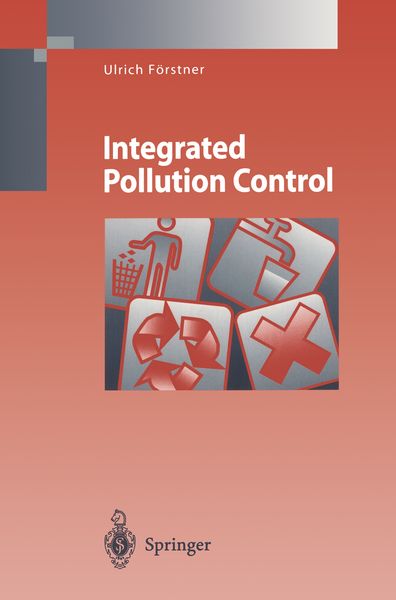
Produktbild: Integrated Pollution Control

Integrated Pollution Control

Fr. 137.00

inkl. gesetzl. MwSt., Versandkostenfrei


Beschreibung

Produktdetails

Einband

Taschenbuch

Erscheinungsdatum

28.01.2012

Verlag

Springer Berlin

Seitenzahl

505

Maße (L/B/H)

23.5/15.5/2.9 cm

Gewicht

785 g

Auflage

Softcover reprint of the original 1st ed. 1998

Übersetzt von

A. Weissbach + weitere

Sprache

Englisch

ISBN

978-3-642-80313-0

Beschreibung

Produktdetails

Einband

Taschenbuch

Erscheinungsdatum

28.01.2012

Verlag

Springer Berlin

Seitenzahl

505

Maße (L/B/H)

23.5/15.5/2.9 cm

Gewicht

785 g

Auflage

Softcover reprint of the original 1st ed. 1998

Übersetzt von

  • A. Weissbach
  • H. Boeddicker

Sprache

Englisch

ISBN

978-3-642-80313-0

Herstelleradresse

Springer-Verlag KG
Sachsenplatz 4-6
1201 Wien
AT

Email: GPSR Kontakt

Noch keine Bewertungen vorhanden

Verfassen Sie die erste Bewertung zu diesem Artikel

Helfen Sie anderen Kundinnen und Kunden durch Ihre Meinung.

Kundinnen und Kunden meinen

Bewertungen (0)

  • Produktbild: Integrated Pollution Control
  • 1 Fundamentals.- 1.1 Description of Modem Environmental Problems.- 1.2 Views of Technology and Environmental Protection.- 1.3 Ecological Fundamentals.- 1.3.1 Structure of Ecosystems.- 1.3.2 Stability of Ecological and Technical Systems.- 1.4 Technological Fundamentals.- 1.4.1 Risk Assessment.- 1.4.2 Environmental Information Technology (IT).- 1.4.3 Environmental Monitoring and Process Control Technology.- 1.4.4 Material and Energy Flow Analysis.- 1.4.5 Pollution Control Process Technology.- 1.4.6 Ecological Engineering for Improving the Quality of Surface Water.- 1.4.7 Ecological Chemistry and Geochemical Engineering.- 1.4.8 Geological Engineering.- 1.4.9 Protective Measures in Hydraulic Engineering.- 1.4.10 Energy Conservation and Structural Engineering.- 1.5 Pollution Control Technology as an Interdisciplinary Approach.- 2 Pollution Control Technology in the Private Sector.- 2.1 Economic Aspects of Pollution Control.- 2.2 Ecological Corporate Strategy.- 2.2.1 The Ecological Reorientation of Business Administration.- 2.2.2 Managerial Strategies for Pollution Control.- 2.3 Technology in Corporate Pollution Control.- 2.3.1 Eco-Controlling: Information Systems and Eco-Balances.- 2.3.2 Material Management and Logistics.- 2.3.3 Environmentally Friendly Designing.- 2.3.4 Production and Manufacturing Technology.- 2.3.5 Process-Integrated Pollution Control.- 2.3.6 Goal Hierarchy in Corporate Pollution Control Technology.- 2.3.7 Policy Perspectives.- 3 Contaminants.- 3.1 Chemistry and the Environment — A Controversy.- 3.1.1 Products of the Chemical Industry.- 3.1.2 Dimensions of the Spread of Environmental Chemicals.- 3.2 Contaminant Impacts.- 3.2.1 Definitions.- 3.2.2 Dose/Response Relationship.- 3.2.3 Environmental Standards.- 3.3 Heavy Metals.- 3.3.1 Impacts from Heavy Metals.- 3.3.2 Sources and Distribution in the Environment.- 3.3.3 Concentrations and Threshold Values in Surface Waters.- 3.4 Organic Contaminants.- 3.4.1 Structure and Characteristics of Organic Contaminants.- 3.4.2 Distribution in the Environment.- 3.4.3 Persistence and Degradation.- 3.4.4 Aquatic Toxicity and Limits.- 3.5 Radioactivity.- 3.5.1 Application of Ionization Radiation.- 3.5.2 Units of Measure in Radiation Protection.- 3.5.3 Sources of Naturally Occurring Radation Exposure.- 3.5.4 Radiation from Human Activities.- 3.5.5 Evaluation of the Total Exposure.- 4 Energy and Climate.- 4.1 Emission of Carbon Dioxide and Methane.- 4.1.1 Carbon Dioxide.- 4.1.2 Methane.- 4.2 Energy Conservation Potential and Climate-Relevant Emissions.- 4.2.1 Power Plants.- 4.2.2 Industry.- 4.2.3 Transportation.- 4.2.4 A Balance of the Energy Conservation Potentials.- 4.3 Renewable Energy.- 4.3.1 Processes for Generating Renewable Energy.- 4.3.2 Limits of the Generation of Renewable Energy.- 4.4 Future Technologies in the Energy Sector.- 4.4.1 Future Energy Networks.- 4.4.2 Hydrogen Technology.- 4.4.3 Fuel Cell Technology.- 5 Air Pollution Control.- 5.1 Origin of and Effects of Air Pollution.- 5.1.1 Origin of Contaminant Emissions.- 5.1.2 Contaminant Transport in the Atmosphere.- 5.1.3 Effects of Airborne Pollutants.- 5.1.4 Methods of Measuring Air Pollution.- 5.2 Industrial Air Pollution Control Methods.- 5.2.1 Air Pollution Emissions from Industrial Processes.- 5.2.2 Methods of Particulate Control.- 5.2.3 Minimization of Gaseous Emissions.- 5.3 Emission Reduction in Power Plants.- 5.3.1 Desulfurization.- 5.3.2 Nitrogen Oxide Reduction.- 5.3.3 Mass Flows and Flue Gas Composition.- 5.4 Reduction of Automobile Emissions.- 6 Water Pollution: Wastewater.- 6.1 Classification of Water Pollution.- 6.2 Wastewater and its Components.- 6.2.1 Collection and Discharge of Wastewater.- 6.2.2 The Municipal Sewage Treatment Plant.- 6.2.3 Calculation of BODs Municipal Sewage Treatment Plant Loads.- 6.2.4 Industrial Wastewater.- 6.3 Biological Wastewater Treatment.- 6.3.1 Conversion by Microorganisms.- 6.3.2 Trickling Filter Processes.- 6.3.3 Activated Sludge Processes.- 6.3.4 Removal of Phosphorus and Nitrogen.- 6.4 Chemical-Physical Wastewater Treatment.- 6.4.1 Precipitation of Heavy Metals.- 6.4.2 Flocculation.- 6.4 3 Liquid/Solid Separation.- 6.4.4 Treatment of Organic Compounds.- 6.5 Sludge Treatment.- 6.5.1 Anaerobic Wastewater and Sludge Treatment.- 6.5.2 Methods of Sludge Treatment.- 6.5.3 Sludge Dewatering and Sewage Sludge Incineration.- 7 Potable Water.- 7.1 Potable Water Supply.- 7.1.1 Water Consumption and Water Conservation Measures.- 7.1.2 Methods for Obtaining Potable Water.- 7.1.3 Materials Used in Distribution Systems.- 7.2 Raw and Potable Water Quality.- 7.2.1 Reactions in the Subsurface.- 7.2.2 Landfill Leachate and Other Seepage.- 7.2.3 Agricultural Runoff.- 7.2.4 Acid Rain Impact on Groundwater Quality.- 7.3 Potable Water Treatment Methods.- 7.3.1 Artificial Groundwater Recharge and Collector Wells.- 7.3.2 Treatment in Water Utilities.- 7.3.3 Comprehensive Potable Water Treatment.- 7.4 Future Safety and Availability of Water Supplies.- 8 Soil.- 8.1 Type and Extent of Substance Uptake in Soils.- 8.1.1 High Priority Contaminants.- 8.1.2 Soil Impacts : Heavy Metals.- 8.2 Behavior and Effects of Soil Contamination.- 8.2.1 Mobilization of Contaminants in Soils.- 8.2.2 Bio-Availability of Contaminants.- 8.2.3 Perspectives on Agricultural Soil.- 8.3 Problems Caused by Abandoned Contamination Sites.- 8.3.1 Remediation Goals.- 8.3.2 Evaluation of Abandoned Landfills and Other Contaminated Sites.- 8.3.3 Assessment of Abandoned Contamination Sites.- 8.4 Securing Abandoned Contamination Sites.- 8.4.1 Excavation and Removal.- 8.4.2 Barrier Systems.- 8.4.3 Solidification, Stabilization, and Inertization.- 8.5 Remediation of Abandoned Contamination Sites.- 8.5.1 Soil Vapor Extraction.- 8.5.2 Soil Washing and Flushing Methods.- 8.5.3 Biological Treatment.- 8.5.4 Thermal Treatment of Contaminated Soils.- 8.5.5 Innovative Treatment Technologies.- 8.6 Outlook.- 9 Waste.- 9.1 Fundamentals of Waste Management.- 9.1.1 Global and Regional Waste Streams.- 9.1.2 Waste Composition.- 9.1.3 Strategies of Preventive Waste Management.- 9.2 Waste Treatment.- 9.2.1 Treatment of Bulk Waste — Example: Excavated Material.- 9.2.2 Chemical-Physical Treatment of Industrial Waste.- 9.2.3 Treatment of Halogenated Organic Waste.- 9.3 Waste Incineration.- 9.3.1 Waste Incinerators.- 9.3.2 Flue Gas Scrubbing.- 9.3.3 Treatment of Residues.- 9.4 Landfilling.- 9.4.1 Elements and Development of Landfill Technology.- 9.4.2 Disposal of Untreated Municipal Waste.- 9.4.3 Landfill Gas and Leachate.- 9.4.4 Permanent Disposal.- 9.5 Summary and a Look Ahead.- 10 Recycling.- 10.1 Theory and Practice of Recycling.- 10.1.1 Theoretical Approaches.- 10.1.2 Industrial Waste Recovery.- 10.1.3 Scrap Automobile Recycling.- 10.2 Recycling of Organic Waste Fractions.- 10.2.1 Biogas from Anaerobic Fermentation.- 10.2.2 Composting.- 10.3 Recycling Mineral Detrital Matter.- 10.3.1 Material Recovery in the Building Industry.- 10.3.2 Recovery of Power Plant By-products.- 10.3.3 Recycling of Metals.- 10.4 Recycling of Plastics.- 10.4.1 Separation and Processing of Waste Plastics.- 10.4.2 Energy Balances.- 10.4.3 Plastics Recycling Techniques.- 10.4.4 Phased Recycling Concepts.- 10.5 Limits and Prespectives of Recycling.- 10.5.1 Material Flow Management.- 10.5.2 Reduction of Material Flows.- 10.5.3 Avoidance as the Primary Task of Pollution Control Technology.- 10.5.4 Additive and Integrated Environmental Technology (Pollution Control Technology).- Appendix A.- Appendix B.- Appendix C.- Appendix D.- References and Further Reading.