• Produktbild: Pest Slugs and Snails
  • Produktbild: Pest Slugs and Snails

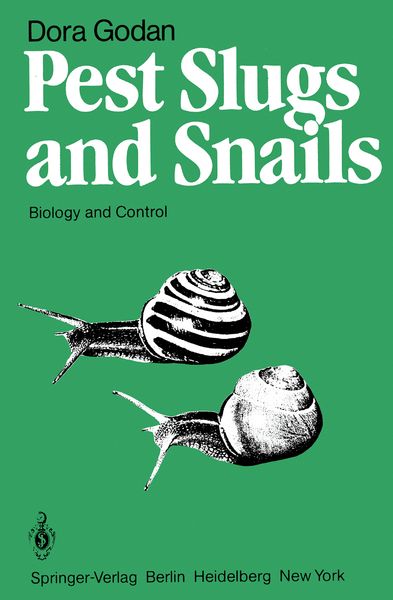
Pest Slugs and Snails Biology and Control

Fr. 138.00

inkl. gesetzl. MwSt., Versandkostenfrei


Beschreibung

Produktdetails

Einband

Taschenbuch

Erscheinungsdatum

07.12.2011

Verlag

Springer Berlin

Seitenzahl

448

Maße (L/B/H)

24.4/17/2.5 cm

Gewicht

794 g

Auflage

Softcover reprint of the original 1st ed. 1983

Übersetzt von

S. Gruber

Sprache

Englisch

ISBN

978-3-642-68799-0

Beschreibung

Produktdetails

Einband

Taschenbuch

Erscheinungsdatum

07.12.2011

Verlag

Springer Berlin

Seitenzahl

448

Maße (L/B/H)

24.4/17/2.5 cm

Gewicht

794 g

Auflage

Softcover reprint of the original 1st ed. 1983

Übersetzt von

S. Gruber

Sprache

Englisch

ISBN

978-3-642-68799-0

Herstelleradresse

Springer-Verlag GmbH
Tiergartenstr. 17
69121 Heidelberg
DE

Email: ProductSafety@springernature.com

Kundinnen und Kunden meinen

0 Bewertungen

Informationen zu Bewertungen

Zur Abgabe einer Bewertung ist eine Anmeldung im Konto notwendig. Die Authentizität der Bewertungen wird von uns nicht überprüft. Wir behalten uns vor, Bewertungstexte, die unseren Richtlinien widersprechen, entsprechend zu kürzen oder zu löschen.

Die Bewertungen sind nach Format, Anzahl Sterne und Datum sortiert.

Verfassen Sie die erste Bewertung zu diesem Artikel

Helfen Sie anderen Kund*innen durch Ihre Meinung

Kundinnen und Kunden meinen

0 Bewertungen filtern

  • Produktbild: Pest Slugs and Snails
  • Produktbild: Pest Slugs and Snails
  • 1 The Biology of Gastropods.- 1.1 Morphology and Anatomy.- 1.2 Physiology.- 1.2.1 Metabolism.- 1.2.2 The Nervous System, Neurohormones.- 1.2.3 Heart, Circulation.- 1.2.4 The Kidney, Excretion.- 1.2.5 Feeding, Digestion.- 1.2.6 Reproduction and Development.- 1.2.6.1 The Genital Tract, Sexual Reproduction.- 1.2.6.2 Hormonal Control.- 1.2.7 The Shell.- 1.3 Ecology.- 1.4 Methods for Mass Rearing.- 1.4.1 Lamellibranchia.- 1.4.2 Gastropods.- 1.4.3 Parasites as Limiting Factors.- 1.5 Molluscs as Carriers of Disease in Man, Animals and Plants.- 1.6 Molluscs as Indicators of Environmental Pollution with Chemicals.- 1.7 Important Pest Gastropod Species.- 1.7.1 Distribution.- 1.7.2 Taxonomy and Nomenclature of European Pest Gastropods.- 1.7.3 Classification of the Most Important Pest Gastropods and Some Carnivorous Snails.- 1.7.4 Key of Identification for Central European Pest Gastropods.- 2 Damage Caused by Gastropods.- 2.1 Causal Factors.- 2.1.1 Activity of Slugs and Snails.- 2.1.2 Population Density.- 2.2 Damage to Crops and Harvests.- 2.2.1 Gastropod Damage in the Federal Republic of Germany.- 2.2.1.1 Agriculture.- 2.2.1.2 Horticulture.- 2.2.1.3 Fruitgrowing.- 2.2.1.4 Forestry.- 2.2.1.5 Agricultural Warehouses, Storerooms and Cellars.- 2.2.2 Gastropod Damage in Other Countries.- 2.2.2.1 Western Europe.- 2.2.2.2 Southern Europe.- 2.2.2.3 Austria and Eastern Europe.- 2.2.2.4 Northern Europe.- 2.2.2.5 America.- 2.2.2.6 Africa, Asia, Pacific, Australia.- 2.2.3 Pattern of Damage and Pest Identification.- 2.3 Prognosis, Critical Number.- 2.3.1 Problems Encountered in Prognosis.- 2.3.2 Critical Number.- 2.3.3 Methods.- 2.3.3.1 Estimating Population Density.- 2.3.3.2 Marking.- 3 Control of Pest Gastropods.- 3.1 Problems Encountered in the Control of Pest Gastropods.- 3.1.1 Influence of Biological and Ecological Factors.- 3.1.1.1 Species-Specific Factors.- 3.1.1.2 The Effect of Age.- 3.1.1.3 Water Regulation, Activity.- 3.1.1.4 Season (Hibernation, Aestivation).- 3.1.1.5 Nutrition.- 3.1.1.6 Behaviour, Learning Capacity, Habituation.- 3.1.2 Repellent Effect of Molluscicides.- 3.1.3 Bait and the Attractiveness of Bait Pellets.- 3.1.4 Reasons for Failure of Chemical Control.- 3.2 Chemical Control Methods.- 3.2.1 Molluscicides Used Against Terrestrial Gastropods.- 3.2.1.1 Metaldehyde.- 3.2.1.2 Carbamate.- 3.2.1.3 Differences in the Symptoms of Poisoning by Metaldehyde and Carbamates.- 3.2.1.4 Combination of Metaldehyde with Other Active Ingredients.- 3.2.1.5 Methods of Application.- 3.2.2 Dehydrating and Caustic Compounds.- 3.2.2.1 Calcium Cyanamide.- 3.2.2.2 Copper Salts, Compounds of Heavy Metals.- 3.2.3 Molluscicides for Control of Aquatic and Amphibious Snails.- 3.2.3.1 Niclosamide.- 3.2.3.2 Trifenmorph.- 3.2.3.3 NaPCP.- 3.2.3.4 Other Chemical Substances.- 3.2.3.5 Inhibitors.- 3.2.3.6 Naturally Occurring Molluscicidal Substances.- 3.2.4 Molluscicidal Effects of Herbicides, Insecticides, and Repellents.- 3.2.4.1 Herbicides.- 3.2.4.2 Insecticides.- 3.2.4.3 Repellents.- 3.2.5 Molluscicides.- 3.2.5.1 Mode of Action and Detoxication.- 3.2.5.2 Resistance.- 3.2.5.3 Residues.- 3.2.5.4 Side Effects.- 3.2.5.5 Maximum Residue Limits.- 3.2.5.6 Time Intervals.- 3.3 Protection of Stored Products.- 3.4 Plant Quarantine Regulations.- 3.4.1 Dispersal of Pest Gastropods.- 3.4.2 Regulations and Control.- 3.5 Mechanical and Ecological Control.- 3.5.1 Mechanical Control.- 3.5.2 Ecological Control.- 3.6 Biological Control.- 3.6.1 Agents of Disease (Viruses, Bacteria, Fungi).- 3.6.1.1 Viruses.- 3.6.1.2 Bacteria.- 3.6.1.3 Fungi.- 3.6.2 Parasites.- 3.6.2.1 Protozoa.- 3.6.2.2 Helminths.- 3.6.2.3 Host-Parasite Interaction.- 3.6.3 Predators.- 3.6.3.1 Molluscs.- 3.6.3.2 Arthropods.- 3.6.3.3 Vertebrates.- 3.6.4 Genetic Methods.- 3.6.4.1 Hybrid Gastropods.- 3.6.4.2 Self-Destruction.- 3.6.5 Biotechnical Control.- Sources of the Illustrations.- References.- Plates.- Index of Scientific Names of Molluscs, Their Pathogens, Parasites and Predators.