• Produktbild: Microbial Survival in the Environment
  • Produktbild: Microbial Survival in the Environment

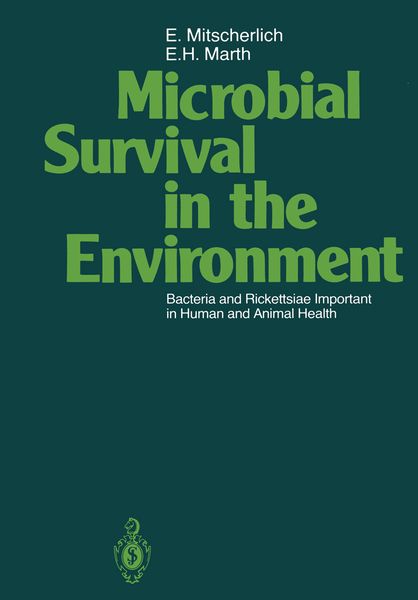
Microbial Survival in the Environment Bacteria and Rickettsiae Important in Human and Animal Health

Fr. 137.00

inkl. gesetzl. MwSt., Versandkostenfrei


Beschreibung

Produktdetails

Einband

Taschenbuch

Erscheinungsdatum

22.11.2011

Verlag

Springer Berlin

Seitenzahl

803

Maße (L/B/H)

24.4/17/4.4 cm

Gewicht

1352 g

Auflage

Softcover reprint of the original 1st ed. 1984

Sprache

Englisch

ISBN

978-3-642-69976-4

Beschreibung

Produktdetails

Einband

Taschenbuch

Erscheinungsdatum

22.11.2011

Verlag

Springer Berlin

Seitenzahl

803

Maße (L/B/H)

24.4/17/4.4 cm

Gewicht

1352 g

Auflage

Softcover reprint of the original 1st ed. 1984

Sprache

Englisch

ISBN

978-3-642-69976-4

Herstelleradresse

Springer-Verlag KG
Sachsenplatz 4-6
1201 Wien
AT

Email: ProductSafety@springernature.com

Kundinnen und Kunden meinen

0 Bewertungen

Informationen zu Bewertungen

Zur Abgabe einer Bewertung ist eine Anmeldung im Konto notwendig. Die Authentizität der Bewertungen wird von uns nicht überprüft. Wir behalten uns vor, Bewertungstexte, die unseren Richtlinien widersprechen, entsprechend zu kürzen oder zu löschen.

Die Bewertungen sind nach Format, Anzahl Sterne und Datum sortiert.

Verfassen Sie die erste Bewertung zu diesem Artikel

Helfen Sie anderen Kund*innen durch Ihre Meinung

Kundinnen und Kunden meinen

0 Bewertungen filtern

  • Produktbild: Microbial Survival in the Environment
  • Produktbild: Microbial Survival in the Environment
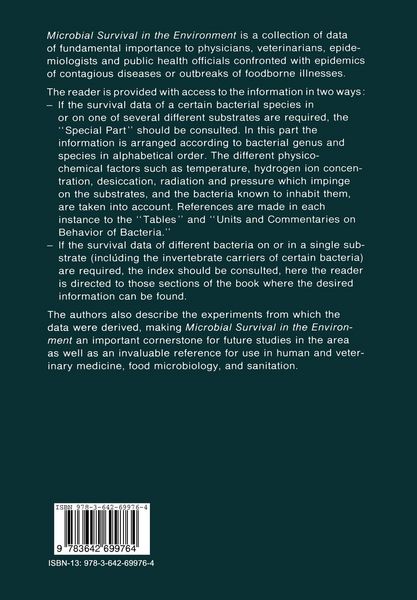
  • I Special Part Bacteria Considered in Alphabetical Order: Vide index.- Bacteria Considered in Alphabetical Order: Vide index.- II Tables.- II Tables.- 1 Growth limits, temperature, hydrogen ion concentration.- 2 Hydrogen ion concentration.- 3–9 Air.- 10 Beer (298).- 11–13 Bread and baker’s ware.- 14–18 Buffer.- 19 Carbonated soft drinks.- 20 Carcass and organs.- 21–22 Carpet, carpeting.- 23 Ceramic.- 24–26 Chocolate.- 27 Cocoa (298).- 28–29 Coffee (298).- 30–47 Culture.- 48–51 Dust.- 52–64 Eggs (298).- 65–66 Farinaceous products.- 67–80 Fats (298).- 81–86 Feces.- 87–91 Foods of casserole type (298).- 92 Fruits (298).- 93–100 Fruit products, fruit juice.- 101–110 Glass, desiccation.- 111–115 Honey (298).- 116–121 Ice cream (298).- 122 Kitchen refuse.- 123–124 Litter.- 125 Manure, liquid.- 126–129 Mayonnaise, acid (298).- 130–134 Meat (298).- 135–140 Meat products (298).- 141 Membrane filter.- 142–152 Metal (298).- 153–173 Milk (298).- 174–183 Milk products.- 184–186 Mineral water (298).- 187–188 Nuts (298).- 189–196 Paper.- 197–199 Pasture.- 200 Pharmaceutical products, sugar.- 201 Plasma, human, cold resistance.- 202–203 Plastic material.- 204 Rubber, ionizing radiation resistance.- 205–230 Salt.- 231–239 Seawater.- 240–241 Semen, animal.- 242 Sewage.- 243 Shellfish.- 244 Shrimps (298).- 245–250 Skin.- 251–253 Sludge.- 254–261 Slurry.- 262–264 Soap.- 265–281 Soil.- 282–283 Spices (298).- 284–286 Spirits (298).- 287 Tea (298).- 288–295 Textiles (298).- 296–297 Urine.- 298 Various substrata.- 299–304 Vegetables (298).- 305–327 Water.- 324–327 Water activity.- Wood.- III Units and Commentaries on Behavior of Bacteria.- 1 General Physicochemical Influences.- Cold resistance.- Heat resistance.- Radiation resistance.- Desiccation.- Pressure.- Water activity (water availability).- 2 Special Influences of the Environment.- Air and dust.- Buffer.- Butter.- Cheese.- Honey.- Litter.- Milk, fermented.- Oil.- Salt.- Shellfish.- Skin.- Slurry.- Soil.- Pathogenic bacteria growing in soil.- Textiles.- Vegetables.- Water.- Pathogenic bacteria growing in seawater or marine sediments.- Pathogenic bacteria growing in freshwater and freshwater sediments.- IV References.- V Subject Index.- Bacteria.- Environment.- Avertebrates as Vectors of Bacteria.- Bacterial Cultures.- Beverages.- Bodies of Man and Animal, their Parts and Excretions.- Feed.- Food, Spices, Salt and Tobacco.- Fundamental Elements of the Environment.- Houses.- Instruments, Medical.- Pharmaceutical Products.- Stables.- Technical Basic Materials.- Toilet and Toilet Articles.- Wastes of Man and Animal.