• Produktbild: Boophilus microplus
  • Produktbild: Boophilus microplus

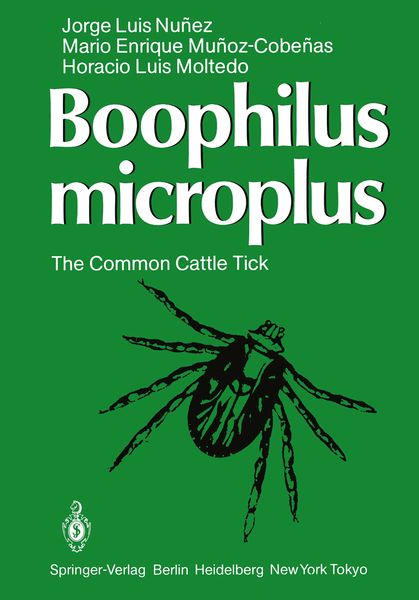
Boophilus microplus The Common Cattle Tick

Fr. 137.00

inkl. gesetzl. MwSt., Versandkostenfrei


Beschreibung

Produktdetails

Einband

Taschenbuch

Erscheinungsdatum

06.12.2011

Verlag

Springer Berlin

Seitenzahl

204

Maße (L/B/H)

24.4/17/1.3 cm

Gewicht

395 g

Auflage

Softcover reprint of the original 1st ed. 1985

Übersetzt von

H. Bailie + weitere

Sprache

Englisch

ISBN

978-3-642-70258-7

Beschreibung

Produktdetails

Einband

Taschenbuch

Erscheinungsdatum

06.12.2011

Verlag

Springer Berlin

Seitenzahl

204

Maße (L/B/H)

24.4/17/1.3 cm

Gewicht

395 g

Auflage

Softcover reprint of the original 1st ed. 1985

Übersetzt von

  • H. Bailie
  • C. Michelsohn
  • C. Paris

Sprache

Englisch

ISBN

978-3-642-70258-7

Herstelleradresse

Springer-Verlag KG
Sachsenplatz 4-6
1201 Wien
AT

Email: GPSR Kontakt

Noch keine Bewertungen vorhanden

Verfassen Sie die erste Bewertung zu diesem Artikel

Helfen Sie anderen Kundinnen und Kunden durch Ihre Meinung.

Kundinnen und Kunden meinen

Bewertungen (0)

  • Produktbild: Boophilus microplus
  • Produktbild: Boophilus microplus
  • I Introduction.- 1 Debilitating Action Exercised by a Hematophagus Parasite on a Host.- 2 Transmission of Diseases to Hematozoons.- 3 Losses Suffered by the Tanning Industry.- References.- II Taxonomy.- External Morphological Characteristics of Argasidae.- Internal Morphological Characteristics of Ixodidae and Argasidae.- A Digestive System.- B Excretory System.- C Respiratory System.- D Genital Organs.- References.- III Morphology and Physiology.- Capitulum.- Chelicerae.- Palps.- Hypostome.- Legs.- Dorsal Shield.- Digestive System.- Central Nervous System.- Circulatory System.- Respiratory System.- Reproductive System.- Male Genital Organs.- Female Genital Organs.- Cuticle (Exoskeleton).- References.- IV Life Cycle.- Free-Living Cycle.- Preoviposition.- Oviposition.- Postoviposition.- Incubation.- Eclosion.- Free-Larval Life.- Incidence of Environmental Factors Upon the Development of the Non-Parasitic Life Cycle.- Parasitic Life Cycle.- Larval Stage.- Neolarva.- Larva Type A.- Larva Type B.- Larva Type C.- Engorged Larva.- Nymphal Stage.- Nymph.- Engorged Nymph.- Adult Stage.- Male.- Undistended Female.- Semi-Engorged Female.- Engorged Female.- Some Thoughts on the Parasitic Cycle.- References.- V Therapeutics and Control.- Principles of the Control of Ticks.- Use of Chemical Products in the Control of Ticks.- Properties of a Good Ixodicide.- Exhaustion of Ixodicides in Dips.- Methods of Applying Ixodicides.- Immersion Dips.- Spraying.- Application of Systemic Ixodicides.- References.- Therapeutics.- Evolution of Tickicide Drugs.- Arsenical Compounds.- Organochloride Compounds.- DDT.- DDT Penetration in the Body of Insects.- Toxicity for Large Animals.- Mode of Action of DDT.- BHC.- Aqueous Suspensions.- Wettable Powders.- Gammexane Activity with Other Insecticides.- Disadvantages of Gamma BHC.- Penetration of BHC.- Symptoms of Intoxication in Insects.- Mechanism of Action.- Residual Effect.- Toxaphene.- Chlordane.- Dieldrin.- Aldrin.- Organophosphorous Compounds.- Physiopathology.- Function of Acetylcholine.- Acetylcholine Breakdown by Cholinesterase.- Cholinesterase Active Centres and Breakdown of Acetylcholine.- Entrance into the Body of the Arthropod.- Distribution.- Symptoms of Intoxication by Poisoning in Ticks.- Organophosphorous Toxicity in Mammals.- Symptoms of Intoxication in Mammals.- Necropsia Findings.- Intoxication Treatment.- Commercial Formulations.- Carbonphenothion.- Chlorfenvinphos.- Chlorpyriphos.- Coumaphos.- Diazinon.- Ethion.- Phosmet.- Dioxathion.- Carbamates.- Carbaryl.- New Acaricide Drugs.- Nimidane.- Amitraz.- Clenpyrin.- Chlordimeform.- Chlormethiuron.- Iminothiazol.- Synthetic Pyrethroids.- Evolution of the Synthetic Pyrethroids.- Mode of Action.- Toxicity to Man and Animals.- Permethrin.- Cypermethrin.- Cypothrin.- Cyhalothrin.- Flumethrin.- Deltamethrin.- Drugs of Systemic Action.- Ivermectin.- Closantel.- References.- VI Tick Control off the Host.- Grazing Treatments with Acaricides.- Repellent Action of Certain Pastures.- Biological Control by Means of Predators.- Birds.- Parasites.- Bacteria and Viruses.- Ants and Spiders.- Wasps.- Sexual Sterilization of Adult Males.- Metabolic Alterations.- Hormones.- Sexual Hormones.- Use of Resistant Cattle.- References.- VII Host Resistance to Ticks.- 1 Resistance in Zebu (Bos indicus) and its Crosses.- 2 Resistance in European Cattle (Bos taurus).- A Influence of Anatomical and Physiological Characteristics of Skin.- B Hypersensitivity.- C Immunity.- Studies on Dermacentor andersoni.- D Grooming.- The Inheritance of Resistance.- Conclusions.- References.- VIII Resistance.- Clinical Symptoms.- Diagnosis.- Symptoms.- Mechanisms.- Arsenicals.- Mechanism of Resistance.- Background.- Chlorides.- Mechanism of Resistance.- Background.- Organophosphorous Compounds and Carbamates.- Mechanisms of Resistance.- Background.- Synthetic Pyrethroids.- Evolution of Resistance After Relaxation of Chemical Pressure.- Genetics of Resistance.- Measuring Resistance.- Techniques Based on Larvae.- A Immersion Techniques.- B Techniques by Contact.- Techniques Based on Engorged Females.- References.