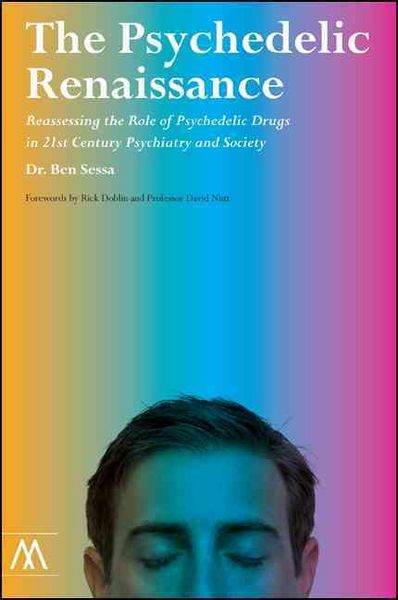
Produktbild: Ben, S: Psychedelic Renaissance

Ben, S: Psychedelic Renaissance

Fr. 31.90

inkl. gesetzl. MwSt., Versandkostenfrei


Beschreibung

Produktdetails

Einband

Taschenbuch

Erscheinungsdatum

28.09.2012

Verlag

Muswell Hill Press

Maße (L/B/H)

23.4/15.7/1.4 cm

Gewicht

382 g

Sprache

Englisch

ISBN

978-1-908995-00-1

Beschreibung

Zitat

Although books on psychedelics abound, volumes like The Psychedelic Renaissance show how the field is now addressing the substance of findings from recent research rather than the legions of case reports and anecdotes Sessa enthusiastically progresses his account of the potential of psychedelic drugs into spirituality and creativity, bringing his unique clinical background to consider concepts too often neglected in psychiatric illness. The Lancet

Produktdetails

Einband

Taschenbuch

Erscheinungsdatum

28.09.2012

Verlag

Muswell Hill Press

Maße (L/B/H)

23.4/15.7/1.4 cm

Gewicht

382 g

Sprache

Englisch

ISBN

978-1-908995-00-1

Kundinnen und Kunden meinen

0 Bewertungen

Informationen zu Bewertungen

Zur Abgabe einer Bewertung ist eine Anmeldung im Konto notwendig. Die Authentizität der Bewertungen wird von uns nicht überprüft. Wir behalten uns vor, Bewertungstexte, die unseren Richtlinien widersprechen, entsprechend zu kürzen oder zu löschen.

Die Bewertungen sind nach Format, Anzahl Sterne und Datum sortiert.

Verfassen Sie die erste Bewertung zu diesem Artikel

Helfen Sie anderen Kund*innen durch Ihre Meinung

Kundinnen und Kunden meinen

0 Bewertungen filtern

  • Produktbild: Ben, S: Psychedelic Renaissance
  • Forewords by Rick Doblin and David Nutt Introduction Apocalypse, Now and Then What Can the Psychedelics Off Us? Defining Psychedelic Drugs Brain Toxins Sacramental Gifts Alien Visitors Dangerous Drugs of Abuse Research and Clinical Tools The Joy of Hippie Culture 1. Personal Reflection Just Missed the Sixties From a Pair of Crutches to a Pair of Turntables Mind Over Matter Where Did All the Flowers Go? Discovering the Lost History Turn On, Tune In, and Disseminate Closure of the Past and Foundation for the Future Undreamt of Possibilities for Therapy 2. The Experience and the Drugs Why Do They Do It and What's it Like? 1. Physiological effects 2. Heightening or distortion of perceptions in all sensory modalities 3. Altered sense of space and time 4. 'Cinematographic' effects 5. Regressive behavior and an increased recall of childhood memories 6. Increased sensitivity to the feeling of others 7. Religious or spiritual experience 8. Being at one with the universe 9. Psychotic/delirious changes As a Neuroscientist, What Does All This Mean? 1. Unity 2. Objectivity and reality 3. Transcendence of space and time 4. Sense of sacredness 5. Deeply felt positive mood 6. Paradoxicality 7. Alleged ineffability 8. Transiency 9. Positive changes in attitude and/or behavior The Importance of Set and Setting Careful Planning, Due Care and Attention How to Take LSD Safely Personal Opinion, Matter of Judgment and Disclaimer Embracing the Challenge The Drugs Themselves Classifying the Psychedelic Drugs The 'Classical' Psychedelics The Entactogens or Empathogens The NMDA-antagonist Dissociatives The Kappa-Opioid Agonist Dissociatives Tryptamines (or those psychedelic drugs closely related to it) Phenthylamines Some Common Psychedelic Substances in More Detail 1. LSD 2. Psilocybin 3. N,N-Dimethyltryptamine (DMT) 4. Mescaline 5. 3, 4-Methylenedioxymethamphetamine (MDMA) 6. Ketamine 7. Some Other Phenthylamines 3. Early Pioneers of the First and Second Psychedelic Eras The First Psychedelic Era: 1880 to 1930 The Second Psychedelic Era: 1938 to 1976 Hofmann the Creative Explorer LSD Comes to Blighty for the First Time Just an Average Day at Work Will LSD be the Next Big Thing in Psychiatry? LSD as a Psychotomimetic Enter Dr. Humphrey Osmond Using LSD to Treat Alcohol Dependency Enter Aldous Huxley A Brief Mention of Al Hubbard Huxley the Conservative Stanislav Grof and the Perinatal Matrices Harvard University and Timothy Leary Leary Discovers the Divine Mushroom Leary Graduates to LSD God in a Bottle God in a Bottle? Not Everyone's Cup of Tea Things Start to Change and Doctor's Get Nervous A Good Thing Turned Sour, But Outcomes Remain Good Did Psychedelic Therapy Actually Work in the 1960s? The Anti-Psychiatry Psychiatrist with a Passion for LSD Prohibition and Ecstasy 4. The Prehistory and Ancient History of Hallucinogens Contemplation of Navels Sitting Around and Coming Up with God Portal for the Immortal Back to the Cave People Mushrooms Gave Us Thought and Thinking Gave Us Language The Mushroom cycle The Birth of Religion Shamanism Many Religions Can Trace Their Roots to Psychedelic Drugs Soma Eleusinian Rites Psychedelic Drugs at the Heart of Christianity Modern Spirituality in Europe: The Middle Ages and Witches Psychoactive Plants Available to Europeans in the Middle Ages Witches, Witchcraft, Ergotism, and Witch-hunts Stigmatisation of Mental Illness Hunting Down and Persecuting Psychedelic Users Has Not Gone Away Spaghetti Monsters and Pot Head Pixies the Varieties of Religious and Psychedelic Experiences Wrestling Bliss Off the Church Conclusion and Confusion about Collusion with the Delusion 5. Hippie Heydays, Ravers and the Birth of Ecstasy Meet the Hippies Who's Going to Take All the Credit - or the Blame? The Beat Generation One Flew East, One Flew West and One Took LSD and Bought a School Bus The Californian Porto-Hippies Get a Place of Their Own Literally, Psychedelically Mind-expanding Words Did JFK Drop LSD? Leary Leaves Harvard and the Fun Really Begins Suddenly LSD is Everywhere Read All About It It's all Too Much Lose Your Mind - But be sure You're Home for Tea wales, London, Goat-breeding and a WPC Called Julie Haight, Collapse and Blame: It's all LSD's Fault But It's Not All Doom and Gloom LSD, Computer Geeks and Green Activists: A New Age of Social Enlightenment It's Not All Over Yet Ecstasy is Upon Us The Grandfather of MDMA Meets His Grandson for the First Time MDMA Becomes Too Popular Gets Banned and MAPS is Born Banning MDMA Gives Birth to Ecstasy and Rave Modern Raving, Festivals and Shamanism: Come Together Kids on E Demonization of Ecstasy MDMA Research On the Ropes of Labels On the Wrong Bottles Doblin Meets Mithoefer at a Conference for the Spiritual Vine Things start Looking Up for MDMA Research 6. Psychedelic Creativity Measuring the Influence of Psychedelic on Creativity Creativity, Psychedelics and the Human Brain Art, Music and Psychedelic Creativity Studying How Psychedelics Influence Creativity A Really Nice Study by James Fadiman and Colleagues Commercial and Design Applications for Psychedelic Creativity: LSD Architecture From Double-helix DNA to San Franciscan Hippies and Geeks with Mice Clinical Applications for Psychedelic Creativity: Autism The Future Looks Creative for Psychedelic Research 7. Modern Uses of Natural Plant and Fungi Psychedelics Wasson All the Fuss About? Mazatec Magic Mushroom Morning Mayhem He Sees When You are Sleeping. He Knows When You're Awake. Objections to the Mushroom Cult The Long-standing Use of Peyote Cacti Ibogaine: Natures of Anti-addiction Plant The Eerie effects of Diviner's Sage: Salvia Divinorum The Sacred Vine: Ayahuasca But What is It All About? The Ceremony Ayahuasca Through the Ages Ayahuasca in Modern Times The Weed: The Risks, Benefits, Chemistry and Culture of Cannabis Indian Cannabis East African and Jamaican Rastafarianism and Cannabis the Killer Weed is Here to Stay This is What I tell My Teenage Patients About Cannabis Being a 'Psychedelic Consultant' for Music Television If in South Africa, One Must Try the Plant Sceletium When in Australia You May Wish to Consider Cane Toad Licking? If You Get to Tonga, You May Want to Check Out the Keva Next Stop India, for Indian Snakeroot Calamus! Calamus! Will You Do the Fandango? If You Stop in South East Asia, Be Sure to Ask for Kratom Nonda Mushrooms The 'Rubbish' Pitohui Bird the Fierce Agara Leaves of Papua New Guinea The Visionary Plants of Africa The Zulu's Strawflower Smoke Jenkem Pandanus Nuts What happened to the Dirty Sanchez Boys? 8. The Psychedelic Renaissance Part One: Movers and Shakers A Coming Together of Disparate Tribes Some Important Contemporary Psychedelic Organisations 1. The Multidisciplinary Association for Psychedelic Studies (MAPS) 2. The Heffter Research Institute 3. The Beckley Foundation 4. Council of Spiritual Practice 5. The Gaia Media Foundation 6. Horizons: Perspectives of Psychedelics 7. Breaking Convention 8. The Open Foundation 9. Erowid 10. Bluelight 11. Shroom with a View 12. Neurosoup 13. Reality Sandwich 14. Regeneration 15. Psychedelic Spirituality Forum 16. Students for Sensible Drug Policy Some Important Contemporary Psychedelic Researchers 9. The Psychedelic Renaissance Part Two: Contemporary Studies When Did the Psychedelic Renaissance Begin? How to Get a Drug to Market How This Research Method Relates to Psychedelic Drugs Looking at the Contemporary Research for the Drugs 1. MDMA 2. LSD 3. Psilocybin 4. Dimethyltryptamine (DMT) 5. Ayahuasca 6. Ketamine 7. Ibogaine Conclusion 10. Psychedelics Caught in the Crossfire of the War on Drugs Crime Pays. War is a Money-spinner. But for Whom? Evidence-based Decriminalisation and Temple Balls MDMA: Are We throwing the baby Out with the Bathwater? Those Evil Blacks and Mexican Drug Users Just How Dangerous is MDMA? How Frequently are Clinical Syndromes Attributed to Ecstasy Use? Unscientific Attitudes Affecting Medical Research The Socio-political Agenda on Drugs has a Deleterious Effect on Medical Research Medical Research with Psychedelics requires Courage The Concept of Harm Minimisation Demonization of Prohibition Why Does This Issue Matter? Recreational Drug Use for Psycho-spiritual Growth In Conclusion Conclusion Back to the Future Psychiatry Need Psychedelics, and Psychedelics need Psychiatry Prehistoric and Recent Psychotherapy with Psychedelics The Problem with Psychiatry Why Psychedelic Medicine Works the Problem with the Recreational Use of Psychedelics The Problem with the Medical Use of Psychedelics Resolution of These Problems Summary of this Book and Orientation for Future Direction Acknowledgments Notes Bibliography and Further Reading