Gutscheinbedingungen

*Gültig bis 20.07.2026 auf alle Bücher. Ausgeschlossen sind Zeitschriften, Prozentbücher und Abos | Einlösbar in allen Buchhandlungen von Orell Füssli, Barth Bücher, Buchladen Rapunzel, Papeterie Köhler, Schuler Orell Füssli, Stauffacher und ZAP unter Vorweisung des Gutscheins, auf www.orellfüssli.ch durch Eingabe des Gutscheincodes. Beim Service „eBooks verschenken“ und bei eBook-Käufen via eReader nicht einlösbar | Mindesteinkaufswert: Fr. 30.- | Nicht mit anderen Rabatten kumulierbar.

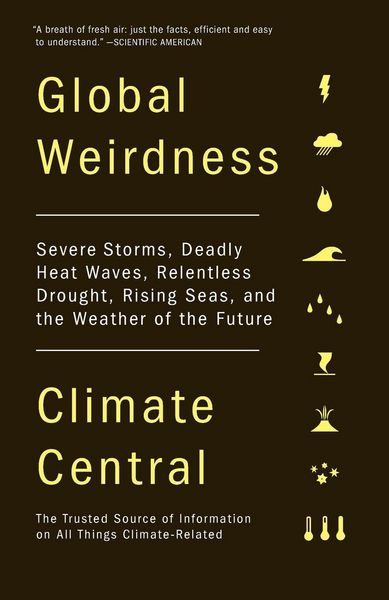
Produktbild: Global Weirdness

Global Weirdness Severe Storms, Deadly Heat Waves, Relentless Drought, Rising Seas, and the Weather of the Future

Fr. 31.90

inkl. gesetzl. MwSt., Versandkostenfrei


Beschreibung

Produktdetails

Einband

Taschenbuch

Erscheinungsdatum

07.05.2013

Verlag

Knopf Doubleday Publishing Group

Seitenzahl

226

Maße (L/B/H)

20.3/13.2/1.4 cm

Gewicht

288 g

Sprache

Englisch

ISBN

978-0-307-74336-7

Beschreibung

Produktdetails

Einband

Taschenbuch

Erscheinungsdatum

07.05.2013

Verlag

Knopf Doubleday Publishing Group

Seitenzahl

226

Maße (L/B/H)

20.3/13.2/1.4 cm

Gewicht

288 g

Sprache

Englisch

ISBN

978-0-307-74336-7

Herstelleradresse

Libri GmbH
Europaallee 1
36244 Bad Hersfeld
DE

Email: GPSR Kontakt

Noch keine Bewertungen vorhanden

Verfassen Sie die erste Bewertung zu diesem Artikel

Helfen Sie anderen Kundinnen und Kunden durch Ihre Meinung.

Kundinnen und Kunden meinen

Bewertungen (0)

Die Leseprobe wird geladen.
  • Produktbild: Global Weirdness
  • Introduction
     
    I WHAT THE SCIENCE SAYS
    1 “Normal Climate” Meant Something Different to the Dinosaurs and the Woolly Mammoths than It Does to Us.
    2 The Climate Has Changed Dramatically in the Past.
    3 Our Ancestors Survived Climate Change. But It Wasn’t Always Pretty.
    4 Dinosaurs Didn’t Drive Gas-Guzzlers or Use  Air-Conditioning.
    5 Carbon Dioxide Is Like a Planetwide Sweat Suit (Sort Of).
    6 “ Global Warming” or “Climate Change”? Doesn’t Matter, It’s All the Same.
    7 Weather Is Not Climate. Climate Is Not Weather. Except They Kind of Are.
    8 On Venus, the Greenhouse Effect Makes It Hot Enough to Melt Lead.
    9 Carbon Dioxide Is Only Part of the Problem.
    10 Once We Invented the Steam Engine, Climate Change Was Pretty Much Inevitable.
    11 The Ozone Hole Is Not Global Warming. Global Warming Is Not the Ozone Hole.
    12 The Northern Hemisphere Has Heated Up More in the Past Half Century than in Any Similar Period Going Back Many Hundreds of Years.
    13 Coal Alone Churns Out 20 Percent of Human Greenhouse Emissions.
    14 A Quarter of the CO2 in the Atmosphere Comes from Fossil Fuels, and It’s on the Way Up.
    15 If We Stopped Burning Fossil Fuels, We’d Keep Emitting Greenhouse Gases.
    16 No Natural Force Has Been Able to Explain the Recent Warming.
    17 CO2 Could Stay in the Air for Hundreds or Thousands of Years, Trapping Heat the Whole Time.
    18 Extra CO2 Going into the Sea Is Making the Ocean More Acidic.
    19 Cutting Down Forests Means More CO2 Stays in the Atmosphere.
    20 Stop All Greenhouse Emissions and the Temperature Will Keep Going Up.
    21 Want an Exact Number for How Warm It Will Get? Sorry, Scientists Don’t Have One.
    22 Melting Ice Makes the Ocean Rise—but It’s Not the Only Factor.
    23 Nobody Ever Said Global Warming Means Every Year Will Be Hotter than the Last.
    24 Nobody Ever Said the Whole World Will Warm Up at the Same Rate.
    25 The Poles Are Warming Faster than Other Places. That’s Just What Climate Scientists Predicted.
     
    II WHAT’S ACTUALLY HAPPENING
    26 The Atmosphere Now Holds a Record Amount of CO2—Unless You Go Back Half a Million Years or More.
    27 Sea Level Is Eight Inches Higher than It Was in 1900.
    28 Earth’s Temperature Is About 1.4°F Higher than It Was in 1900.
    29 The Continental United States Had Twice as Many Record-High Temperatures During the First Decade of the Twenty- First Century as Record Lows.
    30 Glaciers and Ice Caps Have Been Shrinking Since About 1850.
    31 Greenland Is Losing Ice Faster All the Time. 
    32 Polar Bears Will Suffer as Sea Ice Continues to Melt.
    33 The Growing Season in the Continental United States Is Two Weeks Longer than It Was in 1900.
    34 Ecosystems Around the World Are Already Seeing Big Changes as the Climate Warms.
    35 Some Species Can Adapt to Changing Climate a lot Better than Others.
    36 The Arctic Has Been Losing Ice Much Faster than the Antarctic. That’s Just What Scientists Expected.
    37 Arctic Sea Ice Has Been on a Mostly Downward Spiral for the Past Thirty Years.
    38 Droughts, Torrential Rains, and Other Extreme Weather Are Happening More Often than They Used To.
    39 Rising Ocean Temperatures Are Causing a Major Die-Off in Corals.
     
    III WHAT’S LIKELY TO HAPPEN IN THE FUTURE
    40 Computer Models Aren’t Perfect. This Isn’t a Big Surprise.
    41 Since We Don’t Know Whether and How Much People Might Cut Greenhouse- Gas Emissions, It’s Hard to Know Exactly How High the Temperature Will Go by 2100.
    42 An Imperfect but Still Pretty Good Prediction: Sea Level Will Rise Two to Six Feet by 2100. But That Could Change.
    43 The Effects of Greenhouse Gases Won’t Magically Stop in 2100.
    44 Best Guess About Atlantic Hurricanes in the Future: Fewer, but More Powerful.
    45 Whatever Happens with Hurricanes, Higher Sea Level Will Make the Storm Surges They Cause More Destructive.
    46 Climate Change Will Force People to Move, but Whether It’s a Million People or a Hundred Million Is Hard to Say. 
    47 Climate Change Can Be Bad for Your Health.
    48 Climate Change Can Be Bad for the Health of Entire Species, and Even for Their Survival.
    49 Freshwater Will Become Scarcer.
    50 Droughts Will Probably Come More Often.
    51 Climate Change Is Likely to Destabilize the Food Supply.
     
    IV CAN WE AVOID THE RISKS OF CLIMATE CHANGE?
    52 Who Says a 2°C Temperature Rise Won’t Bring Really Bad Consequences? Not Scientists.
    53 Using Ethanol in Your Car Can Reduce Emissions—but Not Always by a lot.
    54 Burning Coal Doesn’t Necessarily Mean Emitting Greenhouse Gases.
    55 Wind Energy Can’t Solve Our Emissions Problem by Itself. Neither Can Other Renewables.
    56 Energy Costs Are Likely to Rise in the Short Term if We Limit Carbon Emissions.
    57 Nuclear Energy Is Essentially Carbon-Free. That Doesn’t Mean It’s Without Issues.
    58 Even If We Can’t Reduce Emissions, Futuristic Technology Could Save Us. Maybe. And It Could Be Risky.
    59 If We Made It Easier for Plants and Animals to Relocate,
    We Might Prevent Some Species from Going Extinct.
    60 Reducing Emissions Has Benefi ts and Costs. But It’s Hard to Pin Down Exactly What They Are.
     
    Epilogue: The IPCC Is What, Exactly?
    References
    List of Outside References