Gutscheinbedingungen

*Gültig bis 05.07.2026 auf (fast) alles. Ausgeschlossen sind Smartboxen, Zeitschriften, Tickets, Lebensmittel, Gaming-Elektroartikel, Tinte/Toner, Gutscheine, Geschenkkarten, Blumen und Abos | Einlösbar in allen Buchhandlungen von Orell Füssli, Barth Bücher, Buchladen Rapunzel, Papeterie Köhler, Schuler Orell Füssli, Stauffacher und ZAP unter Vorweisung des Gutscheins, auf www.orellfüssli.ch durch Eingabe des Gutscheincodes. Beim Service „eBooks verschenken“ und bei eBook-Käufen via eReader nicht einlösbar | Mindesteinkaufswert: Fr. 30.- | Nicht mit anderen Rabatten kumulierbar.

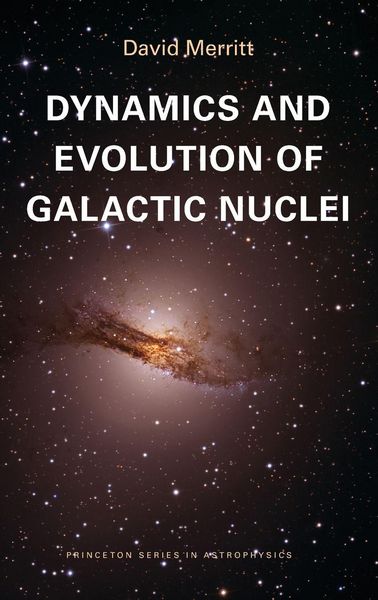
Produktbild: Dynamics and Evolution of Galactic Nuclei
Band 23

Dynamics and Evolution of Galactic Nuclei

Fr. 229.00

inkl. gesetzl. MwSt., Versandkostenfrei


Beschreibung

Produktdetails

Einband

Gebundene Ausgabe

Erscheinungsdatum

21.07.2013

Verlag

University Presses

Seitenzahl

568

Maße (L/B/H)

24/16.1/3.5 cm

Gewicht

1077 g

Sprache

Englisch

ISBN

978-0-691-12101-7

Beschreibung

Produktdetails

Einband

Gebundene Ausgabe

Erscheinungsdatum

21.07.2013

Verlag

University Presses

Seitenzahl

568

Maße (L/B/H)

24/16.1/3.5 cm

Gewicht

1077 g

Sprache

Englisch

ISBN

978-0-691-12101-7

Herstelleradresse

Libri GmbH
Europaallee 1
36244 Bad Hersfeld
DE

Email: GPSR Kontakt

Noch keine Bewertungen vorhanden

Verfassen Sie die erste Bewertung zu diesem Artikel

Helfen Sie anderen Kundinnen und Kunden durch Ihre Meinung.

Kundinnen und Kunden meinen

Bewertungen (0)

  • Produktbild: Dynamics and Evolution of Galactic Nuclei
  • Preface ix Chapter 1 INTRODUCTION AND HISTORICAL OVERVIEW 1 Chapter 2 OBSERVATIONS OF GALACTIC NUCLEI AND SUPERMASSIVE BLACK HOLES 11 2.1 Structure of galaxies and galactic nuclei 11 2.2 Techniques for weighing black holes 18 2.3 Supermassive black holes in the Local Group 29 2.4 Phenomenology 33 2.5 Evidence for intermediate-mass black holes 45 2.6 Evidence for binary and multiple supermassive black holes 47 2.7 Gravitational waves 52 Chapter 3 COLLISIONLESS EQUILIBRIA 57 3.1 Orbits, integrals, and steady states 59 3.2 Spherical nuclei 72 3.3 The adiabatic growth model 90 3.4 Axisymmetric nuclei 93 3.5 Triaxial nuclei 100 Chapter 4 MOTION NEAR SUPERMASSIVE BLACK HOLES 117 4.1 Keplerian orbits 120 4.2 Perturbed orbits 125 4.3 The post-Newtonian approximation 131 4.4 Newtonian perturbations 135 4.5 Relativistic orbits 157 4.6 Capture 176 4.7 Relativistic motion in the presence of a distributed mass 183 4.8 Motion in the presence of a second massive body 192 4.9 Stellar motions at the center of the Milky Way 203 Chapter 5 THEORY OF GRAVITATIONAL ENCOUNTERS 213 5.1 Basic concepts and time of relaxation 213 5.2 Diffusion coefficients 216 5.3 Fokker-Planck equation 236 5.4 Gravitational Brownian motion 246 5.5 Orbit-averaged Fokker-Planck equation 251 5.6 Gravitational encounters near a supermassive black hole 264 5.7 Encounters with a spinning supermassive black hole 277 Chapter 6 LOSS-CONE DYNAMICS 289 6.1 Spherical symmetry 297 6.2 Nonspherical nuclei 326 6.3 Binary and hypervelocity stars 341 6.4 Relativistic loss cones and extreme-mass-ratio inspirals 350 Chapter 7 COLLISIONAL EVOLUTION OF NUCLEI 361 7.1 Evolution of the stellar distribution around a supermassive black hole 366 7.2 Cusp (re)generation 383 7.3 Black-hole-driven expansion 390 7.4 Massive perturbers 391 7.5 Evolution of nuclei lacking massive black holes 395 Chapter 8 BINARY AND MULTIPLE SUPERMASSIVE BLACK HOLES 415 8.1 Interaction of a massive binary with field stars 417 8.2 Massive binary at the center of a galaxy: I. Early evolution 432 8.3 Massive binary at the center of a galaxy: II. Late evolution 446 8.4 Interaction of binary supermassive black holes with gas 462 8.5 Simulations of galaxy mergers 467 8.6 Dynamics of intermediate-mass black holes 468 8.7 Triple supermassive black holes and the final-parsec problem 483 Suggestions for Further Reading 489 References 493 Index 535