Gutscheinbedingungen

*Gültig bis 05.07.2026 auf (fast) alles. Ausgeschlossen sind Smartboxen, Zeitschriften, Tickets, Lebensmittel, Gaming-Elektroartikel, Tinte/Toner, Gutscheine, Geschenkkarten, Blumen und Abos | Einlösbar in allen Buchhandlungen von Orell Füssli, Barth Bücher, Buchladen Rapunzel, Papeterie Köhler, Schuler Orell Füssli, Stauffacher und ZAP unter Vorweisung des Gutscheins, auf www.orellfüssli.ch durch Eingabe des Gutscheincodes. Beim Service „eBooks verschenken“ und bei eBook-Käufen via eReader nicht einlösbar | Mindesteinkaufswert: Fr. 30.- | Nicht mit anderen Rabatten kumulierbar.

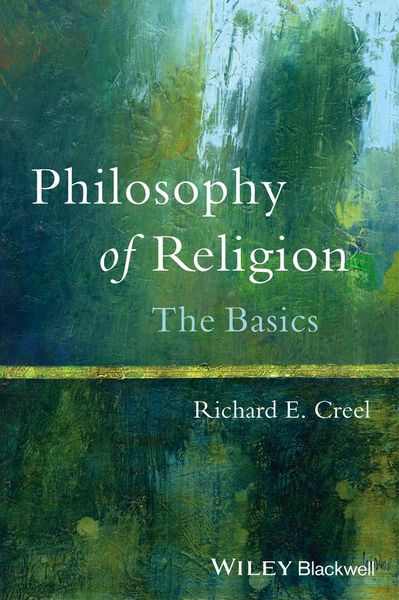
Produktbild: Philosophy of Religion

Philosophy of Religion The Basics

Fr. 152.00

inkl. gesetzl. MwSt., Versandkostenfrei


Beschreibung

Produktdetails

Einband

Gebundene Ausgabe

Erscheinungsdatum

14.10.2013

Verlag

John Wiley & Sons

Seitenzahl

224

Maße (L/B/H)

23.6/15.2/1.5 cm

Gewicht

408 g

Auflage

1. Auflage

Sprache

Englisch

ISBN

978-1-118-61957-5

Beschreibung

Rezension

"This text covers all the major topics in the philosophy of religion. It is clearly written in a style that is attractive and easy to understand and it is constructed with maximum critical candor. A rare find."
 
--William L. Power, The University of Georgia
 
"Richard Creel provides an informative guide to standard topics in philosophy of religion that draws on his years of experience in teaching the subject. He writes in a conversational style that should appeal to beginning students and stimulate them to develop their own thinking on these issues."
 
--David M. Holley, University of Southern Mississippi

Produktdetails

Einband

Gebundene Ausgabe

Erscheinungsdatum

14.10.2013

Verlag

John Wiley & Sons

Seitenzahl

224

Maße (L/B/H)

23.6/15.2/1.5 cm

Gewicht

408 g

Auflage

1. Auflage

Sprache

Englisch

ISBN

978-1-118-61957-5

Herstelleradresse

Libri GmbH
Europaallee 1
36244 Bad Hersfeld
DE

Email: GPSR Kontakt

Noch keine Bewertungen vorhanden

Verfassen Sie die erste Bewertung zu diesem Artikel

Helfen Sie anderen Kundinnen und Kunden durch Ihre Meinung.

Kundinnen und Kunden meinen

Bewertungen (0)

Die Leseprobe wird geladen.
  • Produktbild: Philosophy of Religion
  • Preface for Teachers xi

    Acknowledgements xii

    Introduction 1

    1 What Is Religion? 6

    1.1 Creed 6

    1.2 Code 7

    1.3 Cult 8

    1.4 Community 9

    1.5 Toward a Definition of Religion 11

    1.6 Ze, Zer, Mer 13

    2 Six Conceptions of God 17

    2.1 Experiential Sources of Concepts of God 17

    2.2 Six Conceptions of God 21

    2.3 Religious Naturalism 21

    2.4 Pantheism 23

    2.5 Panentheism (Process Theism) 25

    2.6 Deism 28

    2.7 Classical Biblical Theism is based on divine revelation 29

    2.8 Classical Philosophical Theism 31

    3 Divine Attributes and Dilemmas 34

    3.1 What Is a Dilemma? 39

    3.2 Ways to Respond to a Dilemma 40

    3.3 Divine Attribute Dilemmas 41

    3.4 Proposed Solutions to the Preceding Dilemmas 45

    3.4.1 Unsurpassability 45

    3.4.2 Omnipotence 46

    3.4.3 Are Omnipotence and Omnibenevolence Incompatible? 47

    3.4.4 Immutability and Personhood 48

    3.4.5 Divine Omniscience and Human Freedom 49

    3.5 Open Theism 53

    4 Human Language and Talk about God 57

    5 Arguments about the Existence of God 72

    6 The Ontological Argument 77

    6.1 Is Anselm's Argument Decisive? 82

    6.2 A Version of Duns Scotus' Ontological Argument 83

    7 The Cosmological Arguments 88

    7.1 The First Three of "The Five Ways" of Thomas Aquinas 89

    7.2 Paul Edwards' Infinite Regress Argument against the Cosmological Argument 92

    7.2.1 Two Criticisms of Edwards 93

    7.3 The Oscillatory Theory 93

    7.3.1 Criticism of the Oscillatory Theory 94

    7.4 The Kalam Cosmological Argument 95

    8 The Teleological or Design Arguments 101

    8.1 The Anthropic Principle 108

    8.2 The Multiverse 109

    9 God and Morality 118

    9.1 Two Arguments from Morality for Belief in the Existence of God 118

    9.2 The Relation of Morality to God 119

    9.2.1 The Divine Command Theory 119

    9.2.2 Theocentric Ethics 120

    9.2.3 Natural Law Ethics 121

    10 Religious Experience and Belief in God 128

    10.1 The Principle of Credulity and the Rationality of Belief in God 128

    10.2 Religious Experience as Evidence for the Existence of God 132

    10.3 Toward a Cumulative Argument for God 134

    11 Arguments against Belief in the Existence of God 137

    11.1 Evidentialism and the Burden of Proof 137

    11.2 Conceptual Arguments: Analysis of the Concept of God 138

    11.2.1 The Argument from Meaninglessness 138

    11.2.2 The Arguments from Incoherence and Self-Contradiction 138

    11.3 Arguments from Science 139

    11.3.1 The Natural Sciences: The Adequacy of Science 139

    11.3.2 Criticisms of Naturalism 141

    11.3.3 The Social Sciences: Religion and Emotion 142

    11.4 The Problem of Divine Hiddenness 145

    11.5 The Problem of Many Religions 147

    12 The Problem of Evil 152

    12.1 G.W. Leibniz (1646-1716) 153

    12.2 The Logical Argument from Evil: Arthur Schopenhauer (1788-1860) 153

    12.3 The Evidential Argument from Evil: Edward Madden, Peter Hare, William Rowe 153

    12.3.1 Criticisms of Arguments from Evil against the Existence of God 154

    12.4 Charles Hartshorne's Panentheist or Process Theodicy 156

    13 God and Life after Death 164

    13.1 Cessationism 165

    13.2 Immortalism 167

    13.3 Resurrectionism 170

    13.4 Personal Identity and Continuity 173

    14 Miracles, Revelation, and Prayer 179

    14.1 Miracles 179

    14.2 Revelation 182

    14.3 Prayer 183

    15 Rationality without Evidence 185

    15.1 Pascal's Wager 185

    15.2 Evidentialism vs. the Right to Believe 187

    15.3 Fideism 188

    15.3.1 Faith as Action or Leap 188

    15.3.2 Faith as Passion or Gift 189

    15.4 Agathism, Agatheism, and Religious Hope 190

    Glossary 194

    Biographical Notes 203

    Index 209