Gutscheinbedingungen

*Gültig bis 05.07.2026 auf (fast) alles. Ausgeschlossen sind Smartboxen, Zeitschriften, Tickets, Lebensmittel, Gaming-Elektroartikel, Tinte/Toner, Gutscheine, Geschenkkarten, Blumen und Abos | Einlösbar in allen Buchhandlungen von Orell Füssli, Barth Bücher, Buchladen Rapunzel, Papeterie Köhler, Schuler Orell Füssli, Stauffacher und ZAP unter Vorweisung des Gutscheins, auf www.orellfüssli.ch durch Eingabe des Gutscheincodes. Beim Service „eBooks verschenken“ und bei eBook-Käufen via eReader nicht einlösbar | Mindesteinkaufswert: Fr. 30.- | Nicht mit anderen Rabatten kumulierbar.

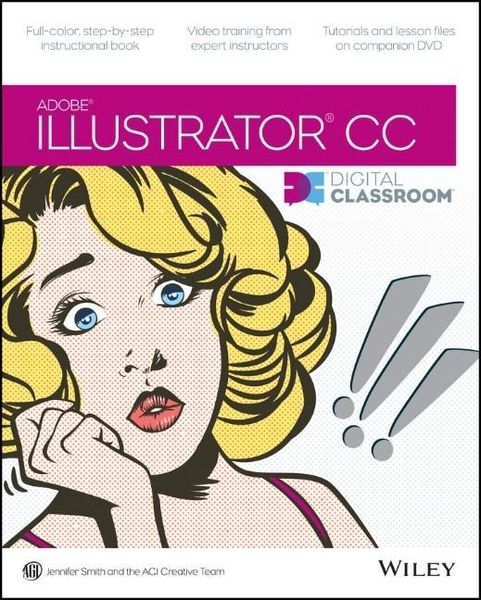
Produktbild: Illustrator CC Digital Classroom

Illustrator CC Digital Classroom By AGI Creative Team

Aus der Reihe Digital Classroom

Fr. 69.90

inkl. gesetzl. MwSt., Versandkostenfrei


Beschreibung

Produktdetails

Einband

Taschenbuch

Erscheinungsdatum

28.10.2013

Verlag

John Wiley & Sons

Seitenzahl

416

Maße (L/B/H)

23.2/18.9/2.5 cm

Gewicht

852 g

Auflage

1. Auflage

Sprache

Englisch

ISBN

978-1-118-63971-9

Beschreibung

Produktdetails

Einband

Taschenbuch

Erscheinungsdatum

28.10.2013

Verlag

John Wiley & Sons

Seitenzahl

416

Maße (L/B/H)

23.2/18.9/2.5 cm

Gewicht

852 g

Auflage

1. Auflage

Sprache

Englisch

ISBN

978-1-118-63971-9

Noch keine Bewertungen vorhanden

Verfassen Sie die erste Bewertung zu diesem Artikel

Helfen Sie anderen Kundinnen und Kunden durch Ihre Meinung.

Kundinnen und Kunden meinen

Bewertungen (0)

Die Leseprobe wird geladen.
  • Produktbild: Illustrator CC Digital Classroom
  • Starting Up

    About Illustrator Digital Classroom 1

    Prerequisites 1

    System requirements 1

    Starting Adobe Illustrator CC 2

    Loading lesson files 5

    Working with the video tutorials 6

    Setting up for viewing the video tutorials 6

    Viewing the video tutorials with the Adobe Flash Player 6

    Additional resources 7

    Lesson 1: Adobe Illustrator CC Jumpstart

    Starting up 9

    The project 10

    Setting up the Artboard 12

    Creating the background shape 13

    Combining shapes 14

    Using the new Kuler panel 15

    Applying a fill and stroke 16

    Creating the smaller combined shape 17

    Applying color and effects 18

    Cloning the small shape 20

    Aligning and distributing the shapes 22

    Adding text 23

    Applying the Warp effect 24

    Adding text to the small shape areas 25

    Distorting a shape 27

    Importing an image 29

    Adding lines of text 30

    Using the new Touch Type tool 35

    Self study 36

    Review 36

    Lesson 2: Getting to Know the Workspace

    Starting up 37

    Opening Illustrator 38

    Exploring the Illustrator CC interface 39

    Choosing a workspace 40

    Opening a file 41

    The document window 43

    Using Artboards 43

    Navigating multiple Artboards 43

    Using the Artboards panel 44

    Creating new Artboards 46

    Switching screen modes 47

    Changing your view 48

    Preview versus Outlines 48

    Zooming and scrolling 49

    Scrolling with the Hand tool 53

    Changing views with the Navigator panel 54

    The Tools panel 55

    Using tools and panels 56

    The Control panel 60

    Moving the Control panel 61

    Panel groups and the dock 62

    Custom workspaces 65

    Saving workspaces 65

    Using the Manage Workspaces dialog box 66

    Customizing keyboard shortcuts 67

    Default shortcuts 67

    Custom shortcuts 68

    Saving shortcut sets 70

    Deleting shortcut sets 71

    Self study 71

    Review 72

    Lesson 3: Illustrator CC Essentials

    Starting up 73

    Using the shape tools 74

    Repositioning and visually resizing the rectangle 76

    Finding or changing the shape's dimensions using the Transform panel 77

    Rotating and shearing using the Transform panel 78

    Constraining a shape 79

    Entering exact dimensions 80

    Selecting artwork 82

    Helpful keyboard shortcuts for selections 82

    The selection tools 82

    Using shape and transform tools to create artwork 87

    Using the transform tools 87

    Adding a fill color 89

    Entering a shape size in the Transform panel 90

    Viewing in Outline view 91

    Rotating the shape 91

    Changing the color of the triangles 93

    Using layers when building an illustration 94

    Creating a new blank layer 95

    Cutting and pasting objects 95

    Creating bubbles 97

    Cloning the bubble group 98

    Repeating a resize transform 99

    Moving objects from one layer to another 101

    Self study 102

    Review 102

    Lesson 4: Adding Color

    Starting up 103

    Basics of the Appearance panel 104

    Changing colors 105

    Adding effects 106

    Creating a colorful illustration 108

    Using Live Paint 108

    Converting the artwork to a Live Paint group 111

    Applying Live Paint to the group 111

    Adding a symbol to your artwork 112

    Expanding the symbol 115

    Saving swatches 115

    What is a Global Color? 117

    Selecting the Same color 117

    Saving a set of colors as a group 119

    Creating a color group from selected colors 119

    Using the Color panel 120

    Adding Pantone (Spot) Colors 122

    Adding Pantone colors 123

    Taking advantage of the new and improved Kuler panel 125

    Review 128

    Lesson 5: Working with the Drawing Tools

    Starting up 129

    Working with the Pen tool 130

    Drawing straight lines 131

    Drawing curved lines 133

    Drawing hinged curves 134

    Drawing curved lines to straight lines 136

    Drawing straight lines to curved lines 138

    Tracing images 139

    Placing an image as a template 139

    Placing an image using Image Trace 142

    Working with the new Image Trace Method option 147

    Other drawing tools 150

    Using the Line Segment and Arc tools 150

    Using the Pencil, Smooth, and Path Eraser tools 152

    Using the Eraser tool 154

    Editing existing paths 154

    Adding and removing points 154

    Refining a curve 156

    Cutting and joining paths 157

    Combining shapes using the Shape Builder tool 159

    Combining the shapes 162

    Subtracting with the Shape Builder tool 162

    Creating the fish eyes 164

    Self study 166

    Review 166

    Lesson 6: Exploring Additional Color Options

    Starting up 167

    Taking a look at the finished illustration 168

    Adding tonal values with gradients 170

    Customizing an existing gradient 172

    Saving the gradient 173

    Applying a second instance of the gradient 174

    Using the Gradient panel 175

    Updating a gradient 179

    Creating and using patterns 180

    Creating a bounding box 181

    Applying the pattern 182

    Editing a pattern fill 183

    Locating existing patterns 187

    Finishing up the illustration 190

    Creating a color group 193

    Using the Color Guide 194

    Self study 198

    Review 198

    Lesson 7: Using Patterns

    Starting up 199

    The Pattern Options panel makes creating patterns more manageable 200

    Creating a pattern 200

    Applying a pattern 201

    Editing a pattern swatch 203

    Editing a pattern in an object 204

    Editing a pattern's application visually 205

    Self study 206

    Review 206

    Answers 206

    Lesson 8: Working with and Formatting Text

    Starting up 207

    Formatting type 208

    Paragraph formatting 211

    Formatting imported type 213

    Paragraph and character styles 216

    Editing styles 219

    Advanced techniques with text 222

    Text on a path 222

    Warping text 223

    Text in a shape 225

    Creating outlines 227

    Check spelling 229

    Find and Replace 231

    Self study 231

    Review 232

    Lesson 9: Organizing your Illustrations with Layers

    Starting up 233

    Getting to know the Layers panel 234

    Using layers to organize your illustrations 236

    Using the Layers panel to make selections 237

    Creating new layers and moving items between layers 238

    Paste remembers layers 241

    Template layers 243

    Self study 244

    Review 244

    Lesson 10: Working with Symbols

    Starting up 245

    Cleaning out the symbol library 246

    Creating symbols 247

    Editing symbols 248

    Importing a symbol library 251

    Using the symbolism tools 252

    Editing nested symbols 259

    Replacing symbols 260

    Saving symbol libraries 261

    Self study 262

    Review 262

    Lesson 11: Using Effects and Transparency

    Starting up 263

    Working with the Appearance panel and effects 264

    Applying effects 265

    Editing effects 267

    Using graphic styles 269

    Creating and saving graphic styles 270

    Applying and modifying graphic styles 272

    Working with object transparency 272

    Working with multiple opacities 273

    Working with blending modes 274

    Saving and importing graphic styles 276

    Applying graphic styles to layers and symbols 277

    Self study 279

    Review 279

    Answers 279

    Lesson 12: Exporting and Saving Files

    Starting up 281

    Saving using the AI file format 282

    Saving an illustration with layers 283

    Making a template layer 283

    Using the Transform Effect 284

    Duplicating a Stroke 285

    Saving different versions of the logo onto separate layers 287

    Expanding appearance 287

    Saving the first version 288

    Using Live Paint 288

    Using the Color Guide panel 289

    Saving the third version 289

    Using Recolor Artwork 290

    Saving a layered PDF 291

    Integration with other applications 293

    Exporting for Photoshop 293

    Integrating with InDesign 293

    Integrating with Flash 293

    Integrating with Microsoft Expression Blend (XAML) 293

    Integrating with Premiere and After Effects 293

    Saving as EPS 293

    Saving for the Web 295

    Making a Flash animation 297

    Exporting a Flash animation 300

    Self study 304

    Review 304

    Lesson 13: Advanced Blending Techniques

    Starting up 305

    Using the Blend tool 306

    Applying a gradient 310

    Applying radial gradients 312

    Applying gradients using Illustrator's Gradient Mesh options 314

    Adjusting the Mesh 317

    Revisiting Blend options 318

    More mesh work 321

    Overlapping images 323

    Applying a gradient mesh using the Mesh tool 326

    Finishing up with the Mesh tool and automatically adding a Highlight 330

    Using the Symbol tools 332

    Creating a symbol 336

    Modifying a symbol's appearance 338

    Self study 342

    Review 342

    Lesson 14: Adobe Illustrator CC New Features

    Starting up 343

    What makes Adobe Illustrator CC so great? 344

    Opening the finished file 344

    Creating the luggage tag 344

    Punching out the strap holder 348

    Cloning the tag 349

    Placing multiple images 350

    Converting an image to vector art 351

    Investigating the improved Links panel 352

    Adding text 355

    Using the new Touch Type tool 356

    Embedding an image 357

    Creating an image brush 358

    Applying the image brush to a stroke 360

    Packaging a file 361