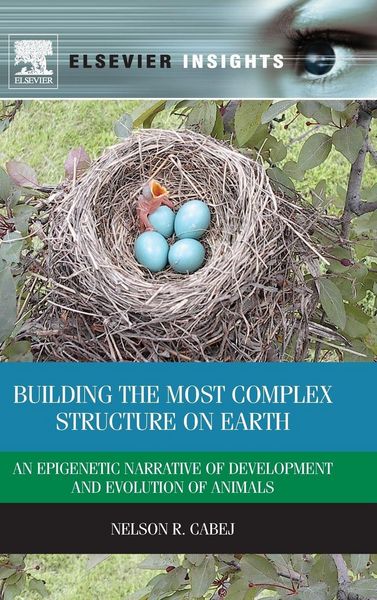
Building the Most Complex Structure on Earth An Epigenetic Narrative of Development and Evolution of Animals
-
- Hardcover ausgewählt
- Taschenbuch
- eBook
-
Sprache:Englisch
Fr. 125.00
inkl. gesetzl. MwSt.,
Beschreibung
Produktdetails
Einband
Gebundene Ausgabe
Erscheinungsdatum
01.04.2013
Verlag
Elsevier Science & TechnologySeitenzahl
314
Maße (L/B/H)
23.6/15.6/3.2 cm
Gewicht
603 g
Sprache
Englisch
ISBN
978-0-12-401667-5
Building the Most Complex Structure on Earth provides readers with a basic biological education, an easy and understandable introduction into a new epigenetic theory of development and evolution. This is a novel theory that describes the epigenetic mechanisms of the development and evolution of animals and explains the colossal evolution and diversification of animals from a new post-genetic perspective. Modern biology has demonstrated the existence of a common genetic toolkit in the animal kingdom, but neither the number of genes nor the evolution of new genes is responsible for the development and evolution of animals. The failure to understand how the same genetic toolkit is used to produce millions of widely different animal forms remains a perplexing conundrum in modern biology. The novel theory demonstrates that epigenetic mechanisms that determine the spatial and temporal expression of genes in particular cells of the organism are the competent users of the epigenetic toolkit.
Noch keine Bewertungen vorhanden
Verfassen Sie die erste Bewertung zu diesem Artikel
Helfen Sie anderen Kundinnen und Kunden durch Ihre Meinung.