Zitat
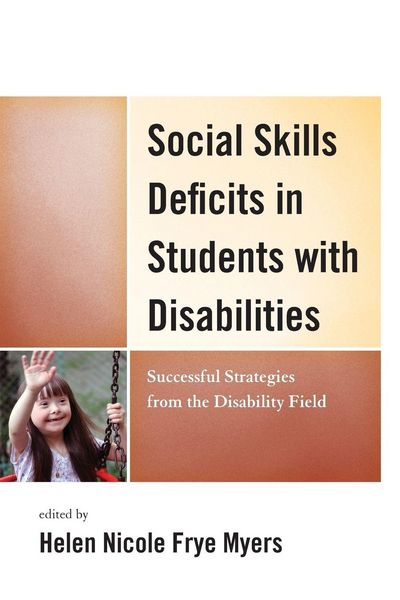
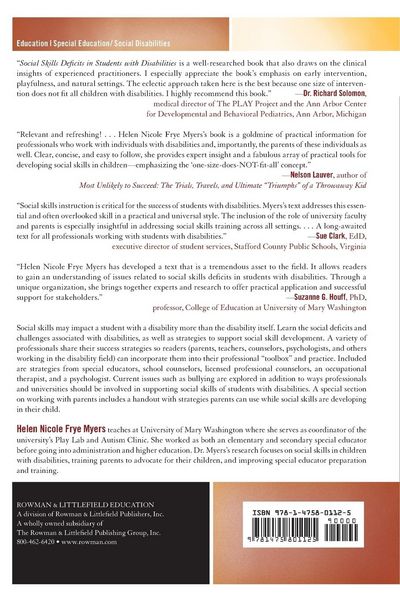
As a developmental and behavioral pediatrician who cares for hundreds of children with disabilities, one of the most difficult, most demanding, and most important questions I face is "How can I help my child develop good social skills?" Social Skills Deficits by Dr. Myers and her team is a well-researched book that also draws on the clinical insights of experienced practitioners. I especially appreciate the book's emphasis on early intervention, playfulness, and naturalistic settings. The eclectic approach taken here is the best because one size of intervention does not fit all children with disabilities. I highly recommend this book. -- Dr. Richard Solomon, Medical Director of The PLAY Project and the Ann Arbor Center for Developmental and Behavioral Pediatrics, Ann Arbor, Michigan Relevant and Refreshing! Lack of attention to the importance of social skills in individuals with disabilities is where we have historically fallen down on the job. In a different era, a different time and place, when attempts were made to educate children with learning disabilities (like me) the irresistible urge on the part of educators, administrators, and parents was to break the will of a spirited child in order to "teach" them -- often while overlooking the inner self and social potential of the child. As a result, today, we have many broken individuals who feel like school failures. There have been great strides made over the years, but Nicole Myers' book is a goldmine of practical information for professionals who work with individuals with disabilities and importantly the parents of these individuals as well. Clear, concise, and easy to follow, she provides expert insight and a fabulous array of practical tools for developing social skills in children -- importantly emphasizing the "one size does NOT fit all concept." As a person with dyslexia, I found getting good grades in school to be impossible. However "good grades" were not a marker of my intelligence. Luckily I was able to foster my communication and social skills and found my true talents in life. I applaud this book. -- Nelson Lauver, Author, Speaker, Broadcaster, Author of Most Unlikely to Succeed: The Trials, Travels, and Ultimate "Triumphs" of a Throwaway Kid Social skills instruction is critical for the success of students with disabilities. Dr. Myers' text addresses this essential and often overlooked skill in a practical and universal style. The inclusion of the role of university faculty and parents is especially insightful in addressing social skills training across all settings...A long-awaited text for all professionals working with students with disabilities. -- Sue Clark, Ed.D., Executive Director of Student Services, Stafford County Public Schools, Stafford, VA Dr. Myers has developed a text that is a tremendous asset to the field. It allows readers to gain an understanding of issues related to social skills deficits in students with disabilities. Through a unique organization, she brings together experts and research to offer practical application and successful support for stakeholders. -- Suzanne G. Houff, Ph.D., Professor, College of Education at University of Mary Washington Social deficits can result in significant school failure for students with disabilities, but in many textbooks they are relegated to a short chapter. This new book, Social Skills Deficits in Students with Disabilities, clearly addresses all the aspects of these essential skills. Each chapter begins with focus questions and makes use of case studies to illustrate practices which are effective in developing confident, collaborative, and resilient learners. Clear descriptions of the way in which teachers, counselors, therapists, and parents can help students meet social challenges are sure to make an important difference in the way students with disabilities meet their daily challenges. -- Dr. Norah Hooper, Professor of Special Education, University of Mary Washington