• Produktbild: Energy Resources
  • Produktbild: Energy Resources

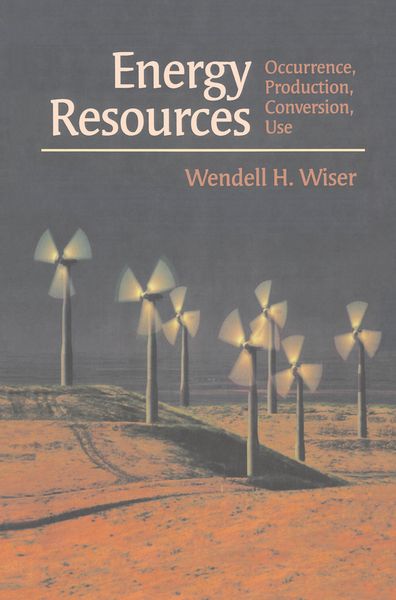
Energy Resources Occurrence, Production, Conversion, Use

Fr. 72.90

inkl. gesetzl. MwSt., Versandkostenfrei


Beschreibung

Produktdetails

Einband

Taschenbuch

Erscheinungsdatum

30.09.2012

Verlag

Springer Us

Seitenzahl

377

Maße (L/B/H)

23.5/15.5/2.2 cm

Gewicht

598 g

Auflage

Softcover reprint of the original 1st ed. 2000

Sprache

Englisch

ISBN

978-1-4612-7050-8

Beschreibung

Produktdetails

Einband

Taschenbuch

Erscheinungsdatum

30.09.2012

Verlag

Springer Us

Seitenzahl

377

Maße (L/B/H)

23.5/15.5/2.2 cm

Gewicht

598 g

Auflage

Softcover reprint of the original 1st ed. 2000

Sprache

Englisch

ISBN

978-1-4612-7050-8

Herstelleradresse

Springer-Verlag KG
Sachsenplatz 4-6
1201 Wien
AT

Email: GPSR Kontakt

Noch keine Bewertungen vorhanden

Verfassen Sie die erste Bewertung zu diesem Artikel

Helfen Sie anderen Kundinnen und Kunden durch Ihre Meinung.

Kundinnen und Kunden meinen

Bewertungen (0)

  • Produktbild: Energy Resources
  • Produktbild: Energy Resources
  • 1 Energy Concepts, Forms, Laws.- Basic Energy Concepts.- Energy Forms.- Fossil Fuels as Sources of Energy.- Machines for Doing Work.- Energy Consumption and Gross Domestic Product.- Energy Fuel Use Patterns in the United States.- Questions.- 2 Petroleum.- Formation of Petroleum.- Recovery of Petroleum.- OPEC-Objectives and Member Countries.- The Arab Oil Embargo of 1973.- Petroleum Reserves, Known and Recoverable.- Petroleum Demand.- Production of Petroleum.- United States Petroleum Demand, 1950 to Present.- U.S Petroleum Imports, 1950 to Present.- Reasons for Concern About Large and Growing Petroleum Imports.- The Strategic Petroleum Reserve.- Profits and Losses in the Oil Industry.- Total Energy Impact of Transportation in the United States.- Petroleum Refining.- Distillation.- Catalysis.- Octane Number.- The Catalytic Converter.- Unleaded Gasoline.- Catalytic Dehydrogenation.- Catalytic Reforming.- Catalytic Alkylation.- Liquefied Petroleum Gases (LPG).- Catalytic Cracking.- Other Techniques for Increasing Gasoline Yields.- The Diesel Engine.- Lubricating Oils.- Questions.- 3 Natural Gas.- Natural Gas Reserves, Known and Recoverable.- Production of Natural Gas.- Coal Bed Methane.- Price Controls on Natural Gas.- Uses of Natural Gas.- Questions.- 4 Coal.- Origin of Coal.- Coal Rank.- Coal Mining.- Coal Resources Versus Coal Reserves.- Coal Reserves and Resources.- Coal Production and Consumption in the U.S.- Coal Uses.- Transporting Coal.- Questions.- 5 Gaseous and Liquid Fuels from Coal.- Coal Structure as It Relates to Coal Conversion.- Conversion of Coal to Gaseous Fuels.- High-Btu Gas (SNG).- Probable Uses of Gaseous Fuels from Coal.- In-Situ Gasification of Coal.- Status of Commercialization of Coal Gasification.- Conversion of Coal to Liquid Fuels.- Indirect Liquefaction: The Fischer-Tropsch Process.- Efficiency of Coal Liquefaction Processes.- Sulfur Removal in Coal Conversion Processes.- The Cost of the First Commercial Coal Liquefaction Plants.- The Uncertain Voice of the Federal Government and the Future of Liquid Transportation Fuels from Coal.- Alcohol Fuel from Coal.- Questions.- 6 Fuels from Oil Shale, Tar Sands, Biomass, Waste.- Oil Shale.- Recovery of Oil Shale.- Recovery of Raw Shale Oil.- The Spent Shale Problem.- Oil Shale Resources and Reserves.- Status of Oil Shale Recovery Technology.- Tar Sands.- The United States Reserves.- Reserves in Canada and South America.- Status of Development.- Energy from Biomass.- Energy from Waste.- Municipal and Industrial Waste.- Wood Waste.- Animal Waste.- Questions.- 7 Fossil Fuel Reserves Versus Consumption.- Comparative Amounts of Fossil Fuel Reserves.- Energy Consumption in the United States.- Substitution of Coal for Petroleum and/or Natural Gas.- Questions.- 8 Electric Power.- Electric Current.- Generation of a Voltage.- Producing Rotation of the Coil in the Magnetic Field.- The Carnot Cycle.- Energy Source Contributions to Electric Power Generation.- Uses of Electricity in the Residential and Commercial Sectors.- Electricity and the Debate over Use of Fossil Fuels.- Electric Heating of Homes.- Substitution for Fossil Fuels in Electric Power Generation.- The Uneven Power Demand-Base Load Versus Peak Load.- Blackout and Brownout.- Long-Distance Power Transmission.- The Transformer and Substation.- Electric Power Generation Costs Versus Energy Resource.- Growth in Electric Power Demand.- Other Facts and Factors in Electric Power Generation.- Questions.- 9 Nuclear Energy.- Atomic Number.- Isotopes.- Nuclear Fission.- Enrichment.- Critical Mass and the Nuclear Reaction Process.- Energy Release in a Nuclear Reaction.- The Nuclear Fission Process.- The Principle of Half-Life.- Concept of Transmutation in Radioactive Waste Disposal.- The Reactor for Controlled Nuclear Fission for Electric Power.- Types of Reactors.- The Breeder Reactor.- General Statements About Controlled Nuclear Fission.- Nuclear Fusion.- Nuclear Fusion Temperatures.- Containment of the Reactants to Achieve Fusion.- Fusion Fuels.- Features of Nuclear Fusion as an Energy Resource.- Cold Fusion.- Questions.- 10 Solar Energy.- Applications.- Space Heating.- Back-Up System.- Solar Electric Power Generation.- Photovoltaic Electric Power Generation.- Concept of a Space System.- Status of Solar Energy.- Questions.- 11 Other Sources of Energy for Electric Power Generation.- Hydroelectric Power.- Geothermal Energy.- Energy from Wind.- Energy from the Tides.- Ocean Thermal Energy Conversion (OTEC).- Magnetohydrodynamics (MHD).- Fuel Cells.- Questions.- 12 Energy Storage.- Storage Batteries.- Pumped Storage.- Hydrogen as an Energy Carrier.- The Flywheel.- Compressed Air for Energy Storage.- Questions.- 13 Energy Use in Agriculture.- Productivity per Person Working on the Farm.- Increase in Productivity per Acre.- Use of Insecticides in Agriculture.- Use of Herbicides in Agriculture.- Energy Requirements in Production of Protein.- Questions.- 14 Energy Use in Transportation.- Freight Transport and the Carbon Dioxide Debate.- People Transport and the Carbon Dioxide Debate.- The Automobile.- Factors that May Increase Miles per Gallon in Driving.- Vehicle Weight and Safety.- Energy Efficiency in People Transport.- Energy Efficiency in Freight Transport.- The Electric Automobile.- Questions.- 15 Pollution of the Atmosphere from Energy Use.- The Earth: Unique in Our Solar System as a Habitat for People.- Energy Use and the Generation of Pollution.- Fossil Fuel Combustion.- The Atmosphere.- The Temperature (Thermal) Inversion.- Fossil Fuel-Generated Pollutants and Their Health Effects.- Ozone and the Ozone Layer.- Carbon Dioxide and Global Warming.- The Mean Temperature in the Northern Hemisphere.- Carbon Dioxide and Predictions of Global Warming.- Energy Consumption and Job Availability in an Industrialized Nation.- Carbon Dioxide, Plant Growth, and Agricultural Productivity.- Questions.- 16 Energy Conservation.- Cost/Benefit Analysis of Energy Conservation Measures.- Energy Conservation in the United States, 1978-1982.- Potential Ways of Conserving Energy.- Gas- or Oil-Fired Furnace Versus Electric Heating: Considerations.- Questions.- 17 Energy Supply for the Future.- Basis for the Projections.- The Time Period 1 to 10 years.- The Time Period 10 to 25 years.- Long Term: Beyond 25 Years.- Domestic and Commercial Heating.- Electric Power.- Minor Impact Only in the Long Term.- Options with Only Incidental Application.- Questions.