Gutscheinbedingungen

*Gültig bis 05.07.2026 auf (fast) alles. Ausgeschlossen sind Smartboxen, Zeitschriften, Tickets, Lebensmittel, Gaming-Elektroartikel, Tinte/Toner, Gutscheine, Geschenkkarten, Blumen und Abos | Einlösbar in allen Buchhandlungen von Orell Füssli, Barth Bücher, Buchladen Rapunzel, Papeterie Köhler, Schuler Orell Füssli, Stauffacher und ZAP unter Vorweisung des Gutscheins, auf www.orellfüssli.ch durch Eingabe des Gutscheincodes. Beim Service „eBooks verschenken“ und bei eBook-Käufen via eReader nicht einlösbar | Mindesteinkaufswert: Fr. 30.- | Nicht mit anderen Rabatten kumulierbar.

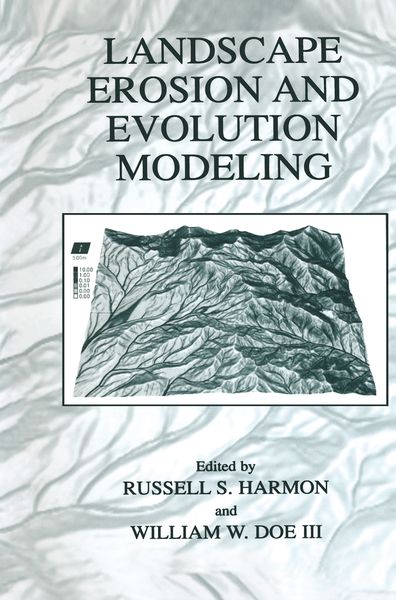
  • Produktbild: Landscape Erosion and Evolution Modeling
  • Produktbild: Landscape Erosion and Evolution Modeling

Landscape Erosion and Evolution Modeling

Fr. 242.00

inkl. gesetzl. MwSt., Versandkostenfrei


Beschreibung

Produktdetails

Einband

Taschenbuch

Erscheinungsdatum

21.09.2012

Herausgeber

Russell S. Harmon + weitere

Verlag

Springer Us

Seitenzahl

540

Maße (L/B/H)

23.5/15.5/3.1 cm

Gewicht

860 g

Auflage

2001

Sprache

Englisch

ISBN

978-1-4613-5139-9

Beschreibung

Rezension

`
In summary, this volume provides an excellent reference book on the state of current erosion modelling, and should be required reading on that topic, including the historical summary and the final review.
'

The Holocene, 13:5 (2003)

Produktdetails

Einband

Taschenbuch

Erscheinungsdatum

21.09.2012

Herausgeber

Verlag

Springer Us

Seitenzahl

540

Maße (L/B/H)

23.5/15.5/3.1 cm

Gewicht

860 g

Auflage

2001

Sprache

Englisch

ISBN

978-1-4613-5139-9

Herstelleradresse

Springer-Verlag GmbH
Tiergartenstr. 17
69121 Heidelberg
DE

Email: GPSR Kontakt

Noch keine Bewertungen vorhanden

Verfassen Sie die erste Bewertung zu diesem Artikel

Helfen Sie anderen Kundinnen und Kunden durch Ihre Meinung.

Kundinnen und Kunden meinen

Bewertungen (0)

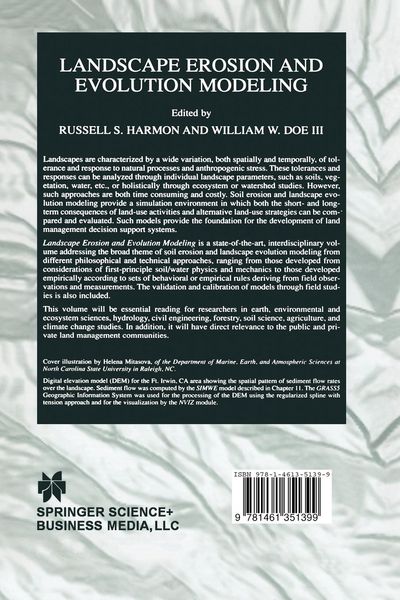
  • Produktbild: Landscape Erosion and Evolution Modeling
  • Produktbild: Landscape Erosion and Evolution Modeling
  • 1. Introduction to Soil Erosion and Landscape Evolution Modeling.- 1. Soil Erosion Management and Model Development.- 2. Soil Erosion Processes.- 3. Models and Modeling Approaches.- 4. Linking Reality and Modeling.- Acknowledgements.- References.- 2. Erosion Problems on U.S. Army Training Lands.- 1. Introduction.- 2. Regulatory Controls.- 3. Plant Material Development and Use on Military Lands.- 4. Physical Erosion and Sediment Controls.- 5. Applying Science in Erosion and Sediment Control.- References.- 3. Effects of Freeze-Thaw Cycling on Soil Erosion.- 1. Introduction.- 2. Effects of Soil Freeze-Thaw Cycling.- 3. Summary and Conclusions.- 4. Future Research Needs.- Acknowledgements.- References.- 4. Determination of Slope Displacement Mechanisms and Causes.- 1. Introduction.- 2. Bluff Geometry and Stratigraphy.- 3. Ground Water Conditions.- 4. Soil Characteristics.- 5. Slope Displacement Monitoring Methods.- 6. Displacement Models.- 7. Causes of Displacement.- 8. Processes of Bluff Failure.- 9. Limit Equilibrium Analyses.- 10. Conclusions.- Acknowledgements.- References.- 5. Using Cosmogenic Nuclide Measurements in Sediments to Understand Background Rates of Erosion and Sediment Transport.- 1. Introduction.- 2. Methods.- 3. Cosmogenic Nuclide Systematics and Interpretative Models.- 4. Case Studies.- 5. Implications Of Sediment Cosmogenic Nuclide Measurements.- Acknowledgements.- References.- 6. Erosion Modeling.- 1. Introduction.- 2. Empirical Models.- 3. Process-Based Models.- 4. Model Testing.- 5. Model Validation.- 6. Model Application.- 7. Conclusions.- References.- 7. The Water Erosion Prediction Project (WEPP) Model.- 1. Introduction.- 2. WEPP Model Development History.- 3. WEPP Hillslope Model Component.- 4. WEPP Model Watershed Component.- 5. Model ValidationStudy Results.- 6. Data and Model Uncertainty: Impacts on Model Evaluation and Application.- 7. WEPP Model Status and Current Activities.- References.- 8. A Simulation Model for Erosion and Sediment Yield at the Hillslope Scale.- 1. Introduction.- 2. Review of Erosion and Sediment Yield Modeling at the Hillslope Scale.- 3. Development of the Hillslope Erosion Model.- 4. Calibration and Validation of the Hillslope Erosion Model.- 5. Applications of the Hillslope Erosion Model at the Fort Carson Military Reservation and the Pinon Canyon Maneuver Site.- 6. Discussion and Summary.- 7. Conclusions.- References.- 9. Waterbots.- 1. Introduction.- 2. The Waterbot Model.- 3. Hillslope Diffusion.- 4. Bedrock Erosion.- 5. Weathering.- 6. Other Landscape Transport Processes.- 7. Nonlinear Effects.- 8. Contributing Area and Hydrographs.- 9. Example - Setting up the DEM and Raining on the Black Mountains.- 10. Dimensionless Numbers in the Black Mountains.- 11. The Case of Gower Gulch: A Change in Flow Regime.- 12. Summary.- Acknowledgements.- References.- 10. Two-Dimensional Watershed-Scale Erosion Modeling with CASC2D.- 1. Introduction.- 2. Hydrologic/Erosion Model CASC2D.- 3. USD A-ARS Goodwin Creek Experimental Watershed.- 4. Calibration of CASC2D Erosion Parameters on Goodwin Creek.- 5. Erosion Model Performance.- 6. Discussion.- 7. Conclusions.- Acknowledgements.- References.- 11. Multiscale Soil Erosion Simulations for Land Use Management.- 1. Introduction.- 2. Methods.- 3. Simplified Special Cases and Model Extensions.- 4. Landscape Scale Erosion Prevention Planning and Design.- 5. Conclusions.- Acknowledgements.- References.- 12. The Channel-Hillslope Integrated Landscape Development Model (CHILD).- 1. Introduction.- 2. Background.- 3. Model Formulation.- 4. Discussion: Application and Limitations.- 5. Summary and Conclusions.- Acknowledgements.- References.- 13. Simulation of Streambank Erosion Processes with a Two-Dimensional Numerical Model.- 1. Introduction.- 2. Theoretical Analysis.- 3. Numerical Simulation.- Summary.- Acknowledgements.- References.- 14. Spatial Analysis of Erosion Conservation Measures with LISEM.- 1. Introduction.- 2. LISEM Theoretical Framework.- 3. Integration into a Raster GIS.- 4. Wheel Tracks and Tillage Networks.- 5. A Case Study: Grass Strips and Tillage Direction in the Netherlands.- References.- 15. Numerical Simulation of Sediment Yield, Storage, and Channel Bed Adjustments.- 1. Introduction.- 2. Model Equations.- 3. Numerical Simulation.- 4. Initial and Transient Boundary Conditions.- 5. Simulation Results.- 6. Conclusions.- References.- 16. The Limits of Erosion Modeling.- 1. Introduction.- 2. The Policy Context of Model Development and Use.- 3. Case Studies.- 4. Conclusions.- Acknowledgements.- References.- 17. Envisioning a Future Framework for Managing Land and Water Resources.- 1. Introduction.- 2. Use of Technology in Resource Management - Today.- 3. Major Aquatic Ecosystems.- 4. Development of the Land Management System.- 5. Summary.