Gutscheinbedingungen

*Gültig bis 05.07.2026 auf (fast) alles. Ausgeschlossen sind Smartboxen, Zeitschriften, Tickets, Lebensmittel, Gaming-Elektroartikel, Tinte/Toner, Gutscheine, Geschenkkarten, Blumen und Abos | Einlösbar in allen Buchhandlungen von Orell Füssli, Barth Bücher, Buchladen Rapunzel, Papeterie Köhler, Schuler Orell Füssli, Stauffacher und ZAP unter Vorweisung des Gutscheins, auf www.orellfüssli.ch durch Eingabe des Gutscheincodes. Beim Service „eBooks verschenken“ und bei eBook-Käufen via eReader nicht einlösbar | Mindesteinkaufswert: Fr. 30.- | Nicht mit anderen Rabatten kumulierbar.

  • Produktbild: Of Microbes and Art
  • Produktbild: Of Microbes and Art

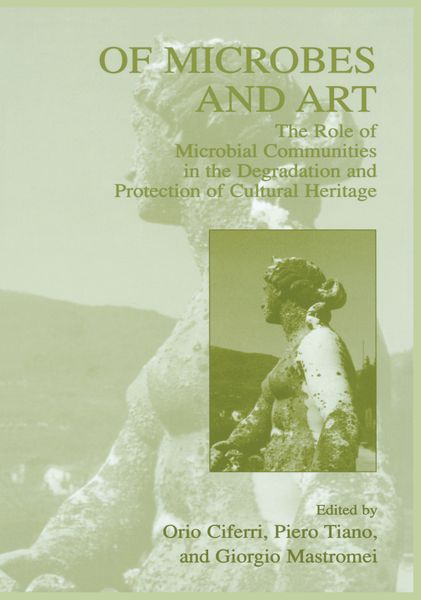
Of Microbes and Art The Role of Microbial Communities in the Degradation and Protection of Cultural Heritage

Fr. 137.00

inkl. gesetzl. MwSt., Versandkostenfrei


Beschreibung

Produktdetails

Einband

Taschenbuch

Erscheinungsdatum

03.10.2012

Herausgeber

Orio Ciferri + weitere

Verlag

Springer Us

Seitenzahl

250

Maße (L/B/H)

25.4/17.8/1.5 cm

Gewicht

518 g

Auflage

Softcover reprint of the original 1st ed. 2000

Sprache

Englisch

ISBN

978-1-4613-6904-2

Beschreibung

Rezension

`
...these words of caution, this book is an extremely useful guide and should greatly assist in the further training of conservators.
'

Antiquity, 75 (2001)

Produktdetails

Einband

Taschenbuch

Erscheinungsdatum

03.10.2012

Herausgeber

Verlag

Springer Us

Seitenzahl

250

Maße (L/B/H)

25.4/17.8/1.5 cm

Gewicht

518 g

Auflage

Softcover reprint of the original 1st ed. 2000

Sprache

Englisch

ISBN

978-1-4613-6904-2

Herstelleradresse

Springer-Verlag KG
Sachsenplatz 4-6
1201 Wien
AT

Email: GPSR Kontakt

Noch keine Bewertungen vorhanden

Verfassen Sie die erste Bewertung zu diesem Artikel

Helfen Sie anderen Kundinnen und Kunden durch Ihre Meinung.

Kundinnen und Kunden meinen

Bewertungen (0)

  • Produktbild: Of Microbes and Art
  • Produktbild: Of Microbes and Art
  • Contributors. Preface. Part 1: Ecology of microbial communities developing on art works. Recent advances in the molecular biology and ecophysiology of meristematic stone-inhabiting fungi; C. Urzì, et al. Molecular tools applied to the study of deteriorated artworks; D. Daffonchio, et al. Molecular approaches for the assessment of microbial deterioration of objects of art; S. Rölleke, et al. Comparative studies of microbial communities on stone monuments in temperate and semi-arid climates; E. May, et al. Occurrence and fluctuation in photosynthetic biocoenoses dwelling on stone monuments; L. Tomaselli, et al. Microbial communities in salt efflorescences; L. Laiz, et al. Characterisation of endolithic communities of stone monuments and natural outcrops; O. Salvadori. Part 2: Biosusceptibility of organic and inorganic constituents. Patina; T. Dornieden, et al. A laboratory investigation of the microbial degradation of cultural heritage; A. Seves, et al. Fungal fox spots and others; M.-L.E. Florian. Polymers and resins as food for microbes; R.J. Koestler. Biodegradability of products used in monuments' conservation; P. Tiano, et al. Part 3: Control and utilization of microorganisms. Integrated concepts for the protection of cultural artifacts against biodeterioration; T. Warscheid. Bacterial carbonatogenesis and applications to preservation and restoration of historic property; S. Castanier, et al. Bacterial genes involved in calcite crystal precipitation; B. Perito, et al. Bioremediation of cultural heritage: removal of sulphates, nitrates and organic substances; G. Ranalli, et al. Index.