
• Produktbild: Tea
  • Produktbild: Tea

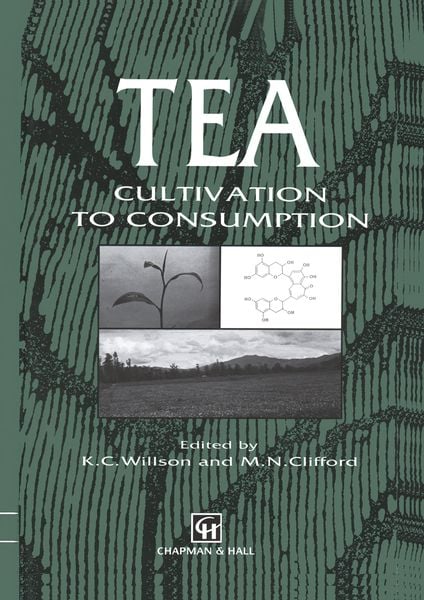
Tea Cultivation to consumption

Fr. 359.00

inkl. gesetzl. MwSt., Versandkostenfrei


Beschreibung

Produktdetails

Einband

Taschenbuch

Erscheinungsdatum

09.10.2012

Herausgeber

K.C. Willson + weitere

Verlag

Springer Netherland

Seitenzahl

769

Maße (L/B/H)

29.7/21/4.3 cm

Gewicht

2052 g

Auflage

Softcover reprint of the original 1st ed. 1992

Sprache

Englisch

ISBN

978-94-010-5027-2

Beschreibung

Rezension

This text is up-to-date and will be of interest to all those involved in the tea business in the widest sense - Food Trade Review; ...the now classic book... - Good Food Retailing

Produktdetails

Einband

Taschenbuch

Erscheinungsdatum

09.10.2012

Herausgeber

Verlag

Springer Netherland

Seitenzahl

769

Maße (L/B/H)

29.7/21/4.3 cm

Gewicht

2052 g

Auflage

Softcover reprint of the original 1st ed. 1992

Sprache

Englisch

ISBN

978-94-010-5027-2

Herstelleradresse

Springer-Verlag GmbH
Tiergartenstr. 17
69121 Heidelberg
DE

Email: ProductSafety@springernature.com

Kundinnen und Kunden meinen

0 Bewertungen

Informationen zu Bewertungen

Zur Abgabe einer Bewertung ist eine Anmeldung im Konto notwendig. Die Authentizität der Bewertungen wird von uns nicht überprüft. Wir behalten uns vor, Bewertungstexte, die unseren Richtlinien widersprechen, entsprechend zu kürzen oder zu löschen.

Die Bewertungen sind nach Format, Anzahl Sterne und Datum sortiert.

Verfassen Sie die erste Bewertung zu diesem Artikel

Helfen Sie anderen Kund*innen durch Ihre Meinung

Kundinnen und Kunden meinen

0 Bewertungen filtern

  • Produktbild: Tea
  • Produktbild: Tea
  • 1 Historical Introduction.- 1.1 China — 2000 years of tea.- 1.2 The discovery of the tea plant in north-east India.- 1.3 A river journey of a thousand miles.- 1.4 The way forward — the introduction of the plantation system.- 1.5 The first Indian tea.- 1.6 Tea in Ceylon: planted in the ashes of the coffee bushes.- 1.7 Early pioneering by the Dutch.- 1.8 Conclusion.- 2 Botanical classification of tea.- 2.1 Introduction.- 2.2 Problems in tea taxonomy.- 2.3 Features of taxonomic importance.- 2.4 The tea varieties.- 2.5 The true tea species.- 2.6 The ‘non-tea’ teas.- 2.7 Key to species and sub-species.- 2.8 Tea hybrids and the genetic pool.- 2.9 Hybrid differentiation.- 2.10 Tea germplasm and wild tea.- 2.11 Future thrust.- References.- 3 Selection and breeding of tea.- 3.1 Introduction.- 3.2 The selection process.- 3.3 Selection criteria for yield.- 3.4 Selection for quality.- 3.5 Selection for seed varieties.- 3.6 Vegetative propagation.- 3.7 Hybridization.- 3.8 Clonal seed variety.- 3.9 Interspecific hybridization.- 3.10 Inheritance.- 3.11 Non-conventional breeding.- 3.12 Breeding strategies.- 3.13 Conclusion: the future trend.- References.- 4 Climate, weather and the yield of tea.- 4.1 Introduction.- 4.2 Growth processes: a basis for comparison.- 4.3 Climatic variables.- 4.4 Commercial yields: case studies in Eastern Africa.- 4.5 Conclusions.- Acknowledgements.- References.- 5 Soils.- 5.1 Introduction.- 5.2 Formation and types of tea soils.- 5.3 Classification of tea soils.- 5.4 Identification through indigenous vegetation.- 5.5 Chemical properties.- 5.6 Physical properties.- 5.7 Biological properties.- 5.8 Management of tea soils.- 5.9 Uprooted and replanted tea land.- References.- 6 Tea crop physiology.- 6.1 Introduction.- 6.2 Crop development and components of yield.- 6.3 The relationship between photosynthesis and yield.- 6.4 Dormancy in shoots.- 6.5 Effect of temperature on shoot growth.- 6.6 Effect of dry air on shoot growth.- 6.7 Effect of day length on shoot growth.- References.- 7 Field operations: 1.- 7.1 Choice of site.- 7.2 Land clearance and preparation.- 7.3 Erosion control and drains.- 7.4 Provenance of plants.- 7.5 Tea seed production.- 7.6 Propagation.- 7.7 Field spacing.- 7.8 Field planting.- 7.9 Infilling and interplanting.- 7.10 Shade and shelter.- 7.11 Weed control.- 7.12 Irrigation.- 7.13 Hail.- References.- 8 Field operations: 2.- 8.1 Bringing into bearing and pruning.- 8.2 Rejuvenation of old plantations.- 8.3 Harvesting.- 8.4 Mechanization of field operations.- 8.5 Fuelwood and diversification.- 8.6 Other products from tea.- References.- 9 Mineral nutrition and fertilizers.- 9.1 Introduction.- 9.2 Loss of nutrients.- 9.3 Outline of nutrition.- 9.4 Effects of individual nutrients.- 9.5 Organic fertilizers.- 9.6 Foliar analysis.- 9.7 Practical fertilization.- 9.8 Symptoms of nutrient deficiency and toxicity.- 9.9 Use of growth regulating chemicals.- 9.10 The effect of fertilizers on tea quality.- References.- 10 Pest and disease control in Africa.- 10.1 Introduction.- 10.2 Pests and their control.- 10.3 Diseases and their control.- 10.4 Pesticides and their application.- References.- 11 Disease control in Asia.- 11.1 Introduction.- 11.2 Effects of diseases on tea production.- 11.3 Disease management in tea.- 11.4 Common diseases of tea.- References.- 12 Pest control in Asia.- 12.1 Introduction.- 12.2 Crop loss.- 12.3 Important pests.- 12.4 Ecology of pests.- 12.5 Pest management.- 12.6 Future strategies.- References.- 13 Green and semi-fermented teas.- 13.1 Introduction to green tea production.- 13.2 A brief history of the production of shade grown green teas—Ten-cha, Gyokuro and Ceremony tea (Matsu-cha).- 13.3 The cultivation and production of steamed, unshaded green tea (Sen-cha).- 13.4 The production of pan-fried green tea (Chinese green tea, Kamairi-cha).- 13.5 The character of green tea.- 13.6 Semi-fermented tea (oolong tea).- References.- 14 Production of black tea.- 14.1 Introduction.- 14.2 Raw materials and products.- 14.3 Principal stages of processing.- 14.4 Process engineering considerations.- 14.5 Air utilization in tea manufacture.- 14.6 The withering stage.- 14.7 Leaf disruption.- 14.8 Fermentation.- 14.9 The drying operation.- 14.10 Sorting and fibre removal.- 14.11 Fuel and power.- 14.12 Packing and transport of tea.- References and further reading.- 15 Speciality and herbal teas.- 15.1 Speciality teas.- 15.2 Herbal teas.- 15.3 Specific origin of camellia tea.- 15.4 Specific occasion teas.- 15.5 China tea.- 15.6 Flavoured teas.- 15.7 Teas with historical associations.- 15.8 Packaging format.- 15.9 Decaffeinated tea.- 15.10 Organically grown tea.- 15.11 The future.- Appendix 15.1 Grades of black tea.- Appendix 15.2 Types of tea.- Appendix 15.3 Herbal teas and their benefits.- 16 Instant tea.- 16.1 Introduction.- 16.2 The production of instant black tea.- References.- Patents.- 17 The chemistry and biochemistry of black tea production—the non-volatiles.- 17.1 Introduction.- 17.2 Green leaf polyphenols.- 17.3 Polyphenol oxidase.- 17.4 Black tea polyphenols.- References.- 18 Tea aroma.- 18.1 Introduction.- 18.2 Biogenetic pathways of the aroma compounds in tea.- 18.3 Changes in the composition of the aroma complex due to agronomic, cultural and manufacturing practices.- 18.4 Use of the aroma complex in chemotaxonomy.- References.- 19 The world trade in tea.- 19.1 Introduction.- 19.2 History.- 19.3 The International Tea Committee and the distribution of world tea supplies.- 19.4 Prices and auctions.- 19.5 Delivery of tea and payment of accounts.- 19.6 Distribution.- 19.7 Production, consumption and promotion.- 19.8 The future.- 19.9 Alternative packaging for bulk tea.- 19.10 FAO Meeting, May 1989.- 19.11 Instant tea.- 19.12 Comment on 1989 data.- 19.13 Update July 1990.- 19.14 Postscript September 1990.- 19.15 World production and exports of green tea.- 19.16 Provisional data for 1990.- References.- 20 Impurities, quality standards and legislation.- 20.1 Impurities.- 20.2 Standards.- 20.3 Legislation.- References.- 21 Physiological and clinical effects of tea.- 21.1 Introduction.- 21.2 Water.- 21.3 Tea as a beverage.- 21.4 Caffeine.- 21.5 Polyphenols.- 21.6 Coronary heart disease and serum cholesterol.- 21.7 Tea and the gut.- 21.8 Trace elements and vitamins.- 21.9 Herbal ‘teas’.- 21.10 Conclusions.- Reference.