
Gutscheinbedingungen

*Gültig bis 07.06.2026 auf (fast) alles. Ausgeschlossen sind Smartboxen, Zeitschriften, Tickets, Lebensmittel, Gaming-Elektroartikel, Tinte/Toner, Gutscheine, Geschenkkarten, Blumen und Abos | Einlösbar in allen Buchhandlungen von Orell Füssli, Barth Bücher, Buchladen Rapunzel, Schuler Orell Füssli, Stauffacher und ZAP unter Vorweisung des Gutscheins, auf www.orellfüssli.ch durch Eingabe des Gutscheincodes. Beim Service „eBooks verschenken“ und bei eBook-Käufen via eReader nicht einlösbar | Mindesteinkaufswert: Fr. 100.- | Nicht mit anderen Rabatten kumulierbar.

  • Produktbild: Analyzing Sound Patterns
  • Produktbild: Analyzing Sound Patterns

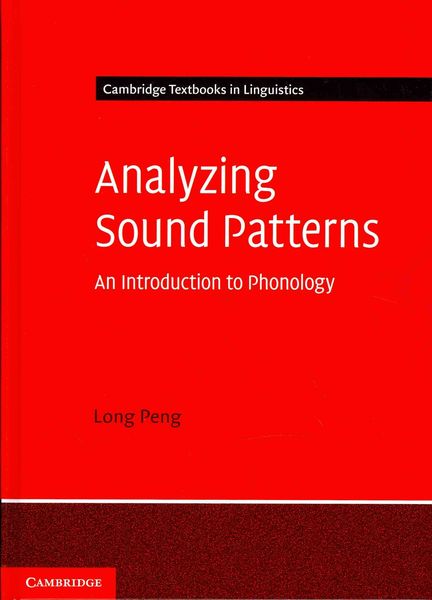
Analyzing Sound Patterns An Introduction to Phonology

Fr. 159.00

inkl. gesetzl. MwSt., Versandkostenfrei


Beschreibung

Produktdetails

Einband

Gebundene Ausgabe

Erscheinungsdatum

06.11.2013

Verlag

Cambridge Academic

Seitenzahl

588

Maße (L/B/H)

25/17.5/3.6 cm

Gewicht

1130 g

Sprache

Englisch

ISBN

978-0-521-19579-9

Beschreibung

Zitat

Advance praise: 'A lively text that develops analytical skills through exposure to a wide array of data. Carefully constructed exercises range from multiple choice to open-ended essay questions.' Ellen Broselow, Stony Brook University

Produktdetails

Einband

Gebundene Ausgabe

Erscheinungsdatum

06.11.2013

Verlag

Cambridge Academic

Seitenzahl

588

Maße (L/B/H)

25/17.5/3.6 cm

Gewicht

1130 g

Sprache

Englisch

ISBN

978-0-521-19579-9

Herstelleradresse

Libri GmbH
Europaallee 1
36244 Bad Hersfeld
DE

Email: Libri GmbH

Kundinnen und Kunden meinen

0 Bewertungen

Informationen zu Bewertungen

Zur Abgabe einer Bewertung ist eine Anmeldung im Konto notwendig. Die Authentizität der Bewertungen wird von uns nicht überprüft. Wir behalten uns vor, Bewertungstexte, die unseren Richtlinien widersprechen, entsprechend zu kürzen oder zu löschen.

Die Bewertungen sind nach Format, Anzahl Sterne und Datum sortiert.

Verfassen Sie die erste Bewertung zu diesem Artikel

Helfen Sie anderen Kund*innen durch Ihre Meinung

Kundinnen und Kunden meinen

0 Bewertungen filtern

Die Leseprobe wird geladen.
  • Produktbild: Analyzing Sound Patterns
  • Produktbild: Analyzing Sound Patterns
  • Introduction; Part I. Distribution: 1. Patterns of sounds: vowel co-occurrence in Kikuyu; 2. The distribution of English nasals; 3. Luganda liquids and the analysis of complementary distribution; 4. Contrast and complementarity: multiple complementation in Thai; Part II. Alternation: 5. Alternation and the case of English nasals; 6. Tibetan numerals and underlying representation; 7. Tonkawa stem alternation; 8. Yawelmani and interacting processes; Part III. Syllable: 9. The distribution of syllable in Ponapean; 10. Syllable and vowel epenthesis in Ponapean; 11. Ponapean syllable and vowel epenthesis; an optimal-theoretic analysis; 12. Syllable and segmental processes in Diola-Fogny; Part IV. Tone: 13. Tonal distribution in Mende and autosegmental representation; 14. Tonal alternation in Mende; 15. Yoruba tone asymmetry and derivational accounts of asymmetry; 16. Yoruba tone asymmetry and optimality theory; Part V. Stress: 17. Pintupi, Wargamay and Choctaw stress and metrical theory; 18. Pintupi, Wargamay and Choctaw stress and optimality theory; 19. To stress or not to stress: stress-epenthesis interactions in Yimas; Part VI. Prosodic Morphology: 20. Templatic morphology and Arabic broken plurals; 21. The emergence of the unmarked and Swati verb reduplication; 22. Prosodic misalignment: LuGanda glide epenthesis.and Swati reduplication; Appendix A. Sample instructions for the reading response assignment; Appendix B. Sample instructions for a problem: vowel co-occurrence in Kikuyu bi-syllabic roots and root-suffix forms; Index of constraints and rules; Language index; Subject Index.