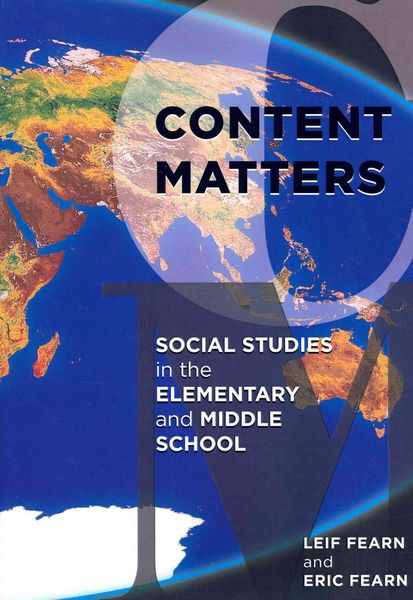
Content Matters Social Studies in the Elementary and Middle School
-
- Hardcover
- Taschenbuch ausgewählt
- eBook
-
Sprache:Englisch
Fr. 72.90
inkl. gesetzl. MwSt.,
Beschreibung
Produktdetails
Einband
Taschenbuch
Altersempfehlung
18 - 22 Jahr(e)
Erscheinungsdatum
26.06.2013
Verlag
Rowman & LittlefieldSeitenzahl
160
Maße (L/B/H)
25.4/17.8/1 cm
Gewicht
355 g
Sprache
Englisch
ISBN
978-1-61048-951-5
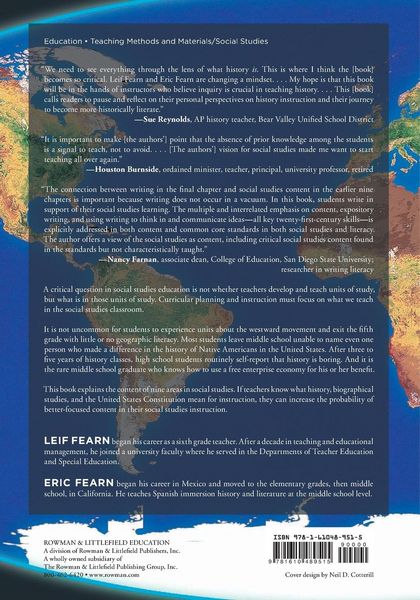
This book explains the content of nine areas in social studies. If teachers know what history, biographical studies, and the United States Constitution mean for instruction, they can increase the probability of better-focused content in their social studies instruction.
Noch keine Bewertungen vorhanden
Verfassen Sie die erste Bewertung zu diesem Artikel
Helfen Sie anderen Kundinnen und Kunden durch Ihre Meinung.