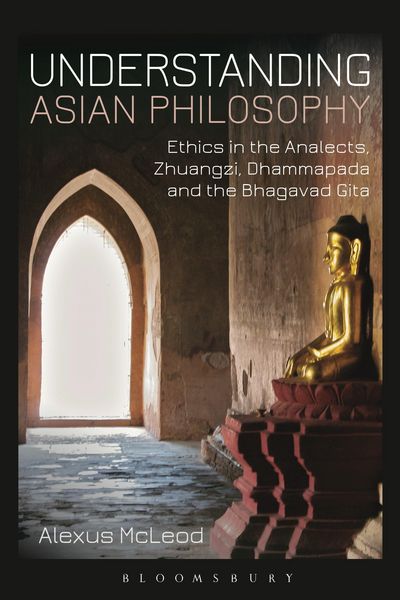
Produktbild: Understanding Asian Philosophy

Understanding Asian Philosophy Ethics in the Analects, Zhuangzi, Dhammapada and the Bhagavad Gita

Fr. 58.90

inkl. gesetzl. MwSt., Versandkostenfrei


Beschreibung

Produktdetails

Einband

Taschenbuch

Erscheinungsdatum

25.09.2014

Verlag

Bloomsbury Academic

Seitenzahl

208

Maße (L/B/H)

23.4/15.6/1.1 cm

Gewicht

324 g

Sprache

Englisch

ISBN

978-1-78093-573-7

Beschreibung

Rezension

By focusing on transformative personal cultivation as the axis shared by these canonical Asian texts, McLeod makes a persuasive argument that while these texts certainly provide a framework for the ethical life, they are much more, demanding as they do different regimens of assiduous practice and the nurturing of profound religious sensibilities. Highly recommended for classroom use. Roger T. Ames, Professor of Philosophy, University of Hawai'i at Manoa, USA 20140326

Produktdetails

Einband

Taschenbuch

Erscheinungsdatum

25.09.2014

Verlag

Bloomsbury Academic

Seitenzahl

208

Maße (L/B/H)

23.4/15.6/1.1 cm

Gewicht

324 g

Sprache

Englisch

ISBN

978-1-78093-573-7

Herstelleradresse

Libri GmbH
Europaallee 1
36244 Bad Hersfeld
DE

Email: gpsr@libri.de

Noch keine Bewertungen vorhanden

Verfassen Sie die erste Bewertung zu diesem Artikel

Helfen Sie anderen Kundinnen und Kunden durch Ihre Meinung.

Kundinnen und Kunden meinen

Bewertungen (0)

Die Leseprobe wird geladen.
  • Produktbild: Understanding Asian Philosophy
  • Introduction: Ethical Philosophy in Asian Traditions
    Kinds of philosophy
    Ethical theories
    Asian traditions
    Self-cultivation in Asian philosophical traditions-the layout of the book

    Part I: Ethics and Self-Cultivation in Ancient China
    Early Chinese Philosophy: Map and Timeline

    1. The Analects of Confucius
    1.1The Life and Legacy of Confucius and the Analects
    1.2 Social Harmony
    1.3 The "Humane" Person and the "Rites"
    1.4 The Virtues of the Family and Community
    1.5 A Life of Learning
    1.6 The Ideal Person
    1.7- Later Confucianism
    1.8 Further Resources on Confucianism and Self-Cultivation
    1.9 A Short Biography of Confucius
    Relevant Questions

    2. Zhuangzi and the Daoist Tradition
    2.1 Yangism, the Daodejing, Zhuang Zhou, and the Retreat from Society
    2.2 The perspective of the dao
    2.3 "Fasting of the mind" and "listening ridiculously"
    2.4 The use of the useless
    2.5 Delighting in "The transformation of the myriad things," what we truly are, and freedom from suffering
    2.6 Later Daoism
    2.6 Further resources on Zhuangzi and self-cultivation
    2.7 A Short Biography of Zhuangzi
    Relevant Questions

    Part II: Ethics and Self-Cultivation in Ancient India
    Early Indian Philosophy: Map and Timeline

    3. The Suttas, Dhammapada, and the Early Buddhist Tradition
    3.1 The Buddha and the Early Buddhist tradition
    3.2 Suffering and the eightfold path
    3.3 Controlling the mind
    3.4 The role of compassion and moral conduct
    3.5 The role of wisdom and the insubstantiality of the "self"
    3.6 The enlightened person and nirvana
    3.7 Later Buddhism
    a. Early Mahayana
    b. Madhyamaka
    c. Chan/Zen
    d. Pure Land
    e. Tantrayana
    3.8 Further resources on Buddhism and self-cultivation
    3.9 A Short Biography of Siddhartha Gautama, The Buddha
    Relevant Questions

    4. The Message of the Bhagavad Gita
    4.1 The Background--Vedas, Vedanta, and the Mahabharata
    4.2 The crisis of choice
    4.3 Sacred duty and the fruits of action
    4.4 Discipline--knowledge, action, and devotion
    4.5 The living universe--Krishna's revelation and its impact
    4.6 The yogi, the realized soul
    a. Advaita and Dvaita
    b. Devotional schools; Vaishnava
    c. Gandhi's allegorical reading
    4.7 Further resources on the Gita and self-cultivation
    4.8 A Short Biography of Vyasa and Shankara
    Relevant Questions

    Conclusion: New Directions in Scholarship

    Annotated Bibliography

    Index