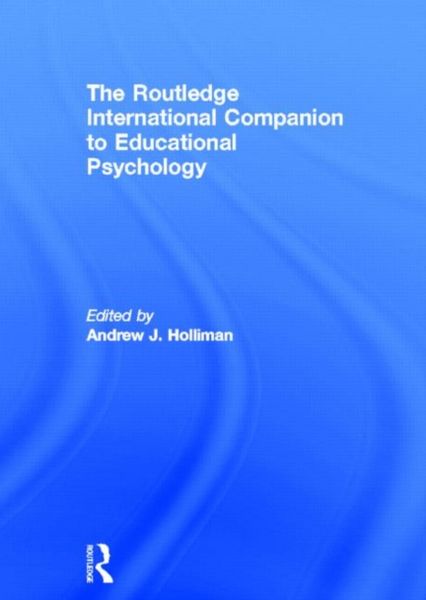
The Routledge International Companion to Educational Psychol
-
- Englisch ausgewählt
Fr. 389.00
inkl. gesetzl. MwSt.,
Beschreibung
Produktdetails
Einband
Gebundene Ausgabe
Erscheinungsdatum
19.07.2013
Abbildungen
5 Tables, black and white 19 Illustrations, black and white
Herausgeber
Holliman Andrew J.Verlag
Taylor and FrancisSeitenzahl
352
Maße (L/B/H)
3.6/17.4/24.6 cm
Gewicht
816 g
Sprache
Englisch
ISBN
978-0-415-67558-1
The Routledge International Companion to Educational Psychology brings together expert practitioners, researchers, and teachers from five continents to produce a unique and global guide to the core topics in the field. Each chapter includes coverage of the key thinkers, topic areas, events, and ideas that have shaped the field, but also takes the reader beyond typical textbook material and into engagement with current issues, cutting-edge research and future directions in the field of educational psychology from an international perspective. With over 30 chapters, the volume is divided into four themed sections: 'An introduction to educational psychology', 'How children learn and develop', 'Issues concerning the assessment of children' and 'Identifying and meeting the needs of children with learning difficulties'.
Covering the key issues and fundamental strands of educational psychology The Routledge International Companion to Educational Psychology aims to provide the reader with knowledge of: educational psychology (history, child rights, and practice); factors which influence children's learning and development; issues to do with assessment (a key aspect of educational psychology); special educational needs (identification and how to meet their needs); the key thinkers, events, and ideas that have shaped the field; the core topics across educational psychology in an accessible manner; cutting edge research including recent research evidence and theory; future directions in the field of educational psychology; educational psychology from an international perspective. The book is conceived for both student and researcher use, and considers the implications for educational psychology practice in all sections. It will be highly beneficial for both students and lecturers on Education Studies and Psychology undergraduate courses, as well as combined undergraduate degrees .
Covering the key issues and fundamental strands of educational psychology The Routledge International Companion to Educational Psychology aims to provide the reader with knowledge of: educational psychology (history, child rights, and practice); factors which influence children's learning and development; issues to do with assessment (a key aspect of educational psychology); special educational needs (identification and how to meet their needs); the key thinkers, events, and ideas that have shaped the field; the core topics across educational psychology in an accessible manner; cutting edge research including recent research evidence and theory; future directions in the field of educational psychology; educational psychology from an international perspective. The book is conceived for both student and researcher use, and considers the implications for educational psychology practice in all sections. It will be highly beneficial for both students and lecturers on Education Studies and Psychology undergraduate courses, as well as combined undergraduate degrees .
Noch keine Bewertungen vorhanden
Verfassen Sie die erste Bewertung zu diesem Artikel
Helfen Sie anderen Kundinnen und Kunden durch Ihre Meinung.