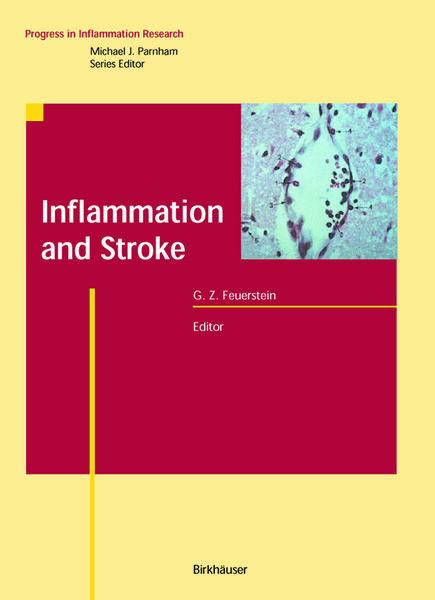
Inflammation and Stroke
Aus der Reihe
Progress in Inflammation Research
-
- Englisch ausgewählt
Fr. 73.90
inkl. gesetzl. MwSt.,
Beschreibung
Produktdetails
Einband
Taschenbuch
Erscheinungsdatum
13.10.2012
Herausgeber
Giora Z. FeuersteinVerlag
Springer BaselSeitenzahl
356
Maße (L/B/H)
23.5/15.5/2.1 cm
Gewicht
569 g
Auflage
Softcover reprint of the original 1st ed. 2001
Sprache
Englisch
ISBN
978-3-0348-9508-8
Stroke is a leading cause of death in developed countries. However,
current therapeutic strategies for stroke have been largely
unsuccessful. One possible explanation is that research and
pharmacological management have focused on very early events in brain
ischemia. New research has shown that brain ischemia and trauma elicit
strong inflammatory reactions driven by both external and brain cells.
The recognition of inflammation as a fundamental response to brain
ischemia provides novel opportunities for new anti-inflammatory
therapies.
For the first time, an international body of researchers presents the
latest findings about the cellular and humoral aspects of immune and
inflammatory reactions in the brain. The work may have an impact on the
treatment of neuroinjuries and ancillary brain diseases, and increase
the understanding of the roles infections and immune reactions play in
the brain milieu.
current therapeutic strategies for stroke have been largely
unsuccessful. One possible explanation is that research and
pharmacological management have focused on very early events in brain
ischemia. New research has shown that brain ischemia and trauma elicit
strong inflammatory reactions driven by both external and brain cells.
The recognition of inflammation as a fundamental response to brain
ischemia provides novel opportunities for new anti-inflammatory
therapies.
For the first time, an international body of researchers presents the
latest findings about the cellular and humoral aspects of immune and
inflammatory reactions in the brain. The work may have an impact on the
treatment of neuroinjuries and ancillary brain diseases, and increase
the understanding of the roles infections and immune reactions play in
the brain milieu.
Noch keine Bewertungen vorhanden
Verfassen Sie die erste Bewertung zu diesem Artikel
Helfen Sie anderen Kundinnen und Kunden durch Ihre Meinung.