
Gutscheinbedingungen

*Gültig bis 05.07.2026 auf (fast) alles. Ausgeschlossen sind Smartboxen, Zeitschriften, Tickets, Lebensmittel, Gaming-Elektroartikel, Tinte/Toner, Gutscheine, Geschenkkarten, Blumen und Abos | Einlösbar in allen Buchhandlungen von Orell Füssli, Barth Bücher, Buchladen Rapunzel, Papeterie Köhler, Schuler Orell Füssli, Stauffacher und ZAP unter Vorweisung des Gutscheins, auf www.orellfüssli.ch durch Eingabe des Gutscheincodes. Beim Service „eBooks verschenken“ und bei eBook-Käufen via eReader nicht einlösbar | Mindesteinkaufswert: Fr. 30.- | Nicht mit anderen Rabatten kumulierbar.

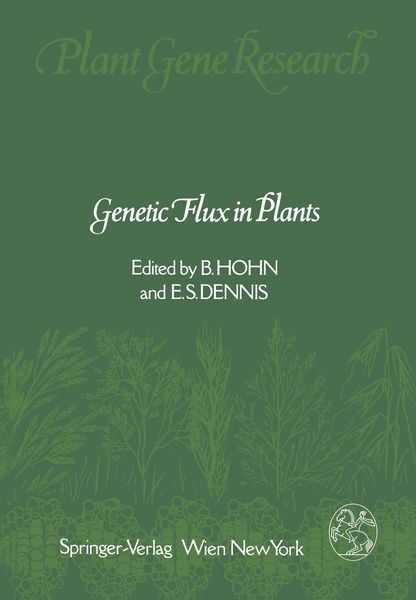
  • Produktbild: Genetic Flux in Plants
  • Produktbild: Genetic Flux in Plants

Genetic Flux in Plants

Aus der Reihe Plant Gene Research

Fr. 72.90

inkl. gesetzl. MwSt., Versandkostenfrei


Beschreibung

Produktdetails

Einband

Taschenbuch

Erscheinungsdatum

31.12.2011

Herausgeber

Barbara Hohn + weitere

Verlag

Springer Wien

Seitenzahl

256

Maße (L/B/H)

24.4/17/1.5 cm

Gewicht

468 g

Auflage

Softcover reprint of the original 1st ed. 1985

Sprache

Englisch

ISBN

978-3-7091-8767-8

Beschreibung

Produktdetails

Einband

Taschenbuch

Erscheinungsdatum

31.12.2011

Herausgeber

Verlag

Springer Wien

Seitenzahl

256

Maße (L/B/H)

24.4/17/1.5 cm

Gewicht

468 g

Auflage

Softcover reprint of the original 1st ed. 1985

Sprache

Englisch

ISBN

978-3-7091-8767-8

Herstelleradresse

Springer-Verlag KG
Sachsenplatz 4-6
1201 Wien
AT

Email: GPSR Kontakt

Noch keine Bewertungen vorhanden

Verfassen Sie die erste Bewertung zu diesem Artikel

Helfen Sie anderen Kundinnen und Kunden durch Ihre Meinung.

Kundinnen und Kunden meinen

Bewertungen (0)

  • Produktbild: Genetic Flux in Plants
  • Produktbild: Genetic Flux in Plants
  • Section 1 Movement of Genetic Information from the Environment to the Plant.- 1 Viruses.- 2 DNA Flux Across Genetic Barriers: The Crown Gall Phenomenon.- I. Introduction: Agrobacterium tumefaciens, a Natural Instance of Genetic Engineering.- A. General Introduction.- B. In Search of the TIP.- C. A More Precise Picture of the T-DNA.- II. The T-DNA Is Designed to Be Functional in the Plant Cell.- A. T-DNA Gene Structure and Its Expression in Plant Cells.- B. Functional Organization of the T-DNA.- C. Agrobacterium rhizogenes, an Analogous System.- D. Some Speculations About the Origin of the T-DNA.- III. Transfer and Integration of the T-DNA in the Plant Cell Nucleus.- A. Agrobacterium Holds the Key.- B. Early Interactions Between Agrobacterium and Plant Cells.- C. T-region and T-DNA Border Sequences.- D. The 25-bp Repeat Sequence.- E. T-DNA Integration Compared to Other Mobile Elements.- F. Crossing the Cellular and Genetic Barriers.- G. T-DNA Stability.- H. Domestication of the Ti Plasmid.- IV. Conclusion.- V. Acknowledgements.- VI. References.- Section II Movement of Genetic Information Between the Plant Organelles.- 3 Movement of Genetic Material Between the Chloroplast and Mitochondrion in Higher Plants.- I. Inter-Organelle DNA Transposition.- II. Sequences Homologous to Chloroplast DNA in Higher Plant Mitochondrial Genomes.- A. The Genome of Zea mays.- B. Other Higher Plant Species.- III. Functionality of the Chloroplast Pseudogene Sequences in the Mitochondrial Genome.- IV. Mechanism of Sequence Transfer.- V. Rate of Sequence Transposition and Selection of Novel Genotypes.- VI. References.- 4 Movement of Genetic Information Between the Chloroplast and Nucleus.- 5 Movement of Genetic Information Between Plant Organelles: Mitochondria-Nucle.- I. Introduction.- II. Organisms Exhibiting Common Mitochondrial and Nuclear DNA Sequences.- III. Common Mitochondrial and Nuclear DNA Sequences in Maize.- IV. Concluding Remarks.- V. References.- Section III Movement of Genetic Information Within Plant Organelles.- 6 Supernumerary DNAs in Plant Mitochondria.- I. Diversity of Genetic Organization in Plant Mitochondrial DNA.- II. Structure of Plasmid-like DNAs.- III. Reversion to Fertility in cms-S.- IV. A. The Diversity Paradox for Maize Mitochondrial DNA.- B. Evolutionary Mechanisms in Maize mtDNA.- V. References.- 7 Plant Mitochondrial DNA: Unusual Variation on a Common Theme.- I. Introduction.- II. The “Extra” DNA in Plant Mitochondria.- A. The Number of Translation Products Does Not Vary with Genome Size.- B. The Sequence Complexity of Mitochondrial RNA Is Large.- C. Are There More Mitochondrial Genes in Plants than in Other Organisms?.- D. Does Mitochondrial DNA Have a Sequence-Independent Function?.- E. Is Mitochondrial DNA Selfish or Ignorant?.- F. Interorganellar DNA.- G. Why Is the Mitochondrial Genome so Large?.- III. Circular Mitochondrial DNA.- A. A Brief History.- B. Circles in Native Plant Tissue.- C. Circles in Cultured Cells.- D. What Do the Circles Represent?.- E. Evidence for a Circular Mitochondrial Genome.- 1. Site-Specific Versus General Recombination.- 2. Circular Molecules Are Not Common in Mitochondrial DNA from Whole Plant Tissue.- 3. Circles and mtDNA Replication.- 4. Is the Genome Really Circular?.- 5. Is Circularity of the Genome Important for Mitochondrial Function?.- IV. Summary and Conclusions.- A. The “Extra” DNA.- B. Circles.- V. References.- 8 Repeated Sequences and Genome Change.- I. Introduction.- II Concerted Evolution.- III. Transposable Elements and Dispersed Repeats.- IV. Repeated DNA Flux and Species Divergence.- V. Concluding Remarks.- VI. References.- 9 Sequence Variation and Stress.- I. Introduction.- II. Environmentally Induced DNA Changes in Flax.- III. Nuclear DNA Variation.- IV. Analysis of Nuclear DNA.- V. Ribosomal DNA Variation.- VI. 5 S DNA Variation.- VII. Satellite DNA.- VIII. Other Repetitive Sequences.- IX. Somaclonal Variation.- X. Instabilities in Hybrid Plants.- XI. Discussion.- XII. References.- 10 The Activation of Maize Controlling Elements.- I. Introduction.- II. Unstable Mutations in Maize.- A. Genetic Loci.- B. General Considerations.- C. Two-Element Systems in Maize.- D. Controlling Element Families.- III. Induction of Controlling Element Activity.- A. Behavior of Broken Chromosomes.- B. Unorthodox Type of Chromosome Rearrangements in BFB Plants.- C. Burst of Mutability Following Chromosome Breakage.- D. Examples of Controlling Element Activation by BFB Cycles.- IV. Biology of Ac/Ds Elements.- A. Chromosome Breakage at Ds.- B. The Ac/Ds Family of Transposable Controlling Elements.- C. Mutator Function of Ac.- D. Molecular Biology of Ac/Ds.- E. Relationship Between Autonomous and Non-autonomous Components.- F. DsElements That Are Structurally Related to Ac.- G. DsElements Capable of Chromosome Dissociation.- H. Type I Elements.- I. Transposition of Ac from a Gene Locus.- V. Cryptic and Active Forms of Ac/Ds Elements.- A. General Considerations.- B. Cryptic Ac-like DNA.- C. Differences Between Active and Cryptic Copies of Ac.- D. Cycling Activity of the Mutator Component of Ac.- VI. Concluding Remarks.- VII. Acknowledgements.- VIII. References.- 11 Somaclonal Variation: The Myth of Clonal Uniformity.- I. Introduction.- II. In Vitro Culture and Genetic Flux.- A. Tissue Culture Instability.- 1. Chromosomal Instability.- 2. Morphological Changes.- 3. Biochemical Changes.- B. Somaclonal Variation.- 1. Ubiquity of Somaclonal Variation.- 2. Maize.- 3. Wheat.- 4. Tomato.- 5. Sugarcane.- 6. Potato.- III. Factors Influencing Somaclonal Variation.- A. Sexual Versus Asexual Species.- B. Preexisting Versus Culture Induced Variation.- C. Genotype.- D. Explant Type and Culture Mode.- E. Duration of Culture.- IV. Origin of Tissue Culture Instability and Somaclonal Variation.- A. Chromosomal Aberrations.- B. DNA Amplification.- C. Transposable Elements.- D. Somaclonal Variation—Analysis and Understanding.- V. Benefits and Disbenefits of Somaclonal Variation.- VI. Conclusions.- VII. Acknowledgements.- VIII. References.