Gutscheinbedingungen

*Gültig bis 07.06.2026 auf (fast) alles. Ausgeschlossen sind Smartboxen, Zeitschriften, Tickets, Lebensmittel, Gaming-Elektroartikel, Tinte/Toner, Gutscheine, Geschenkkarten, Blumen und Abos | Einlösbar in allen Buchhandlungen von Orell Füssli, Barth Bücher, Buchladen Rapunzel, Schuler Orell Füssli, Stauffacher und ZAP unter Vorweisung des Gutscheins, auf www.orellfüssli.ch durch Eingabe des Gutscheincodes. Beim Service „eBooks verschenken“ und bei eBook-Käufen via eReader nicht einlösbar | Mindesteinkaufswert: Fr. 100.- | Nicht mit anderen Rabatten kumulierbar.

  • Produktbild: Temperament
  • Produktbild: Temperament

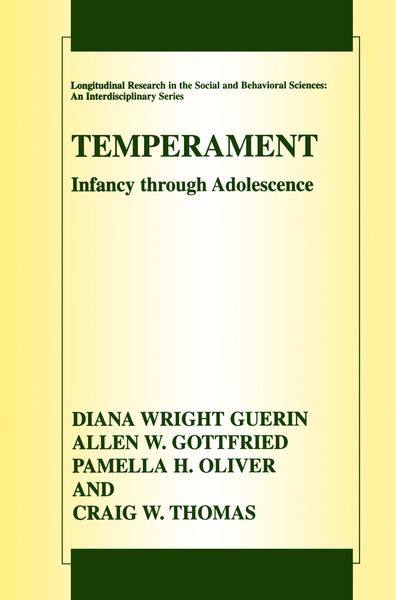
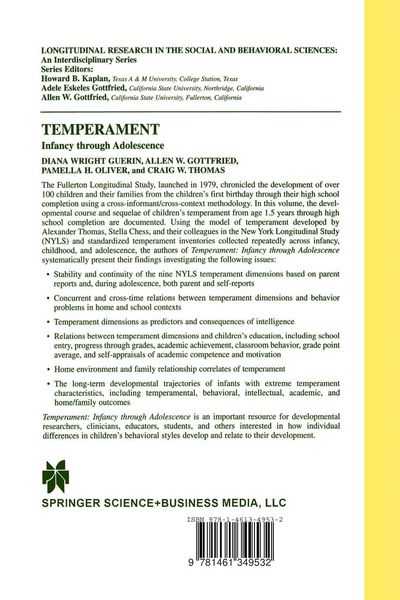
Temperament Infancy through Adolescence The Fullerton Longitudinal Study

Fr. 138.00

inkl. gesetzl. MwSt., Versandkostenfrei


Beschreibung

Produktdetails

Einband

Taschenbuch

Erscheinungsdatum

16.09.2012

Verlag

Springer Us

Seitenzahl

279

Maße (L/B/H)

23.5/15.5/1.7 cm

Gewicht

453 g

Auflage

Softcover reprint of the original 1st ed. 2003

Sprache

Englisch

ISBN

978-1-4613-4953-2

Beschreibung

Produktdetails

Einband

Taschenbuch

Erscheinungsdatum

16.09.2012

Verlag

Springer Us

Seitenzahl

279

Maße (L/B/H)

23.5/15.5/1.7 cm

Gewicht

453 g

Auflage

Softcover reprint of the original 1st ed. 2003

Sprache

Englisch

ISBN

978-1-4613-4953-2

Herstelleradresse

Springer-Verlag GmbH
Tiergartenstr. 17
69121 Heidelberg
DE

Email: ProductSafety@springernature.com

Kundinnen und Kunden meinen

0 Bewertungen

Informationen zu Bewertungen

Zur Abgabe einer Bewertung ist eine Anmeldung im Konto notwendig. Die Authentizität der Bewertungen wird von uns nicht überprüft. Wir behalten uns vor, Bewertungstexte, die unseren Richtlinien widersprechen, entsprechend zu kürzen oder zu löschen.

Die Bewertungen sind nach Format, Anzahl Sterne und Datum sortiert.

Verfassen Sie die erste Bewertung zu diesem Artikel

Helfen Sie anderen Kund*innen durch Ihre Meinung

Kundinnen und Kunden meinen

0 Bewertungen filtern

  • Produktbild: Temperament
  • Produktbild: Temperament
  • 1. Introduction and Overview.- Pervasiveness of the Temperament Construct.- Contemporary Interest in the Concept of Temperament.- Uniqueness of the Fullerton Longitudinal Study for Investigating Temperament.- The NYLS Framework.- The Nine NYLS Temperament Dimensions.- The Concept of Difficult Temperament.- Other Child-Focused Models of Temperament.- to Issues Investigated.- 2. Methodology of the Fullerton Longitudinal Study and Data Analytic Strategy.- FLS Assessment Waves.- Participants.- Delineation of Developmental Eras.- Tests for Attrition Bias.- Use of Parent Report Measures.- Temperament Measures Used in the FLS.- Measures Collected in Other Developmental Domains and the Environment.- Intercorrelations Among Temperament Dimension Scores.- Use of Extreme Temperament Groups.- 3. Consistency and Change in Temperament.- Issues Investigated.- Description of Measures Used in the FLS.- Findings and Discussion.- Summary and Conclusions.- 4. Temperament and Behavioral/Emotional Adjustment.- Issues Investigated.- Description of Measures Used in the FLS.- Findings and Discussion.- Summary and Conclusions.- 5. Temperament and Intelligence.- Issues Investigated.- Description of Measures Used in the FLS.- Findings and Discussion.- Summary and Conclusions.- 6. Temperament in the School Context.- Issues Investigated.- Description of Measures Used in the FLS.- Findings and Discussion.- Summary and Conclusions.- 7. Temperament in the Family Context.- Issues Investigated.- Description of Measures Used in the FLS.- Findings and Discussion.- Summary and Conclusions.- 8. Temperament in the Extremes—Developmental Trajectories of Infants in Three Temperament Groups.- Issues Investigated.- Description of Measures Used in the FLS.- Findings and Discussion.- Summary and Conclusions.- 9.Synthesis and Implications.- Temperament from Infancy through Adolescence: Pathways and Trajectories.- Differential Developmental Significance of Temperament Dimensions.- Implications of Findings Regarding Temperamental Continuity/Stability.- Temperament as a Precursor of Personality.- Temperament Dimensions as Sequelae of Earlier Development.- Evidence that Temperament is a Useful Construct Beyond Parent-Child Interactions/Relationship.- Temperament in the Classroom.- Temperament-Environment Interactions.- Temperament as an Asset and Liability in Development.- Long-Term Sequelae of Temperament Assessed in Infancy.- Temperament from Infancy through Adolescence.- References.- Author Index.