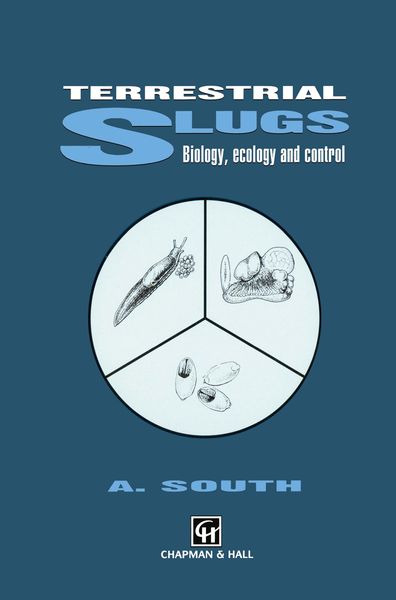
Terrestrial Slugs Biology, ecology and control
-
- Hardcover
- Taschenbuch ausgewählt
- eBook
-
Sprache:Englisch
Fr. 241.00
inkl. gesetzl. MwSt.,
Beschreibung
Produktdetails
Einband
Taschenbuch
Erscheinungsdatum
17.09.2012
Verlag
Springer NetherlandSeitenzahl
428
Maße (L/B/H)
23.5/15.5/2.4 cm
Gewicht
669 g
Auflage
Softcover reprint of the original 1st ed. 1992
Sprache
Englisch
ISBN
978-94-010-5050-0
In recent years slugs have become increasingly important, partly because several species are agricultural and horticultural pests and partly because theyhave proved to be useful experimental animals, particularly in the field of neurophysiology. Most of the early works which included slugs were essentially taxonomic but the book byTaylor (1902-1907) contained a great deal of biological information about slugs, some of which is still relevant today. The publication of the book by Runham and Hunter (1970) represented a milestone in slug research, providing a comprehensive survey of current knowledge about slugs. The book by Godan (1983) on snailsand slugswas mainly concerned with theeconomic importanceof theseanimals. The purpose of the present book is to present a review of current knowledgeofthebiologyandecologyofslugs, togetherwith theirstatusand control as pests. Although relatively little is known about the biology and ecology of tropical slugs and most information is taken from work on European slugs, the European pest species have become widely distributed throughout temperate regions and this book should be of interest world wide. It is written as a source of information for people seeking to control slug pests and, also, for those wishing to use slugs for research or teaching purposes. The book is intended particularly to provide a starting point for those beginning research on slugs and an extensive bibliography has been provided.
Kundinnen und Kunden meinen
Verfassen Sie die erste Bewertung zu diesem Artikel
Helfen Sie anderen Kund*innen durch Ihre Meinung