Band 22
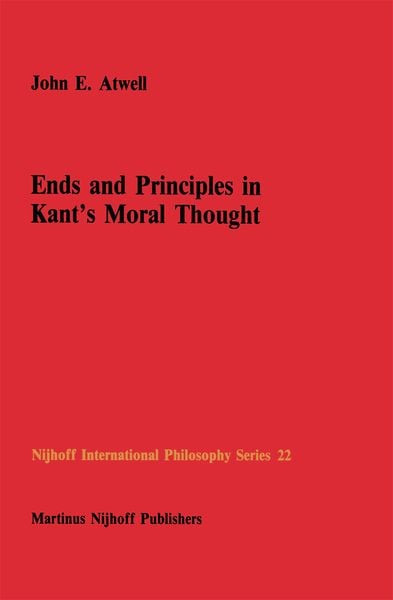
Ends and Principles in Kant’s Moral Thought
Aus der Reihe
Nijhoff International Philosophy Series
-
- Hardcover
- Taschenbuch ausgewählt
- eBook
-
Sprache:Englisch
Fr. 137.00
inkl. gesetzl. MwSt.,
Beschreibung
Produktdetails
Einband
Taschenbuch
Erscheinungsdatum
13.10.2011
Verlag
Springer NetherlandSeitenzahl
227
Maße (L/B/H)
23.5/15.5/1.4 cm
Auflage
Softcover reprint of the original 1st ed. 1986
Sprache
Englisch
ISBN
978-94-010-8431-4
Immanuel Kant (1724-1804) stands among the greatest thinkers of the Western world. There is hardly an area of thought, at least of philosophical thought, to which he did not make significant and lasting contributions. Particularly noteworthy are his writings on the foundations and limits of human knowledge, the bidimensional nature of perceptual or "natural" objects (including human beings), the basic principles and ends of morality, the character of a just society and of a world at peace, the movement and direction of human history, the nature of beauty, the end or purpose of all creation, the proper education of young people, the true conception of religion, and on and on. Though Kant was a life-long resident of Konigsberg, Prussia - child, student, tutor, and then professor of philosophy (and other subjects) - his thought ranged over nearly all the world and even beyond. Reports reveal that he (a bachelor) was an amiable man, highly respected by his students and colleagues, and even loved by his several close friends. He was apparently a man of integrity, both in his personal relations and in his pursuit of knowledge and truth. Despite his somewhat pessimistic attitude toward the moral progress of mankind - judging from past history and contemporary events - he never wavered from a deep-seated faith in the goodness of the human heart, in man's "splendid disposition toward the good.
Kundinnen und Kunden meinen
Verfassen Sie die erste Bewertung zu diesem Artikel
Helfen Sie anderen Kund*innen durch Ihre Meinung