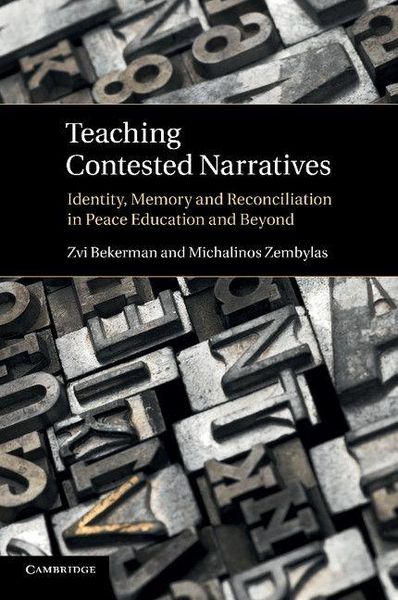
Teaching Contested Narratives Identity, Memory and Reconciliation in Peace Education and Beyond
-
- Hardcover
- Taschenbuch ausgewählt
- eBook
-
Sprache:Englisch
Fr. 69.90
inkl. gesetzl. MwSt.,
Beschreibung
Produktdetails
Einband
Taschenbuch
Erscheinungsdatum
15.08.2013
Verlag
Cambridge University PressSeitenzahl
272
Maße (L/B/H)
22.9/15.2/1.5 cm
Gewicht
370 g
Sprache
Englisch
ISBN
978-1-107-66377-0
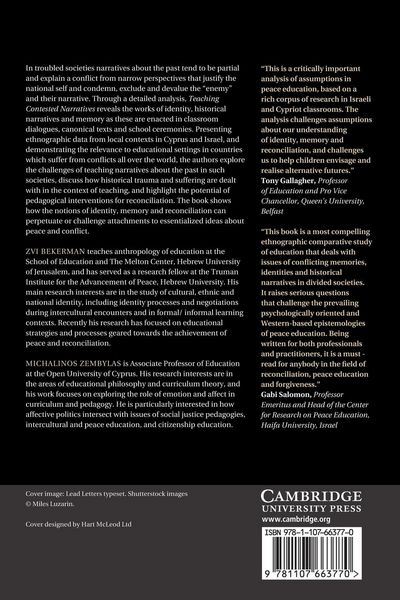
"In troubled societies narratives about the past tend to be partial and explain a conflict from narrow perspectives that justify the national self and condemn, exclude and devalue the 'enemy' and their narrative. Through a detailed analysis, Teaching Contested Narratives reveals the works of identity, historical narratives and memory as these are enacted in classroom dialogues, canonical texts and school ceremonies. Presenting ethnographic data from local contexts in Cyprus and Israel, and demonstrating the relevance to educational settings in countries which suffer from conflicts all over the world, the authors explore the challenges of teaching narratives about the past in such societies, discuss how historical trauma and suffering are dealt with in the context of teaching, and highlight the potential of pedagogical interventions for reconciliation. The book shows how the notions of identity, memory and reconciliation can perpetuate or challenge attachments to essentialized ideas about peace and conflict"--
Noch keine Bewertungen vorhanden
Verfassen Sie die erste Bewertung zu diesem Artikel
Helfen Sie anderen Kundinnen und Kunden durch Ihre Meinung.