Gutscheinbedingungen

*Gültig bis 07.06.2026 auf (fast) alles. Ausgeschlossen sind Smartboxen, Zeitschriften, Tickets, Lebensmittel, Gaming-Elektroartikel, Tinte/Toner, Gutscheine, Geschenkkarten, Blumen und Abos | Einlösbar in allen Buchhandlungen von Orell Füssli, Barth Bücher, Buchladen Rapunzel, Schuler Orell Füssli, Stauffacher und ZAP unter Vorweisung des Gutscheins, auf www.orellfüssli.ch durch Eingabe des Gutscheincodes. Beim Service „eBooks verschenken“ und bei eBook-Käufen via eReader nicht einlösbar | Mindesteinkaufswert: Fr. 100.- | Nicht mit anderen Rabatten kumulierbar.

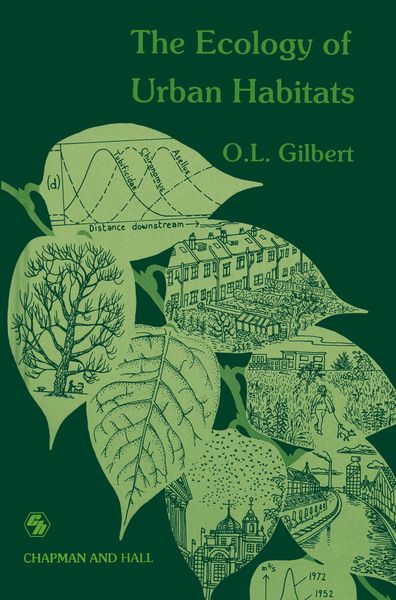
  • Produktbild: The Ecology of Urban Habitats
  • Produktbild: The Ecology of Urban Habitats

The Ecology of Urban Habitats

Fr. 137.00

inkl. gesetzl. MwSt., Versandkostenfrei


Beschreibung

Produktdetails

Einband

Taschenbuch

Erscheinungsdatum

20.09.2011

Verlag

Springer Netherland

Seitenzahl

370

Maße (L/B/H)

23.5/15.5/2.1 cm

Gewicht

576 g

Auflage

Softcover reprint of the original 1st ed. 1989

Sprache

Englisch

ISBN

978-94-010-6855-0

Beschreibung

Produktdetails

Einband

Taschenbuch

Erscheinungsdatum

20.09.2011

Verlag

Springer Netherland

Seitenzahl

370

Maße (L/B/H)

23.5/15.5/2.1 cm

Gewicht

576 g

Auflage

Softcover reprint of the original 1st ed. 1989

Sprache

Englisch

ISBN

978-94-010-6855-0

Herstelleradresse

Springer-Verlag KG
Sachsenplatz 4-6
1201 Wien
AT

Email: ProductSafety@springernature.com

Kundinnen und Kunden meinen

0 Bewertungen

Informationen zu Bewertungen

Zur Abgabe einer Bewertung ist eine Anmeldung im Konto notwendig. Die Authentizität der Bewertungen wird von uns nicht überprüft. Wir behalten uns vor, Bewertungstexte, die unseren Richtlinien widersprechen, entsprechend zu kürzen oder zu löschen.

Die Bewertungen sind nach Format, Anzahl Sterne und Datum sortiert.

Verfassen Sie die erste Bewertung zu diesem Artikel

Helfen Sie anderen Kund*innen durch Ihre Meinung

Kundinnen und Kunden meinen

0 Bewertungen filtern

  • Produktbild: The Ecology of Urban Habitats
  • Produktbild: The Ecology of Urban Habitats
  • Preface.- 1 Introduction.- 2 Characteristics of urban flora and fauna.- 2.1 Proliferation of introduced species.- 2.2 Severe disturbance.- 2.3 Increased opportunities for dispersal.- 2.4 Habitat diversity.- 2.5 Taxonomic and evolutionary aspects.- 2.6 Vertebrates.- 2.7 Invertebrates.- 2.8 Planted vegetation.- 2.9 Historical factors.- 3 The urban climate and air pollution.- 3.1 Climate.- 3.2 Air pollution.- 4 Soils in urban areas.- 4.1 The classification of urban soils.- 4.2 Conspectus.- 4.3 Characteristics of urban soils.- 4.4 Brick rubble.- 4.5 Topsoiled sites.- 5 Vegetation dynamics.- 5.1 Ecological change as greenfield sites become developed.- 5.2 Ecological change as urban land is recycled.- 5.3 Postdevelopment.- 5.4 Discussion.- 6 Urban commons.- 6.1 Plants.- 6.2 Animals.- 6.3 Research opportunities.- 7 Industrial areas.- 7.1 Raw materials.- 7.2 Buildings, structures, hard landscapes.- 7.3 Energy aspects.- 7.4 Stores and warehouses.- 7.5 Solid waste material.- 7.6 Modern trends.- 8 Railways.- 8.1 The permanent way.- 8.2 Sidings.- 8.3 Brickwork and masonry.- 8.4 Verges.- 8.5 Boundary features.- 9 Roads.- 9.1 Road design.- 9.2 Exhaust emissions.- 9.3 De-icing salt.- 9.4 Traffic stress.- 9.5 Street trees.- 9.6 Grass verges.- 9.7 Animals.- 10 City centres.- 10.1 Animals.- 10.2 Vegetation.- 10.3 Interactions.- 11 City parks.- 11.1 Habitats within a park.- 11.2 Grassland.- 11.3 Growth retardants and herbicides.- 11.4 The changing wild flora of parks.- 11.5 Lakes.- 11.6 Mammals.- 11.7 Birds.- 11.8 Invertebrates.- 12 Allotments and leisure gardens.- 12.1 Background.- 12.2 Cultivated plots.- 12.3 Secondary successions.- 12.4 Birds.- 12.5 Supplementary habitats.- 12.6 Fostering wildlife on allotments.- 13 Cemeteries.- 13.1 Background.- 13.2 Structure planting.- 13.3 Shrubs.- 13.4 The ground layer.- 13.5 Grave plots.- 13.6 Relic communities.- 13.7 Succession.- 13.8 Management options.- 14 Gardens.- 14.1 Vegetation.- 14.2 Animals.- 14.3 Discussion.- 15 Rivers, canals, ponds, lakes, reservoirs and water mains.- 15.1 Urban hydrology.- 15.2 Rivers.- 15.3 Canals.- 15.4 Ponds, lakes, reservoirs and water mains.- 16 Woodland.- 16.1 The archaeology of a small urban wood.- 16.2 Ancient seminatural woodland.- 16.3 Plantations on the site of ancient woodland.- 16.4 Spontaneous recent woodland.- 16.5 Plantations.- 16.6 Birds.- 17 Living with wildlife.- 17.1 The aesthetic conflict.- 17.2 Social considerations.- 17.3 Design and management.- 17.4 Benefits for all.- References.