• Produktbild: Perspectives in Ethology
  • Produktbild: Perspectives in Ethology
Band 5

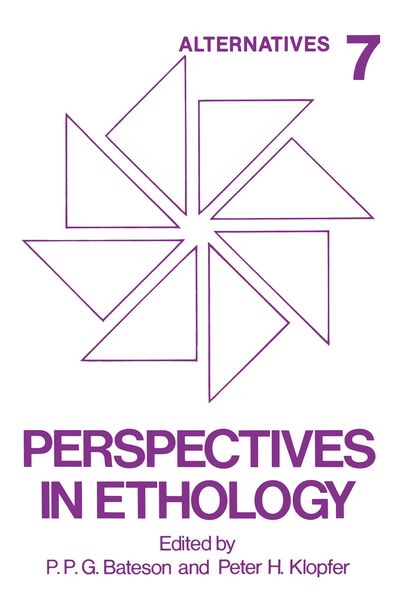
Perspectives in Ethology Volume 7 Alternatives

Aus der Reihe Perspectives in Ethology

Fr. 72.90

inkl. gesetzl. MwSt., Versandkostenfrei


Beschreibung

Produktdetails

Einband

Taschenbuch

Erscheinungsdatum

13.10.2011

Verlag

Springer Us

Seitenzahl

282

Maße (L/B/H)

23.5/15.5/1.7 cm

Gewicht

458 g

Auflage

Softcover reprint of the original 1st ed. 1987

Sprache

Englisch

ISBN

978-1-4612-9015-5

Beschreibung

Produktdetails

Einband

Taschenbuch

Erscheinungsdatum

13.10.2011

Verlag

Springer Us

Seitenzahl

282

Maße (L/B/H)

23.5/15.5/1.7 cm

Gewicht

458 g

Auflage

Softcover reprint of the original 1st ed. 1987

Sprache

Englisch

ISBN

978-1-4612-9015-5

Herstelleradresse

Springer-Verlag KG
Sachsenplatz 4-6
1201 Wien
AT

Email: GPSR Kontakt

Noch keine Bewertungen vorhanden

Verfassen Sie die erste Bewertung zu diesem Artikel

Helfen Sie anderen Kundinnen und Kunden durch Ihre Meinung.

Kundinnen und Kunden meinen

Bewertungen (0)

  • Produktbild: Perspectives in Ethology
  • Produktbild: Perspectives in Ethology
  • 1 Pattern and Adaptation in Individual Behavioral Differences.- I. Abstract.- II. Introduction.- III. Semantic Issues.- IV. The Occurrence and Form of Individuality.- A. Social Behavior.- B. Foraging Behavior.- C. Advantages and Disadvantages of Being Different.- V. Adaptation and the Process of Differentiation.- A. Introduction.- B. Stages and Shifting Characteristics.- C. Covert Differences and Threshold Effects.- VI. Acknowledgments.- VII. References.- 2 Alternative Reproductive Tactics in Birds: Individual Variation in Clutch Size.- I. Abstract.- II. Introduction.- A. Individual Variation in Clutch Size.- B. Clutch Size: Proximal Influences.- III. Hypotheses to Account for Clutch Size Variation.- IV. Evaluation of the Evidence.- A. The Individual Optimization Hypothesis.- B. The Tradeoff Hypothesis.- C. The Fluctuating Selection Pressures Hypothesis.- V. Conclusions Regarding the Three Hypotheses.- VI. Discussion.- A. Why Should Selection Pressures Fluctuate?.- B. Implications: Life in a Fluctuating Environment.- VII. Acknowledgments.- VIII. References.- 3 Critique of Helping Behavior in Birds: A Departure from Functional Explanations.- I. Abstract.- II. Introduction.- III. Criticisms and Alternatives.- A. How Is Helping Behavior Perceived?.- B. Control of Provisioning Behavior.- C. In What Contexts Is Provisioning Behavior Observed?.- D. Provisioning Behavior in Communal Breeders.- E. Development and Evolution of Communal Breeding.- F. How Is Provisioning Behavior Maintained in Communal Breeders?.- IV. Discussion.- V. Acknowledgments.- VI. References.- 4 On the Evolution of Density-Regulating Behavior.- I. Abstract.- II. Introduction.- A. The Controversy over Group Selection.- B. Individual Selection and Individual Preferences.- III. The Haystack Model.- IV. Breeding Site Limitation.- V. Habitat Selection in the Nonbreeding Season.- A. Random Assignment.- B. Ideal Avoidance.- C. Ideal Assessment.- D. Ideal Dominance.- E. The Assessment Dominance Distribution (ADD).- VI. Population Dynamics.- A. Density Dependence in Two Seasons.- B. Nest Site Selection and Geographic Range.- VII. Discussion of Model Assumptions.- VIII. Wynne Edwards Theory Reconsidered.- IX. Acknowledgment.- X. References.- 5 The Evolutionary Dynamics of Mixed Mating Systems: On the Adaptive Value of Selfing and Biparental Inbreeding.- I. Abstract.- II. Introduction.- III. Determination of the Adaptive Value of Selfing.- A. Response of Characters Correlated with Selection.- B. Modification to Accommodate the Evolution of Transmission.- C. Inbreeding Depression and Reproductive Mode of Origin As Determinants of Tradeoffs in Offspring Number.- D. The Effect of Uniparental and Biparental Inbreeding on the Selective Advantage of Selfing.- IV. Three Regular Systems of Biparental Inbreeding.- A. Regular Systems of Inbreeding.- B. The Effect of Prior Inbreeding on the Condition Permitting the Increase of Selfing under Negligible Inbreeding Depression.- C. The Effect of Biparental Inbreeding on the Adaptive Value of Selfing in the Presence of Significant Inbreeding Depression.- D. A Summary of the Qualitative Effects of Biparental Inbreeding on the Evolution of Selfing.- V. Discussion.- A. Toward a Predictive Theory of Mating System Dynamics.- B. Genetic Variation in Reproductive Mode.- C. The Resemblance between Parents and Their Offspring.- D. Empirical Estimates of Tradeoffs in Offspring Number.- E. Long-Term and Short-Term Effects of Selfing on Progeny Variance.- F. The Effect of Selfing on Male Success.- G. Implications of Biparental Inbreeding for the Adaptive Value of Selfing.- H. Consequences of Environmentally Imposed Shifts in the Breeding System.- I. Summary.- VI. Appendix A.- VII. Appendix B.- VIII. Appendix C.- IX. Acknowledgments.- X. References.- 6 The Experience of Experience: An Exogenetic Program for Social Competence.- I. Abstract.- II. Introduction: The Bird of Paradox.- III. Methods of Inquiry: Functional Metrics of Communication.- IV. Male Inheritance: An Embarassment of Riches?.- V. Female Cowbirds: Like Mother, Like Daughter.- VI. Male Modifiability: Behind Closed Doors.- VII. The Female: A Connoisseur of Fine Song.- VIII. Population Comparisons: The Perspective from the Prairie.- IX. General Perspectives: Exogenetic Programs for Development.- X. A Final Perspective: The Cowbird’s Place in Nature’s Gallery.- XI. Acknowledgments.- XII. References.- 7 A Comparative-Developmental Approach to Understanding Imitation.- I. Abstract.- II. Introduction.- III. Baldwin, Morgan, Guillaume, and Piaget on Imitation.- A. James Mark Baldwin.- B. Conwy Lloyd Morgan.- C. Paul Guillaume.- D. Jean Piaget.- E. Similarities and Differences.- IV. The Definition of “Imitation”.- V. The Levels of Imitation.- A. First-Level Imitation.- B. Second-Level Imitation.- C. Third-Level Imitation.- D. Fourth-Level Imitation.- E. Fifth-Level Imitation.- F. Clarifications.- VI. Conclusion.- VII. Acknowledgments.- VIII. References.- 8 The Dynamics of Group Behavior.- I. Abstract.- II. Introduction.- A. What Is Group Behavior?.- B. Why Study Group Behavior?.- III. Investigating Group Behavior: An Example of the Approach.- A. The Daily Round As a Unit of Group Behavior.- B. The Individual in Group Context.- C. Dynamics of Group Behavior.- IV. Extending the Approach.- V. Acknowledgments.- VI. References.- 9 Artificial Design in Natural History: Why it’s so Easy to Understand Animal Behavior.- I. Abstract.- II. Introduction: The Design Argument in Natural Theology.- III. Natural Selection As a Designer.- IV. Artificial Design: Synthesis and Analysis.- V. Apparent Design in Behavior: Optimal Foraging Theory.- VI. Conclusion.- VII. Acknowledgments.- VIII. References.- 10 The Misappropriation of Teleonomy.- I. Abstract.- II. Introduction.- III. Teleonomy As an Antidote to Circular Reasoning.- IV. Psychology and the Concept of Objective Teleology.- A. Tolman’s Purposive Behaviorism.- B. Hofstadter’s Objective Teleology.- V. Biological Interpreters of Teleonomy.- A. Huxley and the Openbill’s Open Bill.- B. Mayr and Determination by a Program.- C. George Williams’s Natural Selection and Adaptation.- D. Curio’s Teleonomic Methodology.- E. Pittendrigh, Reprise.- F. Conclusion: The Biological Interpreters.- VI. The Appropriate Use for “Teleonomy”.- VII. Acknowledgments.- VIII. References.