
Gutscheinbedingungen

*Gültig bis 05.07.2026 auf (fast) alles. Ausgeschlossen sind Smartboxen, Zeitschriften, Tickets, Lebensmittel, Gaming-Elektroartikel, Tinte/Toner, Gutscheine, Geschenkkarten, Blumen und Abos | Einlösbar in allen Buchhandlungen von Orell Füssli, Barth Bücher, Buchladen Rapunzel, Papeterie Köhler, Schuler Orell Füssli, Stauffacher und ZAP unter Vorweisung des Gutscheins, auf www.orellfüssli.ch durch Eingabe des Gutscheincodes. Beim Service „eBooks verschenken“ und bei eBook-Käufen via eReader nicht einlösbar | Mindesteinkaufswert: Fr. 30.- | Nicht mit anderen Rabatten kumulierbar.

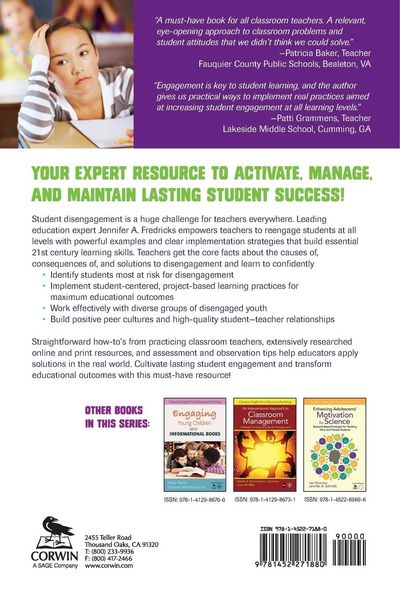
  • Produktbild: Eight Myths of Student Disengagement
  • Produktbild: Eight Myths of Student Disengagement

Eight Myths of Student Disengagement Creating Classrooms of Deep Learning

Fr. 51.90

inkl. gesetzl. MwSt., Versandkostenfrei


Beschreibung

Produktdetails

Einband

Taschenbuch

Erscheinungsdatum

18.03.2014

Verlag

Sage Publications

Seitenzahl

272

Maße (L/B/H)

22.9/15.2/1.5 cm

Gewicht

440 g

Sprache

Englisch

ISBN

978-1-4522-7188-0

Beschreibung

Produktdetails

Einband

Taschenbuch

Erscheinungsdatum

18.03.2014

Verlag

Sage Publications

Seitenzahl

272

Maße (L/B/H)

22.9/15.2/1.5 cm

Gewicht

440 g

Sprache

Englisch

ISBN

978-1-4522-7188-0

Herstelleradresse

Libri GmbH
Europaallee 1
36244 Bad Hersfeld
DE

Email: gpsr@libri.de

Noch keine Bewertungen vorhanden

Verfassen Sie die erste Bewertung zu diesem Artikel

Helfen Sie anderen Kundinnen und Kunden durch Ihre Meinung.

Kundinnen und Kunden meinen

Bewertungen (0)

Weitere Artikel finden Sie in

  • Produktbild: Eight Myths of Student Disengagement
  • Produktbild: Eight Myths of Student Disengagement
  • Preface
    Acknowledgments
    About the Author
    About the Contributors
    Introduction
    Myth 1. It¿s Easy to Tell Who Who Is Engaged: What Is Engagement and How Can I Assess It in My Classroom?
    Portraits of Engagement
    What Is Engagement?
    Why Assess Engagement?
    Consistency, Duration, and Variation in Engagement
    Methods for Assessing Engagement
    Chapter Summary
    Text-to-Practice Exercises
    Key Terms and Concepts
    Research-Based Resources
    Myth 2. Some Students Just Don¿t Care: How Disengagement Is More Than Just a Lack of Student Motivation
    School Versus Out-of-School Tasks
    Teacher-Student Relations and Disengagement
    Peer Relations and Disengagement
    Chapter Summary
    Text-to-Practice Exercises
    Key Terms and Concepts
    Research-Based Resources
    Myth 3. What Happens Outside of School Competes With Academics: How Out-of-School Time and Families Affect Engagement in School
    Extracurricular Activity Participation and Academic Outcomes
    Variation in Engagement Across Contexts
    Self-Determination Theory and Engagement
    Families and Engagement
    Barriers to Parent Involvement
    Chapter Summary
    Text-to-Practice Exercises
    Key Terms and Concepts
    Research-Based Resources
    Myth 4. Hands-On Is Minds-On: How to Create More Engaging Classroom Tasks That Result in Deep Learning
    Designing Classroom Tasks for Engagement
    Cognitive Components of the Task
    Authentic Tasks
    Authentic Instructional Models
    Motivational and Cognitive Challenges With Authentic Instruction
    Strategies for Implementing Cognitively Complex Tasks
    Chapter Summary
    Text-to-Practice Examples
    Key Terms and Concepts
    Research-Based Resources
    Myth 5. Focus on Content: Don't Make It Personal: How Relationships Matter for Student Engagement
    Teacher Support and Student Engagement and Achievement
    Essential Characteristics of Meaningful Teacher-Student Relations
    Building Relatedness in the Classroom
    Being an Autonomy-Supportive Teacher
    Supporting Students¿ Need for Competence
    How Teachers Support Cognitive Engagement
    Barriers to Developing High-Quality Relationships
    Building Relationships With Difficult Students
    Connecting With Diverse Students
    Chapter Summary
    Text-to-Practice Exercises
    Key Terms and Concepts
    Research-Based Resources
    Myth 6. Socializing With Peers Detracts From Student Engagement: How to Create a Peer Context That Supports Engagement
    Why Are Peer Relationships Important?
    Friendships
    Teachers¿ Beliefs and Instructional Practices
    How Do Peers Socialize Engagement?
    Cooperative Learning and Collaborative Instruction
    Key Strategies for Supporting Cooperation and Collaboration
    Creating Classroom Communities
    Chapter Summary
    Text-to-Practice Exercises
    Key Terms and Concepts
    Research-Based Resources
    Myth 7. There's Only So Much a Teacher Can Do: How to Help Those Students Still Struggling to Succeed
    Why Is It Important to Resist Disengagement?
    Risk Factors for Disengagement
    Why Is a Student Disengaged?
    Boys and Disengagement
    Academic Problems and Disengagement
    Students With a History of Behavioral Problems
    African American, Hispanic, and Low-Income Students and Disengagement
    Interventions to Increase Engagement
    Chapter Summary
    Text-to-Practice Exercises
    Key Terms and Concepts
    Research-Based Resources
    Myth 8. Student Engagement Is a Student Choice: Choosing to Make the Effort and Not Waiting for Engagement to Happen
    References
    Index